What is the Best Titan Carbide Product for Your Needs?
Choosing the right Titan Carbide product can be daunting. With numerous options available, it's crucial to understand your specific needs. Titan Carbide is known for its durability and performance in various applications.
Consider the environment where the products will be used. Is it high-impact or abrasive? Each application demands different features. For instance, some items excel in wear resistance, while others might focus on toughness.
Many customers report dissatisfaction when the wrong product is chosen. It's essential to analyze your requirements thoroughly. Take time to research and consult experts if needed. Titan Carbide products are an investment. Making the right choice will lead to better performance and longevity.
What is Titan Carbide and Its Key Benefits for Industry Applications?
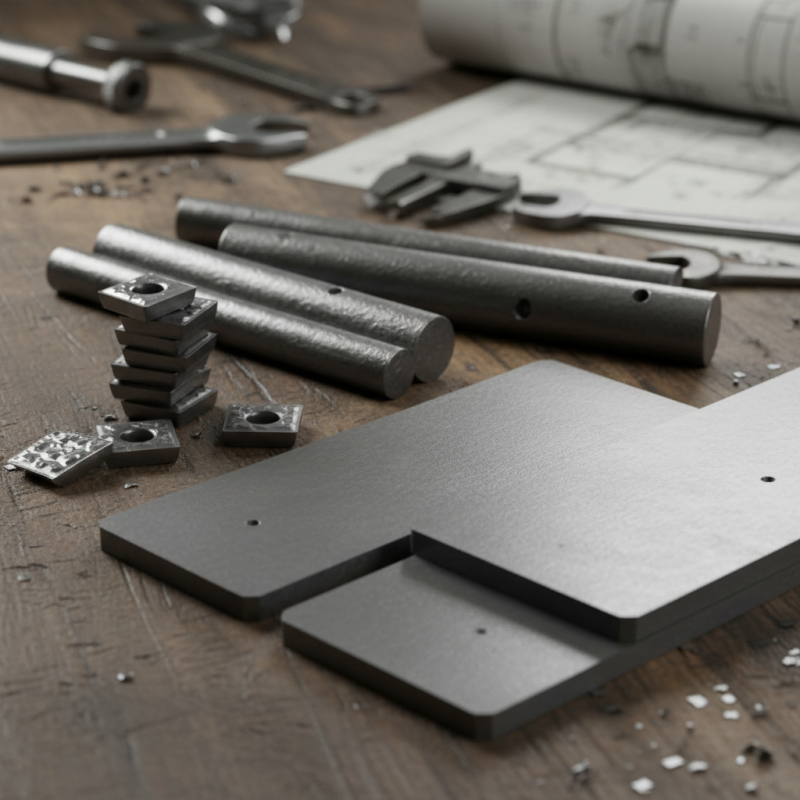
Titan Carbide is an innovative material widely utilized in various industries, especially in manufacturing and mining. This high-performance carbide is engineered to withstand extreme conditions, offering superior wear resistance. According to industry studies, Titan Carbide tools can last up to 50% longer than traditional materials. This longevity translates to cost savings, as companies can reduce their replacement frequency and maintenance costs.
The key benefits of Titan Carbide lie in its unique properties. It boasts high thermal stability and exceptional hardness, making it suitable for high-speed machining processes. Research indicates that components made from Titan Carbide maintain integrity even at elevated temperatures. However, some users have reported challenges in processing these materials. Techniques may need adjustment to maximize efficiency, highlighting areas for improvement in user training and technology adaptation.
Businesses are increasingly adopting Titan Carbide for its reliable performance. Many sectors, including oil and gas, rely on it for tools and machinery parts that demand durability. Yet, integrating this material often requires initial financial investment and strategic planning. Companies should weigh these factors against potential long-term gains in productivity and efficiency.
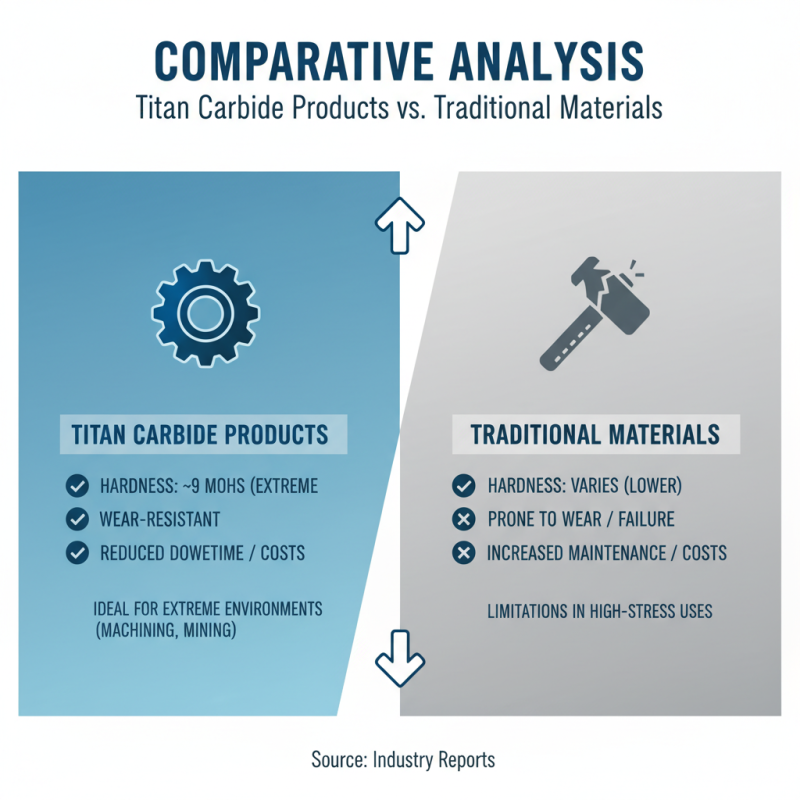
Comparative Analysis: Titan Carbide Products vs. Traditional Materials
Titan carbide products have been gaining traction in various industries due to their superior properties compared to traditional materials. Reports show that titan carbide has a hardness level approaching 9 on the Mohs scale, making it ideal for wear-resistant applications. In contrasted environments, such as machining and mining, traditional materials often fail under stress, leading to increased maintenance costs and downtime.
One compelling advantage of titan carbide is its thermal stability. Research indicates it retains strength at elevated temperatures, unlike some standard steel alloys that soften. This property significantly reduces the frequency of replacements. Data from industry analyses suggest that components made with titan carbide can last up to 50% longer than those made from conventional materials. However, the initial investment in titan carbide components can be higher, which may deter some businesses.
Despite its benefits, titan carbide is not without drawbacks. Its brittleness can be a concern in impact-heavy applications. Companies must balance cost and performance. Some may find traditional materials sufficient for their needs. Careful consideration is necessary when choosing the right material for specific applications. Always evaluate operational demands and long-term costs before making a decision.
Key Factors to Consider When Choosing Titan Carbide Products
When selecting Titan carbide products, several key factors must be considered. Understanding the specific applications of these products is crucial. For instance, according to a report by the International Journal of Advanced Manufacturing Technology, the effectiveness of carbide tools can vary significantly based on the material being processed. This means that choosing the right tool for your machinery can drastically affect the overall productivity and quality of your work.
Another important consideration is the manufacturing process. High-performance carbide products, while often more expensive, tend to offer longer tool life. A study from the Engineering Journal noted that tools made from premium-grade carbide can last up to three times longer than standard alternatives in demanding applications. This longevity can lead to a reduction in downtime, translating into significant savings for companies.
User feedback often highlights the balance between cost and quality. Some users report that cheaper products lead to frequent replacements, counteracting initial savings. Therefore, it is essential to consider not just the price, but also the long-term economic impact. Evaluating the potential for increased efficiency and reduced maintenance costs may provide a clearer picture of what is best for your specific needs.
Comparison of Titan Carbide Products
This chart compares various Titan Carbide products based on their durability and cost. The bars indicate the durability on a scale from 1 to 10, while the cost in dollars is represented on the same scale, allowing for a direct comparison of value versus performance.
Industry-Specific Titan Carbide Applications and Performance Metrics
Titan carbide is gaining recognition across various industries due to its exceptional wear resistance and durability. In mining, for instance, the use of titan carbide liners has been shown to reduce wear rates by up to 50%. This statistic highlights its effectiveness compared to traditional materials, fulfilling the rigorous demands of high-impact environments.
In the construction sector, titan carbide tools outperform standard steel alternatives by offering extended tool life. Reports indicate that these tools can last three times longer, leading to significant cost savings on replacements and maintenance. Nonetheless, many professionals still underestimate the long-term benefits of investing in higher-quality materials, focusing only on initial costs.
Performance metrics vary by application. For example, in oil and gas drilling, titan carbide drill bits demonstrate enhanced penetration rates, which can increase production efficiency by up to 30%. However, some users may encounter challenges with material compatibility or manufacturing tolerances. Careful consideration of these factors is crucial for optimizing product performance and ensuring reliability in field applications.
What is the Best Titan Carbide Product for Your Needs?
| Application Area |
Titan Carbide Product Type |
Performance Metrics |
Durability |
Cost Efficiency |
| Mining |
Titan Carbide Drill Bits |
High Wear Resistance, Impact Strength |
Long-lasting under extreme conditions |
Low operational costs over time |
| Construction |
Titan Carbide Cutting Tools |
Precision Cutting, Edge Retention |
High durability even with abrasive materials |
Cost-effective for high-volume projects |
| Manufacturing |
Titan Carbide Inserts |
Enhanced Cutting Speed, Tool Life |
Superior performance under stress |
Reduces waste, maximizes productivity |
| Aerospace |
Titan Carbide Finishing Tools |
Precision Finish, Surface Quality |
Optimal for lightweight materials |
High return on investment |
Recent Innovations in Titan Carbide Technology and Future Trends
Recent innovations in titan carbide technology are reshaping various industries. Enhanced hardness and wear resistance make titan carbide an attractive choice for applications in cutting tools and mining equipment. A notable development is the introduction of new manufacturing techniques. These techniques improve the material's properties while reducing production costs. As a result, more companies are turning to titan carbide for reliable, long-lasting products.
Looking forward, trends indicate a shift towards greener production methods. Companies are seeking sustainable alternatives in material sourcing. This focus may lead to innovations in recycling titan carbide. However, challenges remain. The high cost of raw materials can impede widespread adoption.
Another area of interest is nanotechnology. Researchers are exploring how to create nanostructured titan carbide. This could greatly enhance performance but requires further study. The potential is exciting, yet the path is unclear. Companies must balance the demand for innovation with practical manufacturing capabilities.