Leave Your Message

Leave your message now to get your free sample and discount price

China Top 10 Tungsten Carbide Tube Manufacturers?

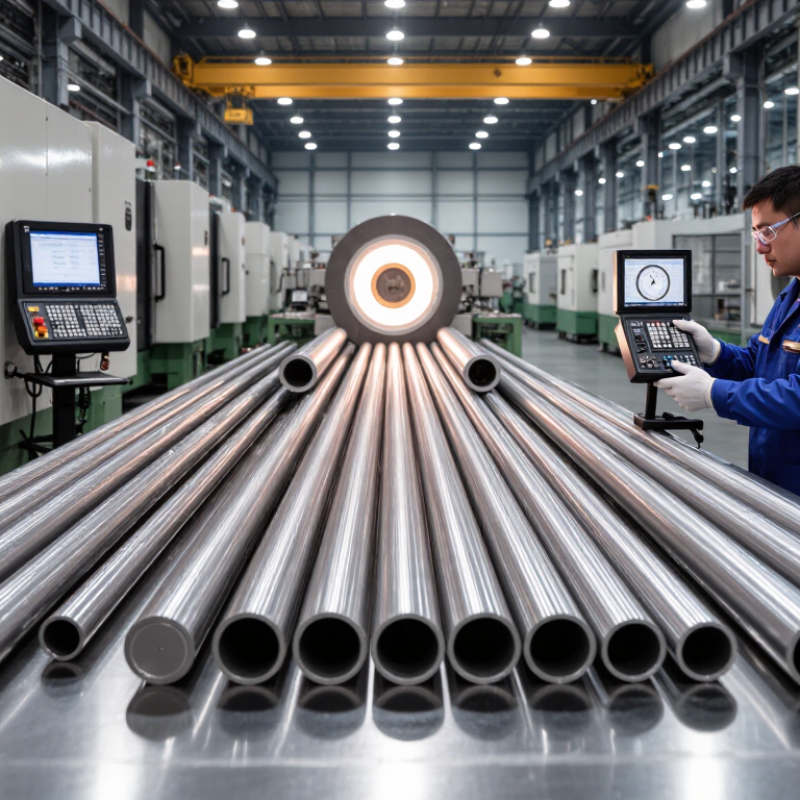
Choosing among China’s top tungsten carbide manufacturers requires more than comparing website claims. This guide examines ten suppliers associated with Tungsten Carbide Tube production and evaluates their practical capabilities. The review considers material consistency, manufacturing experience, technical support, and delivery reliability. Rankings can change. No list stays perfect.

A dependable manufacturer should explain its carbide grade, cobalt content, grain size, and sintering process. These details influence hardness, toughness, corrosion resistance, and service life. Some suppliers use vacuum sintering or hot isostatic pressing to reduce internal porosity. Others focus on custom dimensions for wear sleeves, drilling components, pump parts, and high-temperature tooling. Wall thickness matters. So does concentricity.

Real evaluation begins with evidence. Buyers should request inspection reports, dimensional records, material certificates, and sample testing. ISO-based quality systems can support consistency, but certification alone proves little. Factory experience, calibrated equipment, and traceable production records matter more. Photos help, though they cannot replace a physical sample. This guide also considers communication speed, minimum order quantities, packaging, export experience, and after-sales response. Those factors often decide whether a technically strong supplier becomes a reliable partner. Some information may remain incomplete because manufacturers update equipment and product ranges. That limitation deserves attention. Readers should verify current certifications, production capacity, and quoted specifications before placing an order. A careful comparison can reveal which Chinese supplier offers the right balance of performance, customization, cost, and long-term dependability.

China Top 10 Tungsten Carbide Tube Manufacturers?

WC Tubes: 9–9.5 Mohs Hardness and 14.5–15.7 g/cm³ Density

China Top 10 Tungsten Carbide Tube Manufacturers?

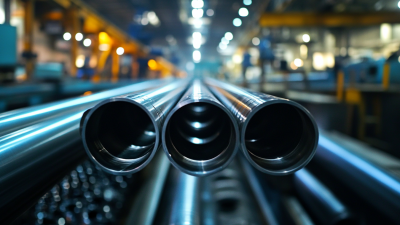
When comparing China’s top ten tungsten carbide tube manufacturers, focus on material data, not attractive catalogs. WC tubes typically reach 9–9.5 Mohs hardness. Their density commonly ranges from 14.5 to 15.7 g/cm³. These values indicate strong wear resistance and a compact structure. However, performance depends on tungsten carbide grain size, binder content, sintering control, and tube geometry.

A reliable manufacturer should provide batch test reports, density results, hardness methods, and dimensional records. Ask about inner diameter tolerance, wall thickness, surface finish, and straightness. In practical use, a tube may face abrasive powder, vibration, heat, or repeated pressure. Even small internal scratches can reduce service life. Experience with cutting, grinding, and inspection matters. A high hardness value alone does not guarantee good performance. That point is often overlooked.

Tips: Request a sample before placing a large order. Check its weight against the stated density. Inspect both tube ends under strong light. Look for pores, cracks, uneven grinding, or chipped edges. Confirm whether the reported 9–9.5 Mohs hardness applies to the finished tube. Some specifications may describe the raw material instead. Do not rely only on supplier ranking. A perfect-looking sample can still hide inconsistent batches. Your application may need a different binder ratio or tighter tolerance.

China’s Tungsten Supply: 67,000 t Mine Output in 2023 (USGS)

China remains the center of global tungsten supply. The USGS Mineral Commodity Summaries 2024 reported 67,000 metric tons of tungsten mine output from China in 2023. That figure represented most global production, estimated at about 78,000 metric tons. The scale matters for tungsten carbide tube buyers. It supports powder availability, but it does not guarantee consistent tube quality.

The International Tungsten Industry Association links carbide performance to powder chemistry, grain size, binder control, and sintering conditions. These factors affect wear resistance, hardness, and dimensional stability. In production, a tube may look smooth externally yet contain internal pores or uneven wall thickness. Practical checks should include density testing, metallographic inspection, hardness measurement, and bore tolerance records. Small details matter.

A “top 10” list can mislead.

Manufacturing capacity is only one comparison point. Buyers should also examine traceability, batch testing, furnace controls, and experience with thin-wall designs. The USGS data describes mine output, not finished carbide production. That distinction is easy to miss. A reliable supplier should explain how mined tungsten becomes qualified carbide powder, then a tube with stable dimensions. I would also request recent inspection reports, because old certificates may not represent current process performance. Availability can be strong, while consistency still needs verification.

Ranking Method: Grain Size, ISO 9001, Tolerance, and Pressure Data

China Top 10 Tungsten Carbide Tube Manufacturers?

A credible ranking needs measurable evidence, not website claims. Grain size is a practical starting point. ISO 4499-2 supports metallographic measurement of cemented carbide structure. Fine WC grains can improve hardness and wear resistance, while coarser grains may support toughness. The choice depends on load, temperature, and impact conditions. USGS Mineral Commodity Summaries 2024 reported global tungsten mine production at approximately 83,000 metric tons in 2023. This supply context matters because powder consistency can affect final tube performance.

ISO 9001 certification shows controlled quality processes, but it does not guarantee every tube is flawless. Request the certificate scope, audit status, and batch traceability. Tolerance should be checked against drawings, not general catalog claims. Measure inner diameter, outer diameter, wall thickness, and straightness. Pressure data needs equal care. Ask for test medium, holding time, temperature, failure mode, and sample size. A burst-pressure number without test conditions is weak evidence. That is a common ranking mistake.

Tips: Build a scoring sheet with grain size, ISO 9001 validity, dimensional tolerance, and pressure results. Give more weight to verified test reports. Inspect sample tubes with calibrated gauges. Record the lot number. Do not rank suppliers using price alone. Data can still be incomplete. Reflect on missing evidence before assigning a final position.

China Top 10 Tungsten Carbide Tube Manufacturers? — Ranking Framework

This chart presents a transparent, brand-neutral weighting model for evaluating tungsten carbide tube suppliers. Grain size is assessed in micrometres (μm), ISO 9001 represents quality-management certification, tolerance is measured in millimetres (mm), and pressure data is reviewed in megapascals (MPa) when supplied with test conditions.

The percentages show the proposed importance of each evaluation dimension, not scores for any individual company. Technical claims should be verified against product drawings, inspection reports, certificates, and pressure-test documentation.

China’s Top 10 Tube Manufacturers: Products, Processes, and Certifications

China’s top ten tungsten carbide tube manufacturers are often compared by product range, processing control, and certification records. Their products may include wear-resistant tubes, guide sleeves, nozzle tubes, and custom components with coolant holes. Common grades combine tungsten carbide with cobalt binders for cutting, drilling, and high-abrasion applications. Dimensions can vary from small precision sleeves to larger industrial tubes.

Powder preparation usually begins with controlled mixing, spray drying, and compacting. Manufacturers then use vacuum sintering, pressure sintering, centerless grinding, honing, or wire electrical discharge machining. These steps influence hardness, straightness, surface roughness, and internal diameter accuracy. Experienced factories should provide inspection data for density, hardness, porosity, and dimensional tolerance. Batch traceability is equally important. It connects raw powder, furnace records, and final inspection results.

ISO 9001 certification can indicate a structured quality system, but it does not prove every tube is suitable. Some suppliers also provide RoHS or REACH-related documentation when required by the application. Independent material reports can offer stronger evidence. A ranking is never fully objective. Catalogs may show polished samples while omitting tolerance limits or failure rates. Buyers should review drawings, test methods, certificates, and sample performance before placing larger orders. Small details matter. Surface finish, edge protection, packaging, and delivery consistency often reveal more than promotional claims.

China Top 10 Tungsten Carbide Tube Manufacturers? - China’s Top 10 Tube Manufacturers: Products, Processes, and Certifications

Rank Anonymous Manufacturer Profile Primary Tungsten Carbide Tube Products Typical Material Grades Manufacturing Processes Typical Size Capability Surface and Dimensional Finishing Typical Applications Relevant Certifications and Compliance
1 Profile A — Precision Extrusion Specialist Wear-resistant straight tubes, guide tubes, nozzle liners, and custom hollow carbide components ISO K10–K20; cobalt binder commonly 6–10% Powder preparation, uniaxial pressing or extrusion, vacuum sintering, centerless grinding, and inspection Common outside diameters of approximately 3–40 mm; custom lengths available Diamond grinding; dimensional tolerance commonly down to approximately ±0.02 mm, depending on size Wire drawing, abrasive slurry handling, mining equipment, and high-wear guides ISO 9001:2015 quality-management systems; RoHS and REACH declarations available for applicable products
2 Profile B — Oil and Gas Wear-Tube Supplier Carbide-lined tubes, choke components, flow-control sleeves, and erosion-resistant inserts ISO K20–K30; corrosion-resistant binder systems available by specification Powder granulation, pressing, vacuum sintering, brazing or interference fitting into steel bodies, and non-destructive inspection Small precision tubes up to approximately 60 mm outside diameter Internal bore grinding, lapping, edge chamfering, and visual or dimensional inspection Oilfield flow control, drilling tools, mud systems, and high-pressure abrasive service ISO 9001:2015; material certificates and lot traceability commonly supplied; product qualification to customer specifications
3 Profile C — Drawing-Die and Wire-Processing Specialist Drawing dies, capillary tubes, wire-guiding tubes, and tungsten carbide die blanks ISO K10–K30; fine-grain grades used for high surface-finish requirements Cold isostatic pressing, vacuum sintering, electrical-discharge machining, precision grinding, and polishing Micro-bore designs from approximately 0.5 mm; outer diameters commonly below 25 mm Mirror-polished bores, controlled entry geometry, and tight concentricity requirements Metal wire drawing, cable production, tube reduction, and precision forming ISO 9001:2015; inspection reports may include hardness, density, coercivity, magnetic saturation, and dimensional results
4 Profile D — Mining and Mineral-Processing Manufacturer Wear tubes, drill-tool liners, cyclone components, and abrasion-resistant sleeves ISO K30–K40; higher-cobalt grades selected for impact resistance Powder mixing, pressing, sinter-HIP or vacuum sintering, rough machining, and diamond grinding Outside diameters commonly from 10–80 mm; short and medium-length components Ground outer surfaces, honed bores, robust edge chamfers, and impact-resistant geometry Mining, mineral classification, sand pumping, cement processing, and aggregate handling ISO 9001:2015; ISO 14001:2015 may apply to environmental-management systems; RoHS documentation available when required
5 Profile E — Micro-Tube and Small-Batch Custom Manufacturer Small-bore carbide tubes, capillary liners, medical-device wear sleeves, and laboratory components Fine-grain ISO K05–K15; low-porosity grades for precision applications Precision molding, vacuum sintering, laser or EDM machining, internal grinding, and coordinate measurement Typical bore sizes from approximately 0.3–5 mm; short lengths and custom profiles Honed or polished bores, tight concentricity, controlled roundness, and custom end geometry Analytical instruments, precision dispensing, micro-forming, and specialized industrial equipment ISO 9001:2015; RoHS and REACH compliance statements; inspection records typically available by batch
6 Profile F — Large-Diameter Engineering Components Supplier Large carbide tubes, wear sleeves, pump liners, and composite carbide-steel assemblies ISO K20–K40; grades selected according to abrasion and impact conditions Cold isostatic pressing, vacuum sintering, sinter-HIP, CNC machining, and diamond grinding Outside diameters approximately 50–150 mm; larger sizes subject to tooling and furnace capacity External grinding, internal boring, lapping, chamfering, and assembly into steel housings Slurry pumps, hydraulic equipment, coal preparation, construction machinery, and bulk-material handling ISO 9001:2015; material traceability and dimensional inspection commonly included; customer-specific quality plans available
7 Profile G — Hot-Working and Forming-Tool Manufacturer Extrusion liners, hot-forming tubes, mandrel sleeves, and high-temperature wear inserts ISO K10–K30; grades chosen for thermal shock, wear, and compressive strength Powder pressing, vacuum sintering, HIP treatment, CNC grinding, and surface polishing Typical outside diameters from 8–70 mm with application-specific wall thicknesses Precision bore grinding, polished working surfaces, controlled chamfers, and crack inspection Metal extrusion, tube forming, forging, hot stamping, and non-ferrous alloy processing ISO 9001:2015; test data may include transverse rupture strength, hardness, density, and porosity evaluation
8 Profile H — Fluid-Control and Nozzle Component Supplier Spray nozzles, abrasive-blast tubes, metering tubes, flow restrictors, and nozzle liners ISO K10–K30; corrosion-resistant or binder-modified grades available for selected media Pressing, sintering, EDM drilling, precision grinding, lapping, and flow-performance testing Common tube and nozzle diameters from approximately 1–30 mm Fine internal finish, calibrated orifices, polished flow channels, and dimensional verification Spray drying, abrasive blasting, sandblasting, chemical processing, and precision fluid delivery ISO 9001:2015; RoHS and REACH declarations; pressure or flow test reports available for qualified designs
9 Profile I — Custom Composite and Brazed Assembly Manufacturer Carbide-steel composite tubes, brazed liners, replaceable wear sleeves, and engineered assemblies ISO K20–K40; carbide grade and steel substrate selected for service conditions Carbide sintering, steel machining, brazing or shrink fitting, heat treatment, grinding, and assembly inspection Composite assemblies commonly from 10–100 mm outside diameter Ground interfaces, controlled braze gaps, concentricity checks, leak testing, and final assembly inspection Industrial pumps, drilling systems, conveying equipment, cement plants, and recycling machinery ISO 9001:2015; welding or brazing procedures may be qualified to customer requirements; batch traceability commonly provided
10 Profile J — Export-Oriented Standard Tube Manufacturer Standard wear tubes, carbide sleeves, guide bushings, replacement liners, and small custom orders ISO K10–K40; standard cobalt-bonded grades for general wear applications Powder blending, die pressing, vacuum sintering, CNC machining, diamond grinding, and final inspection Standard sizes commonly from 2–50 mm outside diameter; custom lengths available Ground or polished surfaces, chamfered ends, visual inspection, and dimensional reports General engineering, textile machinery, wire processing, pumps, cutting tools, and wear protection ISO 9001:2015; commercial inspection certificates, RoHS, REACH, and country-of-origin documents available when requested

Note: The specifications shown are representative industry capability ranges for China-based tungsten carbide tube production. Exact grades, dimensions, tolerances, testing methods, and certifications must be confirmed against the individual supplier’s current technical datasheet and quality documentation.

Buyer Comparison: Service Life, Cost per Meter, and 2,870°C WC Stability

China Top 10 Tungsten Carbide Tube Manufacturers: Buyer Comparison

A serious comparison starts with service life, not catalog hardness. In furnace trials, tube failure usually begins at the hot zone, joints, or thin wall sections. Ask each of the ten suppliers for batch-level density, cobalt content, grain size, and ultrasonic inspection results. ISO 9001 certification helps, but it does not prove field durability. Actual temperature logs matter more.

Cost per meter needs a consistent formula. Include tube price, machining, freight, replacement frequency, and downtime. A cheaper tube may cost more after two premature failures. USGS Mineral Commodity Summaries 2025 identifies tungsten as a critical mineral and reports China as the leading global producer. This supply concentration can affect powder costs and delivery stability. Request a 12-month quotation history, not only today’s price.

The 2,870°C figure requires careful reading. Many technical references cite this value for WC’s approximate melting or decomposition range, but WC is not automatically stable in air at that temperature. Inert gas, vacuum quality, thermal gradients, and binder chemistry change the result. ASTM-style test documentation should state atmosphere, heating rate, holding time, and mass loss. I would distrust a claim showing only “2,870°C stability.” Too simple. A practical buyer should compare measured service hours, dimensional change, and crack density at the real operating temperature. Industry reports from the International Tungsten Industry Association also emphasize powder quality and processing control as major performance variables.