Leave your message now to get your free sample and discount price
China has become a major sourcing destination for Silver Tungsten Alloy components, serving electrical, industrial, and precision engineering markets. However, identifying the top manufacturers requires more than comparing production capacity or website claims.
Dr. Li Wei, a materials engineer specializing in refractory metal composites, offers a practical reminder: “Reliable Silver Tungsten Alloy begins with controlled powder quality, consistent sintering, and evidence that performance survives real service.”
That standard matters. A strong manufacturer should explain tungsten and silver ratios clearly. It should also show how density, hardness, electrical conductivity, and contact resistance are controlled. Factory experience becomes visible in small details, such as uniform silver distribution, clean machined edges, and stable dimensions after repeated heating.
Testing capability is equally important. Look for material certificates, inspection records, batch traceability, and application-specific quality checks. ISO certification can support credibility, but it cannot replace technical evidence. Product samples should be examined under realistic current, pressure, temperature, and wear conditions.
No supplier is perfect.
Some manufacturers excel at high-volume electrical contacts. Others perform better with custom drawings, tight tolerances, or low-volume development. Pricing may look attractive, yet inconsistent density can create expensive field problems. This is where careful communication matters.
This guide will compare leading Chinese manufacturers through technical expertise, manufacturing experience, quality systems, customization ability, delivery reliability, and customer support. It will also acknowledge practical limitations, because supplier rankings can change with product type and application. The best choice is rarely the largest factory. It is the manufacturer that can prove repeatable performance for the intended working environment.
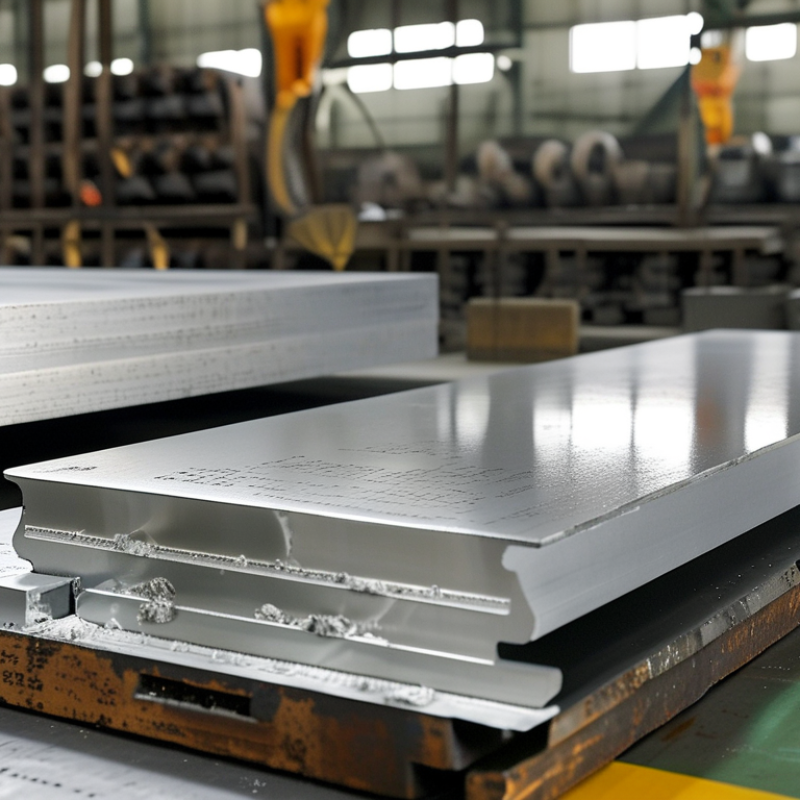
Silver tungsten alloy combines silver’s excellent electrical conductivity with tungsten’s hardness and resistance to heat. It is commonly produced through powder metallurgy, sintering, or silver infiltration. The final structure contains a conductive silver phase and a strong tungsten framework. Its performance depends heavily on composition, particle distribution, and density.
This material is widely used in electrical contacts for relays, circuit breakers, contactors, and control equipment. It can carry substantial current while resisting welding, pitting, and material loss during repeated switching. Some grades also serve in resistance welding electrodes and other components exposed to electrical arcing. In practical design work, engineers check contact pressure, operating current, voltage, switching frequency, and cooling conditions before selecting a grade.
It is not a perfect material. Tungsten improves durability but can reduce conductivity and make machining more difficult. Silver can oxidize less readily than many metals, yet contact performance may still change in polluted or humid environments. Designers sometimes focus only on hardness. That can be misleading. A reliable manufacturer should provide composition ranges, density data, hardness results, electrical conductivity, and batch inspection records. Small differences in infiltration quality can affect service life. Actual testing under the intended load remains important, especially when a contact operates thousands of times each day.
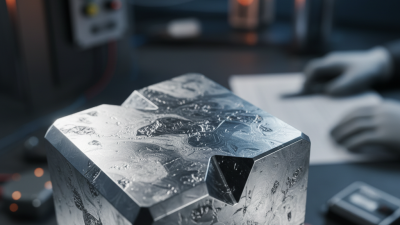
Silver tungsten alloys combine silver’s electrical conductivity with tungsten’s hardness, melting resistance, and arc-erosion control. Common grades contain roughly 20–80% tungsten by weight, depending on the switching duty. Higher tungsten content usually improves wear resistance, but it can reduce conductivity and complicate processing.
A hardness-only comparison can mislead.
The U.S. Geological Survey reported approximately 26,000 metric tons of mined silver and 78,000 metric tons of tungsten in 2023. These supply figures matter because material cost and powder consistency affect manufacturer selection.
ASTM B631 provides a specification framework for silver-tungsten electrical contact materials. For finished switching devices, IEC 60947-4-1 emphasizes electrical endurance, temperature rise, and reliable operation under stated loads.
Testing should include contact resistance, welding tendency, arc erosion, density, and dimensional stability. Test voltage matters.
Tips:
Ask for batch-level composition, hardness, density, and resistance data. Request test conditions, not only pass statements. A supplier’s “high conductivity” claim is incomplete without temperature and current values.
Metallurgical structure also deserves review; uneven tungsten distribution can create local heating and premature contact damage. In my experience, production samples often perform differently from polished laboratory coupons. That gap needs honest investigation.
Independent verification remains wise, especially for high-frequency switching or heavy industrial loads.
How Silver Tungsten Alloys Are Manufactured in China
China’s silver tungsten alloy production relies on powder metallurgy, supported by strong local raw-material capacity. The USGS Mineral Commodity Summaries 2024 reported China’s 2023 tungsten mine production at about 63,000 metric tons. The World Silver Survey 2024 estimated China’s silver mine output at roughly 3,400 metric tons. These resources do not guarantee quality, but they support stable material sourcing.
Manufacturing usually begins with tungsten powder and silver powder. Technicians control particle size, purity, and moisture before mixing. A pressed tungsten skeleton is then sintered at high temperature. Molten silver fills its connected pores during infiltration. Some factories use blended powders instead. The selected route depends on conductivity, hardness, and contact-force requirements. The final material is machined into contacts, plates, or electrodes. It is then checked for density, electrical resistance, hardness, and surface defects.
Process control matters most. A small pore can increase heating during switching. Excess silver may improve conductivity but reduce wear resistance. Production teams often use metallographic inspection and sampling from different batches. In practice, inspection is not always perfect. Even a polished cross-section can hide internal variation. Buyers should request composition records, test methods, and batch traceability before approval. Capability differs between workshops, despite similar equipment.
| Data Dimension | Typical Silver Tungsten Alloy Data | Manufacturing or Quality Details | Engineering Significance |
|---|---|---|---|
| Material Classification | Silver–tungsten composite contact material | A metallic silver phase is combined with a refractory tungsten phase. The two metals have limited mutual solubility, so the material is generally produced by powder-based methods rather than conventional melting. | Combines silver’s electrical and thermal conductivity with tungsten’s hardness, high melting point, and resistance to arc erosion. |
| Common Composition Range | Silver: approximately 20–50 wt%; tungsten: approximately 50–80 wt% | Actual composition is selected according to contact current, voltage, switching frequency, contact force, and required wear resistance. | Higher silver content normally improves electrical and thermal conductivity, while higher tungsten content generally improves hardness and resistance to welding and erosion. |
| Raw Material Preparation | Silver powder and tungsten powder | Powders are inspected for chemical purity, particle-size distribution, morphology, moisture, and contamination before batching. | Stable powder characteristics support consistent density, microstructure, conductivity, and dimensional control. |
| Powder Mixing | Homogeneous blending of silver and tungsten powders | Controlled dry or wet mixing is used to distribute the silver phase and tungsten particles uniformly while limiting segregation and oxidation. | Uniform mixing reduces local differences in conductivity, hardness, arc erosion, and contact resistance. |
| Primary Forming Method | Powder compaction followed by sintering and, where required, infiltration | Powders are compacted into a porous tungsten skeleton or a blended compact. The compact is sintered at high temperature, and molten silver may be infiltrated into connected pores. | Infiltration can produce a dense composite with a continuous silver network and a rigid tungsten framework. |
| Alternative Manufacturing Route | Blended powder metallurgy with liquid-phase sintering | For suitable compositions, silver can form a liquid phase during controlled heating and improve densification around tungsten particles. | Useful for selected geometries and compositions, although process control is needed to limit silver loss, distortion, and phase segregation. |
| Typical Sintering Environment | Vacuum or controlled protective atmosphere | Heating is performed under conditions that reduce oxidation and contamination of the silver and tungsten phases. Temperature profiles are adjusted to the composition and part geometry. | Atmosphere control helps maintain surface quality, bonding, conductivity, and repeatable mechanical properties. |
| Post-Processing | Calibration, machining, grinding, stamping, or surface finishing | After densification, parts may be sized to tolerance and finished to meet the required contact shape, flatness, surface roughness, and assembly dimensions. | Accurate geometry supports reliable contact pressure, stable electrical connection, and consistent switching performance. |
| Silver Distribution | Continuous or interconnected silver phase in a tungsten-rich matrix | Metallographic inspection is used to assess silver continuity, tungsten distribution, pores, cracks, inclusions, and interfacial bonding. | Microstructural uniformity is important for current flow, heat dissipation, and resistance to arc-induced material loss. |
| Density Control | High relative density is targeted; the exact value depends on composition and process | Density is checked by dimensional and mass measurement or by an appropriate material-density method. Excessive residual porosity is normally treated as a defect for high-duty contacts. | Lower porosity generally improves thermal conductivity, electrical stability, mechanical strength, and resistance to arc penetration. |
| Electrical Performance | Conductivity is lower than pure silver but substantially higher than pure tungsten | Electrical resistivity or conductivity is measured on representative samples after processing and finishing. | Provides a practical balance between low contact resistance and the durability required for repeated switching. |
| Thermal Performance | Good heat dissipation compared with many refractory contact materials | Thermal behavior depends on silver content, phase continuity, density, and the quality of the silver–tungsten interface. | Efficient heat removal helps limit temperature rise during continuous current flow and short-duration overloads. |
| Mechanical and Arc Resistance | High hardness and strong resistance to deformation, welding, and arc erosion | Tungsten provides the refractory skeleton, while the composite structure is evaluated through hardness testing and electrical endurance testing. | Suitable for demanding switching duties where contact wear, material transfer, and contact welding must be controlled. |
| Dimensional Quality Control | Controlled thickness, diameter, flatness, and profile | Inspection may include calibrated gauges, optical measurement, coordinate measurement, and visual examination of edges and surfaces. | Consistent dimensions help maintain contact alignment, operating force, and repeatable electrical performance. |
| Typical Applications | High-current electrical contacts, circuit breakers, contactors, relays, and switching components | Application suitability is confirmed through electrical endurance, temperature-rise, contact-resistance, and arc-erosion testing under the intended service conditions. | Used where conductivity, thermal management, mechanical strength, and resistance to severe arcing are required together. |
| Testing and Inspection | Chemical composition, density, microstructure, hardness, electrical resistance, dimensions, and appearance | Production inspection normally combines incoming-material checks, in-process monitoring, final dimensional inspection, and sample-based performance testing. | A multi-stage quality system reduces variation between production batches and supports traceable manufacturing records. |
| Key Manufacturing Risks | Powder segregation, incomplete infiltration, residual porosity, oxidation, cracking, and dimensional distortion | Risks are managed through controlled powder handling, optimized compaction, suitable sintering cycles, atmosphere protection, and metallographic verification. | Process stability is essential because defects can increase contact resistance, accelerate erosion, or reduce mechanical reliability. |
| Selection Guidance | Choose composition and structure according to electrical load and switching duty | Important input parameters include rated current, prospective short-circuit current, operating voltage, duty cycle, mechanical force, environmental conditions, and required service life. | No single silver–tungsten composition is optimal for every application; performance must be matched to the complete operating profile. |
Note: The ranges and process descriptions above are general technical references. Final composition, tolerances, test methods, and acceptance criteria should be confirmed against the applicable product specification and service conditions.
China’s silver tungsten alloy manufacturers are best understood by type, not by production volume alone. Powder-metallurgy specialists mix silver powder with tungsten, then press, sinter, and infiltrate the compact. Their products suit circuit breakers, relays, and high-current switching parts. The Silver Institute’s World Silver Survey 2025 reported record industrial silver demand of about 680.5 million ounces in 2024. That demand supports continued interest in durable contact materials.
Electrical-contact manufacturers form a second group. They usually offer finished rivets, buttons, strips, or assembled contacts. Their strength is practical application knowledge. Buyers should request contact resistance, hardness, density, and arc-erosion results, not only a chemical certificate. IEC 60947 test references can help compare low-voltage switching performance. Small details matter, such as a clean contact surface and consistent button thickness.
Custom alloy suppliers make a third category. They adjust silver-tungsten ratios, dimensions, bonding methods, and packaging for specific equipment. USGS Mineral Commodity Summaries 2025 identifies China as the leading tungsten-mining country, but raw-material strength does not guarantee process quality. A polished catalog proves little. In factory audits, inspect batch records, metallographic images, and sampling procedures. Some suppliers may disclose incomplete test data. That deserves careful questioning, not immediate rejection. Even experienced buyers can overvalue price and overlook porosity, uneven infiltration, or unstable delivery.
The chart compares nominal silver and tungsten content in commonly specified AgW alloy grades. Higher tungsten content generally supports greater resistance to arc erosion and wear, while higher silver content improves electrical and thermal conductivity. Actual specifications may vary by manufacturing standard and application.
A reliable supplier should understand your application, not merely quote a low price. Ask about silver content, tungsten grade, density, conductivity, hardness, and dimensional tolerances. These details affect contact performance, wear resistance, and service life.
Request recent material certificates and independent laboratory reports. Check whether test results match the exact production batch. A factory visit can reveal powder handling, sintering equipment, inspection areas, and storage conditions. Look for traceable raw materials and documented quality procedures. ISO certification can help, but it should not replace technical verification.
Start with samples made to your drawings. Measure them independently before approving a larger order. Discuss tooling ownership, minimum quantities, lead times, packaging, and corrective actions in writing. Ask how rejected parts are identified and controlled. Clear answers matter.
Price is only one signal.
A polished website proves little. In practical sourcing, small inconsistencies often appear between samples and mass production. That risk deserves attention. I would compare at least three qualified suppliers, then score quality, communication, capacity, and evidence separately. A supplier that admits a limitation may be more dependable than one promising everything. Regular inspections remain useful, even after several successful shipments.