How to Choose the Best Silver Tungsten Alloy for Your Needs?
Selecting the right Silver Tungsten Alloy can be challenging. This material is renowned for its high density and excellent electrical conductivity. It is widely used in electrical contacts and various industrial applications. However, not all silver tungsten alloys are created equal.
Different suppliers offer various compositions. The properties of your chosen alloy depend heavily on its specific formulation. This can impact performance in distinct environments. It’s essential to consider factors like wear resistance, thermal stability, and machining capabilities.
Finding the best option demands careful evaluation. Engage with experts who understand these materials. They can provide guidance tailored to your needs. In an evolving market, staying updated can prevent costly mistakes. The right choice can enhance efficiency and reduce downtime in your operations.
Understanding Silver Tungsten Alloys and Their Properties
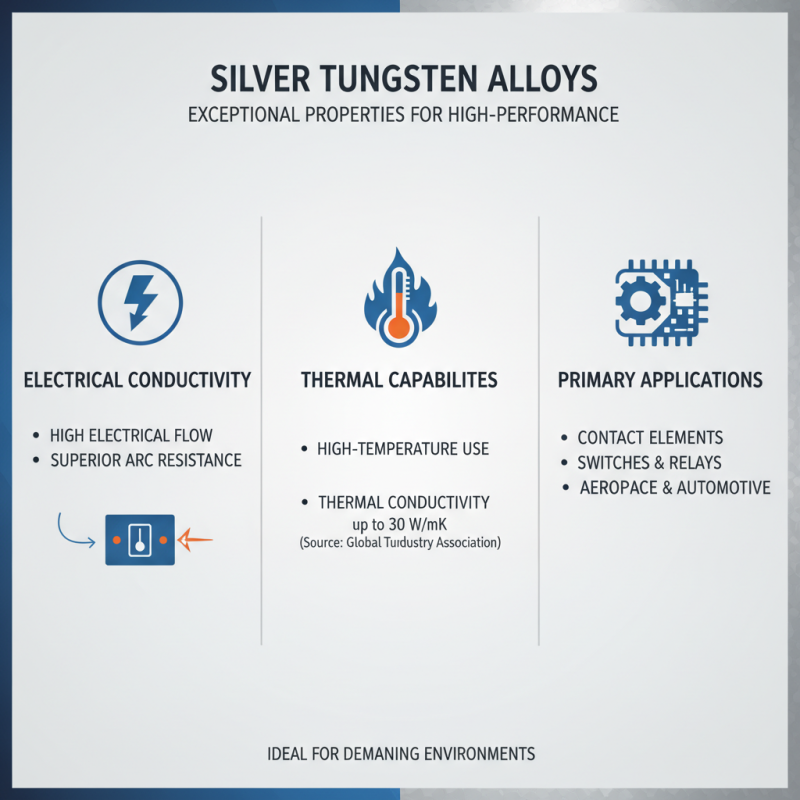
Silver tungsten alloys are notable for their exceptional properties. These materials excel in high-temperature applications, making them ideal for contact elements. They often showcase a high level of electrical conductivity and arc resistance. According to a report by the Global Tungsten Industry Association, the thermal conductivity of silver tungsten alloys can reach up to 30 W/mK, which is significantly superior to other metals.
The versatility of silver tungsten alloys stems from their composition. Generally, the silver content ranges from 10% to 90%, impacting properties such as hardness and melting point. Higher silver content leads to increased ductility, while lower percentages enhance wear resistance. However, with increased hardness, machinability may become a concern. Some companies have reported that achieving optimal balance in these alloys often requires experimentation.
Understanding the properties of silver tungsten alloys helps in selecting the best fit for specific applications. Various studies indicate that the right alloy can improve the longevity and efficiency of components used in electrical contacts. Engineers emphasize the importance of precise formulation. A well-crafted alloy can perform consistently under demanding conditions. Each application may present unique challenges, requiring careful consideration of both performance and reliability.
Assessing Your Specific Application Needs for Alloy Selection
Choosing the right silver tungsten alloy begins with understanding your specific application needs. Consider the environment where the alloy will be used. Are there extreme temperatures or corrosive elements? Silver tungsten alloys have unique properties that might be suitable for high-stress applications, such as electrical contacts in harsh conditions.
Your project requirements also dictate the alloy composition. Different ratios of silver and tungsten can affect conductivity and hardness. A higher silver content often improves electrical performance. However, too much silver may reduce hardness, which is crucial for certain applications. Balancing these properties is essential.
Manufacturing processes also play a role in selection. Some applications may require intricate shapes while others focus on bulk strength. How complex is your design? If you are unsure, consulting with industry experts can provide valuable insights. They can help navigate through the choices, ensuring the alloy you select meets both performance and durability needs.
Evaluating the Key Performance Characteristics of Different Alloys
Choosing the right silver tungsten alloy requires careful consideration of performance characteristics. The key properties to evaluate include thermal conductivity, density, hardness, and resistance to wear. According to a recent industry report, silver tungsten alloys often contain between 30% to 70% tungsten. The varying percentages significantly affect their performance. For instance, higher tungsten content increases density and hardness but may reduce thermal conductivity.
Thermal management is crucial in applications where heat dissipation is necessary. A specific alloy formulation might demonstrate mechanical hardness of over 1000 HV, while another could show over 150 W/mK for thermal conductivity. Understanding these nuances is essential. Wear resistance varies widely; some alloys withstand extreme conditions better than others. Enhanced wear resistance can improve product lifespan, reducing overall replacement costs.
Users should consider the specific requirements of their applications. Balancing required hardness with thermal performance can be challenging. Data indicates that not all alloys are suitable for high-frequency switching applications. Testing different compositions in real-world conditions can yield insights into performance gaps. Continuous evaluation allows users to refine choices, adapting to evolving needs.
How to Choose the Best Silver Tungsten Alloy for Your Needs?
| Alloy Type |
Silver Content (%) |
Hardness (HV) |
Density (g/cm³) |
Electrical Conductivity (% IACS) |
Melting Point (°C) |
| AgW90 |
90 |
280 |
18.0 |
80 |
3150 |
| AgW80 |
80 |
300 |
17.8 |
75 |
3100 |
| AgW70 |
70 |
320 |
17.5 |
70 |
3050 |
| AgW60 |
60 |
350 |
17.2 |
65 |
3000 |
Comparing Cost and Availability of Silver Tungsten Alloys
When selecting a silver tungsten alloy, cost and availability play crucial roles. Silver tungsten alloys vary in price based on their composition and market demand. Generally, these alloys are more expensive than regular tungsten due to silver's high value. This can be a significant factor for individuals or businesses on a budget.
Finding a reliable supplier is essential. Not all suppliers offer the same quality or pricing. Prices can differ based on the region and the sourcing of raw materials. Some alloys may be hard to find, especially in specific grades. Small quantities may result in higher costs. Therefore, researching local and global suppliers is vital.
Understanding the specific application can also affect costs. Some industries require specialized alloys that may be less readily available. This might lead to delays in procurement. Always consider the balance between cost, availability, and quality. Forgetting to check these aspects may result in unforeseen complications down the line.
Comparison of Silver Tungsten Alloys: Cost and Availability
Making an Informed Decision Based on Technical Specifications and Testing
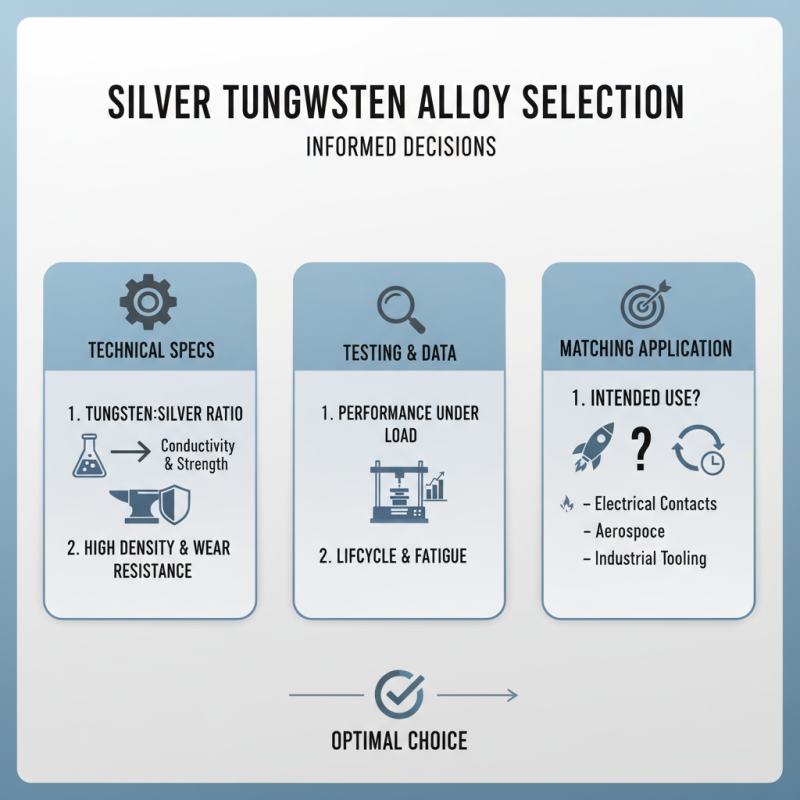
When selecting a silver tungsten alloy, understanding its technical specifications is crucial. These alloys are known for their high density and excellent wear resistance. Look for information on the specific ratios of tungsten to silver, as this affects conductivity and strength. Different applications require different properties, so ensure the alloy matches your intended use.
Testing is essential in making an informed decision. Review any available test data on the alloy's performance under various conditions. Common tests include hardness, thermal conductivity, and resistance to corrosion. Gathering data from credible sources can help validate your choice. It’s important to consider that some specifications may not fully capture real-world performance.
Be aware of the variability in production methods. Each manufacturing process can introduce slight differences in the alloy's properties. While some products may look perfect on the surface, hidden flaws may impact overall performance. Always weigh your options carefully and consider seeking expert advice to enhance your understanding of any chosen alloy.