2026 How to Choose the Best Tungsten Carbide Alloy for Your Needs?
Choosing the right Tungsten Carbide Alloy can be challenging. With various options available, it's crucial to understand your specific needs. Tungsten Carbide Alloy is renowned for its hardness and durability. It's widely used in manufacturing tools and components that require high resistance.
Knowing the application is key. Different industries demand different properties from their Tungsten Carbide Alloys. For example, some applications need enhanced wear resistance, while others may prioritize toughness. It’s easy to overlook the nuances that affect performance. Not all Tungsten Carbide Alloys are created equal; factors like grain size and binder material can make a significant difference.
Consider the balance between cost and quality. It's tempting to choose the cheapest option. However, investing in a high-quality Tungsten Carbide Alloy can lead to better long-term results. Some might feel overwhelmed by the choices. Seeking expert advice can provide clarity and ensure your decision is informed.

Understanding Tungsten Carbide Alloys: An Overview
Tungsten carbide alloys are crucial in various industries due to their strength and durability. These materials are a combination of tungsten and carbon, resulting in a highly resilient compound. According to recent industry reports, tungsten carbide has a hardness of approximately 9 on the Mohs scale, making it ideal for applications where wear resistance is essential. These qualities facilitate use in mining, tools, and manufacturing.
When selecting the right tungsten carbide alloy, consider factors like hardness, cobalt content, and grain size. Alloys with higher cobalt content offer better toughness. However, they may sacrifice some hardness. Depending on the application's function, balancing these properties is key. The right choice can enhance performance and longevity.
**Tips:** Assess your operational environment before making a decision. A more abrasive environment may require harder alloys. Additionally, consult material data sheets for specific alloy compositions. Understanding these specifications can prevent costly mistakes. Remember, even minor variations can significantly impact performance and reliability in demanding applications.
Comparison of Tungsten Carbide Alloys
Key Properties of Tungsten Carbide and Their Importance
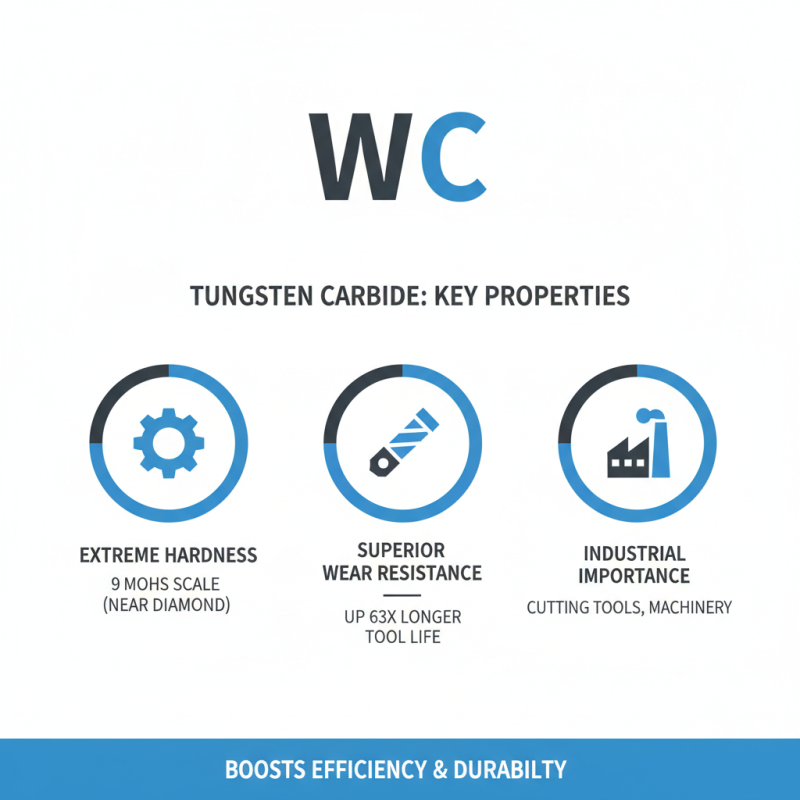
Tungsten carbide is a vital material in various industries, known for its exceptional hardness and wear resistance. With a hardness rating of 9 on the Mohs scale, it is nearly as hard as diamond. This makes it ideal for applications that require high durability, such as cutting tools and industrial machinery. A report from the International Journal of Advanced Manufacturing Technology highlights that tungsten carbide tools can outlast conventional steel tools by up to six times, underscoring their crucial role in manufacturing efficiency.
The key properties of tungsten carbide include its high compressive strength and thermal stability. Compressive strength ranges from 1700 to 2400 MPa, depending on the specific alloy composition. This characteristic allows it to withstand significant force without deforming. In high-temperature applications, its thermal stability prevents structural failures, a critical factor in aerospace and automotive industries. However, the brittleness of tungsten carbide at lower temperatures can be a limitation, requiring careful consideration in application.
When selecting tungsten carbide alloys, one must also consider factors like grain size and binder material. Finer grain sizes can enhance toughness and wear resistance. Nonetheless, users often overlook the impact of the binder phase, which can affect the overall performance. Choosing the right alloy involves balancing these properties based on specific needs. For optimal results, consulting with materials experts can lead to more informed decisions that reflect the complexities of tungsten carbide.
Factors to Consider When Selecting Tungsten Carbide Alloys
When selecting a tungsten carbide alloy, specific factors are crucial for optimal performance. The hardness and wear resistance of the alloy are primary considerations. Different applications require varying levels of toughness. For instance, applications in mining demand extremely hard alloys that can withstand intense wear. However, too much hardness may lead to brittleness, which requires careful selection.
Another key aspect is the alloy's composition. Tungsten carbide typically combines tungsten with cobalt or nickel. The proportion of these materials influences the alloy's properties. A higher cobalt content enhances ductility but reduces hardness. On the other hand, too much tungsten can create a rigid structure. Achieving the right balance is essential for your needs.
Cost-effectiveness is also a relevant consideration. Higher quality alloys often come at a premium price. However, choosing a cheaper option can lead to increased wear and replacement costs later. Evaluating long-term benefits versus initial investment can be complex. In-depth research and expert consultation may be necessary to make the best choice.
Common Applications of Tungsten Carbide Alloys
Tungsten carbide alloys are known for their extreme hardness and durability. They find common applications in various industries due to these properties. One notable use is in cutting tools. These tools benefit from tungsten carbide's resistance to wear and tear. They can retain sharp edges longer than many other materials.
Another application lies in mining and drilling industries. Tungsten carbide inserts are used in drill bits and mining equipment. This allows for efficient performance in harsh conditions. The alloy's ability to withstand high temperatures and pressures makes it essential for such applications.
However, selecting the right tungsten carbide alloy can be challenging. Different compositions cater to different needs. Understanding your specific requirements is crucial. For example, an alloy designed for drilling may not suit cutting applications. Evaluate the conditions where the alloy will be used. Usage patterns can influence performance significantly.
Comparative Analysis of Different Tungsten Carbide Alloys
When choosing a tungsten carbide alloy, it is essential to consider various factors. Each alloy exhibits unique properties tailored to specific applications. For example, a recent industry report noted that cobalt-based tungsten carbide alloys are favored in high-load applications due to their excellent wear resistance and toughness. On the other hand, nickel-bonded tungsten carbide performs well in environments featuring corrosion. Understanding these distinctions is crucial.
Mechanically, the hardness of tungsten carbide alloys varies significantly. Alloys can range from 1200 to 2500 HV on the Vickers hardness scale. Such a range provides options for applications from drilling to wear protection. However, selecting the wrong hardness can lead to premature failure. Industry data suggests that softer alloys may wear out more quickly in abrasive conditions. This highlights the need for careful analysis before making a choice.
In terms of cost, the price reflects the alloy's composition and performance characteristics. Some high-performance alloys may seem expensive upfront. However, their durability can lead to lower long-term costs due to reduced maintenance and replacement needs. Balancing initial investment with performance requirements is critical. Potential buyers should reflect on their specific operational demands and the alloy's properties before making a final decision.
2026 How to Choose the Best Tungsten Carbide Alloy for Your Needs? - Comparative Analysis of Different Tungsten Carbide Alloys
| Alloy Type |
Hardness (HRA) |
Density (g/cm³) |
Wear Resistance |
Applications |
| Standard Tungsten Carbide |
88-90 |
14.5 |
Moderate |
Cutting Tools |
| Cobalt-Bonded Tungsten Carbide |
87-89 |
14.9 |
High |
Mining Tools |
| Nickel-Bonded Tungsten Carbide |
90-92 |
15.2 |
Very High |
Oil & Gas Industry |
| Titanium-Modified Tungsten Carbide |
85-88 |
14.7 |
High |
Aerospace Components |
| Ultra-Fine Tungsten Carbide |
90-94 |
15.0 |
Extremely High |
Precision Tools |