How to Choose Tungsten Tipped Tools for Global Buyers?
Choosing Tungsten Tipped tools for global buyers is not simply a price comparison. It is a technical decision involving material grade, cutting conditions, supplier reliability, and application risk. A tool that performs well on cast iron may fail quickly on stainless steel or abrasive composites. Small differences matter.
Dr. H. K. Tönshoff, a respected researcher in cutting technology, stated, “Tool performance depends on matching the tool material to the workpiece and cutting conditions.” This principle remains practical today. Buyers should examine carbide grade, tip geometry, brazing quality, edge preparation, and substrate toughness. Ask for test data, dimensional tolerances, material certificates, and consistent batch records. A polished photograph is not evidence of quality.
Real purchasing experience also shows a less comfortable truth. The cheapest Tungsten Tipped tool can become the most expensive choice after premature wear, vibration, or production delays. It happens. Before placing a large order, request samples and test them under actual feed rates, speeds, coolant conditions, and workpiece hardness. Compare tool life, surface finish, and replacement time.
Global sourcing adds further questions. Can the supplier communicate clearly? Are packaging and labeling suitable for international transport? Does the manufacturer provide traceable documentation and responsive technical support? Buyers should also verify applicable import, safety, and environmental requirements in their destination market. No supplier can remove every uncertainty. Careful evaluation can reduce it. The right choice balances performance, consistency, service, and total operating cost rather than unit price alone.

Classify the Cutting Task by ISO 513 Tool-Material Groups
How to Choose Tungsten Tipped Tools for Global Buyers?
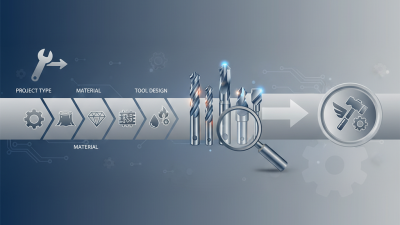
Classify the cutting task by ISO 513 tool-material groups before choosing a tungsten tipped tool. The workpiece matters more than the tool’s appearance. Group P covers steels and usually requires controlled wear resistance. Group M covers stainless steels, where toughness helps resist chipping. Group K suits cast iron, often producing abrasive dust and interrupted cuts.
Group N covers aluminium, copper, and other non-ferrous materials. Sharp edges and polished surfaces can reduce built-up edge. Group S includes titanium and heat-resistant alloys, which create high heat and cutting pressure. Group H covers hardened materials and demands strong edge support. These groups guide selection, but they do not replace a full machining review.
Check hardness, tensile strength, chip control, coolant, and machine rigidity. A rigid machine may accept a harder carbide grade. A weaker setup often needs a tougher grade instead. Watch the cutting edge after several passes. A bright flank wear line suggests abrasion, while small edge breaks may indicate impact or insufficient toughness. Do not trust a color chart alone. The first classification can still be wrong.
I have seen buyers select tools by price and advertised hardness, then overlook interrupted cuts. That decision looked efficient at first. It was not. Record tool life, surface finish, cutting sound, and actual production cost. ISO 513 provides a reliable technical language for global purchasing, but shop-floor evidence should refine the final choice.
How to Choose Tungsten Tipped Tools for Global Buyers?
Classify the cutting task by ISO 513 tool-material groups
ISO 513 classifies cutting applications by workpiece material. Tungsten carbide-tipped tools are commonly selected for groups P, M, K and N, while groups S and H generally require more specialized carbide grades, geometries and cutting parameters. The values show the number of representative material families listed for each ISO group and are intended as a classification guide, not a cutting-speed recommendation.
Compare WC–Co Grades: 6–15% Cobalt and 1,300–2,000 HV Hardness
Choosing tungsten tipped tools for global buyers starts with the WC–Co grade, not the catalog photograph. Cobalt levels from 6% to 15% create different performance balances. Lower cobalt generally offers higher hardness and stronger wear resistance. Higher cobalt usually improves toughness under impact or interrupted cutting.
The stated hardness range, about 1,300–2,000 HV, needs careful interpretation. A 6% cobalt grade may approach the harder end, especially with fine carbide grains. A 15% cobalt grade may sit closer to 1,300 HV but resist cracking better. Hardness alone can mislead. Grain size, carbide distribution, edge geometry, and sintering quality also affect service life.
Match the grade to the real cutting condition. Dry machining, abrasive minerals, and stable finishing cuts often favor harder grades. Vibration, shock loading, and uneven workpieces may require more cobalt. Check the supplier’s test method, hardness tolerance, transverse rupture strength, and dimensional inspection records. Ask for batch-level certificates, not only general product sheets.
Field experience matters.
Before ordering, send details about material hardness, cutting speed, feed rate, coolant, and tool diameter. A trial batch can reveal issues that laboratory values hide. I have seen buyers select maximum hardness, then face premature edge chipping because the machine setup was unstable. The harder option looked better on paper, but the application needed toughness. Performance data should guide the purchase, while practical testing should challenge the first assumption.
Select Coatings by Heat Resistance: TiAlN Performs Up to 800°C
Global buyers should choose tungsten-tipped tools by heat exposure, not catalog hardness alone. TiAlN is a strong option for dry or high-speed cutting. ASM Handbook, Volume 16, reports oxidation resistance approaching 800°C for TiAlN systems, depending on chemistry and testing. That figure needs caution. It describes coating behavior, not guaranteed cutting temperature.
At the machine, watch chip color, flank wear, and edge chipping. A glowing chip can signal excessive heat. Select TiAlN when hardened steel, stainless steel, or interrupted cuts create thermal stress. For aluminum, the coating choice may differ because built-up edge remains a concern. Check substrate toughness, edge preparation, and tool geometry together. ISO 1832 insert codes help buyers compare dimensions, but they cannot replace supplier test data. Request trials at the intended speed, feed, and cutting depth.
A 2023 professional cutting-tool review connected coating performance with substrate preparation and deposition quality, not coating name alone. This matters during cross-border purchasing. Ask for oxidation-test conditions, coating thickness, adhesion results, and batch traceability. I once treated the 800°C limit as universal. That was too simple. Coolant, workpiece hardness, and air exposure changed the result. Use the figure as a screening point, then validate one tool on the actual machine. Small tests save expensive mistakes.
Verify Global Compliance Through ISO 9001, RoHS, REACH, and Traceability
When global buyers choose tungsten tipped tools, compliance should be checked beside cutting performance. A clean edge means little if documentation is incomplete. Ask for the manufacturer’s current ISO 9001 certificate, certification scope, issuing body, and validity dates. ISO 9001 supports controlled processes, but it does not automatically prove product compliance. That distinction is easy to miss.
For material and chemical review, request a product-specific RoHS declaration and REACH information. Check the tool, coating, soldered parts, packaging, and supplied accessories. A generic statement may not cover every configuration. Review restricted-substance test reports, laboratory details, test dates, and sample identification. Requirements can differ by destination and product use. Local review remains necessary.
Traceability should follow each tool from raw carbide batch to shipment carton.
Look for lot numbers, inspection records, production dates, and retained samples. Ask whether a defect can be linked to a furnace cycle, grinding line, or operator check. In real procurement, missing records often appear after an urgent order. That is a warning. I would also compare certificates against the actual factory and address, not just a PDF filename. No system is perfect. Buyers should record unanswered questions, verify renewals, and approve tools only when evidence matches the delivered specification.