How to Use Dth Bits for Enhanced Data Management in 2025
In the rapidly evolving landscape of data management, the integration of Dth Bits stands out as a transformative development set to redefine how organizations handle and analyze information by 2025. As we move deeper into an era characterized by exponential data growth, experts are turning their attention to innovative solutions that enhance efficiency and accuracy in data processes. Notably, Dr. Jane Harlow, a leading authority in data analytics, emphasizes the significance of Dth Bits by stating, "Harnessing the potential of Dth Bits will empower organizations to not only manage vast datasets but to extract actionable insights in real time."
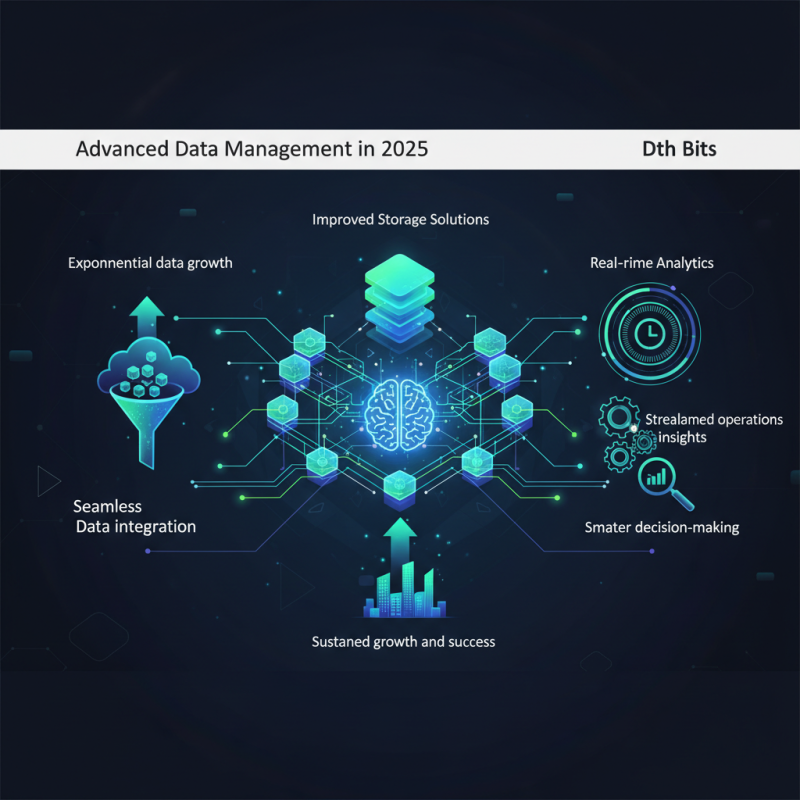
The application of Dth Bits is poised to enhance data management strategies across various industries, facilitating seamless data integration, improved storage solutions, and real-time analytics. As businesses grapple with the increasing complexity of data systems, leveraging Dth Bits can provide the necessary edge to streamline operations and make informed decisions. The transition to this advanced methodology offers a pathway to a more organized and responsive data ecosystem, ensuring that companies remain competitive in an information-driven world.
In conclusion, as we approach 2025, the adoption of Dth Bits will likely be a game-changer for organizations dedicated to optimizing their data management practices. By embracing this innovative technology, companies can pave the way for a future of enhanced data processes and smarter decision-making, ultimately leading to sustained growth and success.
Understanding Dth Bits and Their Role in Data Management
Dth bits represent a revolutionary approach to data management that centers around the concept of "data as a native entity." In this context, they serve as discrete units of data that can be manipulated and analyzed in real-time, drastically enhancing the efficiency of data processing. By allowing data to carry its own context and meaning, Dth bits streamline workflows, minimize the dependency on traditional relational databases, and facilitate dynamic data interactions. This holistic view not only simplifies data retrieval but also enables more intelligent data applications to emerge, which can lead to better insights and decision-making.
Understanding the role of Dth bits in data management involves recognizing their potential to transform how organizations handle information. As data continues to grow exponentially, traditional methods of storage and retrieval can become cumbersome, leading to bottlenecks and inefficiencies. Dth bits address this challenge by providing a flexible framework that integrates seamlessly with emerging technologies like artificial intelligence and machine learning. This integration empowers businesses to harness the full potential of their data, promoting agility and responsiveness in an ever-evolving digital landscape. The future of data management, therefore, hinges on leveraging these innovative elements to create a more responsive, insightful, and effective data ecosystem.
Data Management Efficiency Using Dth Bits in 2025
This bar chart shows the projected data management efficiency using Dth Bits across four quarters in 2025. Notice how the efficiency is expected to improve steadily as organizations adapt to advanced data management techniques.
Benefits of Using Dth Bits for Enhanced Data Control
The adoption of Dth Bits in data management is set to revolutionize how organizations handle their data in 2025. One of the primary benefits of utilizing Dth Bits is the enhancement of data control capabilities. According to a report by the International Data Corporation, organizations leveraging advanced data management technologies like Dth Bits can achieve up to a 40% improvement in data retrieval speeds. This means that businesses can access critical information faster, which is crucial for making informed decisions in today’s fast-paced environment.
Moreover, the effectiveness of Dth Bits extends beyond speed; it also significantly improves data integrity and security. A study conducted by Gartner estimates that 70% of data breaches are a result of inadequate data governance. By implementing Dth Bits, organizations can leverage more robust tracking and auditing features, allowing them to maintain higher standards of data quality and security. This proactive approach not only mitigates risks associated with data loss and breaches but also instills greater confidence among stakeholders regarding the management of sensitive information.
Additionally, enhanced data control through Dth Bits facilitates better compliance with regulatory requirements. As data regulations continue to evolve, businesses must adapt their data management practices accordingly. Research by Forrester indicates that companies with advanced data management systems report a 50% reduction in compliance-related issues. By integrating Dth Bits into their data management strategy, organizations can ensure more streamlined compliance processes, ultimately leading to reduced operational disruptions and enhanced overall efficiency.
Implementing Dth Bits: Step-by-Step Guide for 2025
Implementing Dth bits for enhanced data management in 2025 requires a systematic approach to ensure optimal results. The first step involves identifying the specific data needs of your organization. Assess the types of data you generate and manage, and evaluate how Dth bits can streamline this process. Consider conducting a data audit to uncover inefficiencies and areas where Dth bits can add value, such as improving speed, accuracy, and accessibility of data.
Once the requirements are established, the next phase involves integrating Dth bits into your existing data systems. This includes selecting appropriate tools and technologies that support Dth bits and training your team on these new processes. Setting up a pilot program is recommended; this allows you to test the integration in a controlled environment before full deployment. Utilize feedback from the pilot to refine the implementation process, addressing any challenges that may arise.
Finally, establish a continuous monitoring and evaluation system to assess the effectiveness of Dth bits over time. Regularly review your data management objectives and adjust your strategies as needed to align with evolving business goals. This iterative process ensures that your organization fully leverages Dth bits to enhance data management, driving efficiency and innovation well into the future.
How to Use Dth Bits for Enhanced Data Management in 2025 - Implementing Dth Bits: Step-by-Step Guide for 2025
| Data Dimension |
Description |
Value |
Impact Level |
| Data Volume |
Total amount of data processed |
1.5 TB |
High |
| Data Quality |
Accuracy and completeness of data |
96% |
Medium |
| Data Processing Time |
Time taken to process data |
2 hours |
High |
| User Engagement |
Interaction level of users with data |
75% |
Medium |
| Cost Efficiency |
Cost savings through data management |
30% |
High |
Challenges and Solutions in Using Dth Bits for Data Management
As organizations increasingly embrace digital transformation, the management of vast amounts of data has become a critical challenge. Utilizing Dth bits can enhance data management by providing a more efficient structure for data storage and retrieval. However, this transition is not without its difficulties. Data integrity and accuracy remain paramount concerns, as organizations may struggle to ensure that their Dth bit implementations are both secure and reliable. Furthermore, the limited understanding of Dth bit technology among various stakeholders can hinder successful adoption.
To navigate these challenges, it is essential to focus on education and training. Regular workshops and training sessions can equip teams with the necessary knowledge to implement Dth bit systems effectively. Additionally, organizations should collaborate with experts who can provide guidance on best practices and troubleshooting techniques tailored to their specific needs.
Tips: Start with a small-scale Dth implementation to test its effectiveness and understand the potential issues. Encourage open communication among team members to share insights and solutions as challenges arise. Prioritize data validation processes to maintain the integrity of information as you transition to using Dth bits. By addressing these challenges head-on, companies can develop robust data management strategies that leverage the full potential of Dth bits.
Future Trends in Dth Bits and Data Management Practices
As we look towards 2025, the landscape of data management is poised to undergo significant transformations, particularly with the advent of Dth bits. These advanced data structures are predicted to enhance how organizations store, retrieve, and process information. One key trend is the integration of artificial intelligence and machine learning with Dth bits, which will enable automated data analysis and more intelligent decision-making frameworks. This synergy will not only improve efficiency but also ensures that businesses stay agile in a rapidly evolving market.
Tips for businesses considering Dth bits for their data management systems include starting with a hybrid approach. By combining traditional data management practices with Dth bits, organizations can gradually transition and adapt to new technologies without overwhelming their existing systems. Additionally, investing in training and development for staff to understand the implications of Dth bits will be crucial. Encouraging a culture of innovation among teams will facilitate a smoother integration of new practices.
Another popular trend is the emphasis on data privacy and security. As Dth bits allow for more granular data handling, organizations will need to ensure they comply with privacy regulations while leveraging the advantages of these advanced technologies. This might involve implementing robust encryption methods and conducting regular audits to maintain compliance and protect sensitive information. Adopting a proactive stance on data governance will be essential for thriving in the data-driven landscape of the future.