Leave Your Message

Leave your message now to get your free sample and discount price

2026 Top Lathe Insert Types for Global Buyers to Consider?

In the world of precision machining, the choice of a lathe insert is crucial. For manufacturers and buyers globally, understanding the various types of lathe inserts can significantly impact productivity and efficiency. Lathe inserts play a vital role in shaping materials with precision. Selecting the right type can enhance tool life and improve surface finish.

As we look toward 2026, several insert types are gaining attention. Inserts made from advanced materials, like ceramics and carbide, offer durability. Yet, they can present challenges in certain applications. An insert that excels in one project may not perform adequately in another. It's essential to assess specific needs carefully.

Many buyers face the dilemma of choosing inserts that align with their operations. While some prefer high-speed cutting, others may need inserts for tougher materials. The right lathe insert can optimize both performance and cost. However, it's imperative to reflect on past choices. Continuous improvement and adaptation are necessary in this fast-evolving market.

2026 Top Lathe Insert Types for Global Buyers to Consider?

Top Lathe Insert Types for 2026: An Overview for Global Buyers

As the manufacturing landscape evolves, lathe inserts remain pivotal. In 2026, global buyers are tasked with selecting the best types for their needs. Understanding the various options is essential for effective machining processes.

The latest advancements in insert materials and coatings enhance durability and performance. Cermet and ceramic inserts are gaining attention for their hardness and wear resistance. These materials can withstand extreme conditions, offering longer tool life. Buyers must evaluate the specific applications to maximize efficiency.

Lathe insert geometries also play a crucial role. Specific shapes improve chip control and surface finish. However, there’s a delicate balance. A wrong choice can lead to poor performance and increased costs. Buyers should remain informed about industry trends and seek expert advice when needed. Achieving the right fit requires careful consideration and a willingness to adapt.

2026 Top Lathe Insert Types for Global Buyers to Consider

Insert Type Material Application Coating Type Preferred Industry
Cermet Inserts Cermet Finishing AlTiN Automotive
Carbide Inserts Carbide Roughing TiN Machinery
Ceramic Inserts Ceramic High-Speed Cutting ZrO2 Aerospace
High-Performance Inserts High-Speed Steel General Machining Multi-Layer Energy
Polycrystalline Diamond (PCD) Inserts Diamond Non-Metal Machining None Woodworking

Key Features to Consider When Selecting Lathe Inserts

2026 Top Lathe Insert Types for Global Buyers to Consider?

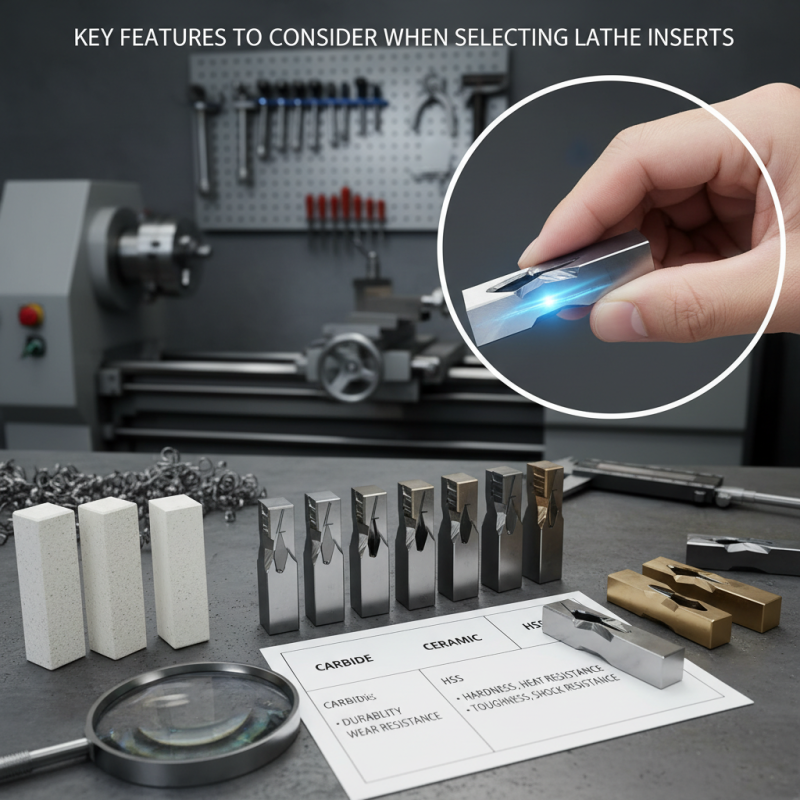
When selecting lathe inserts, several key features come into play. First, consider the material type. Inserts made from carbide, ceramic, or high-speed steel can all offer unique benefits. Carbide inserts are often preferred for their durability and wear resistance. They excel in high-speed machining. Each material has its pros and cons, requiring careful evaluation based on your specific needs.

The geometry of the insert is another critical factor. Shapes such as triangular, square, or round can significantly influence cutting performance. For instance, triangular inserts typically provide sharp cutting edges, enhancing chip removal. However, not all geometries suit every application. The insert's clearance and rake angles also play pivotal roles in achieving optimal tool performance.

Finally, while selecting an insert, it's essential to consider the coatings. Coated inserts can greatly improve tool life and performance. Various coatings, like titanium nitride (TiN) or aluminum oxide, provide different levels of hardness and oxidation resistance. However, excessive reliance on coatings may also lead to unexpected tool wear. Therefore, balance and testing are necessary before a final decision.

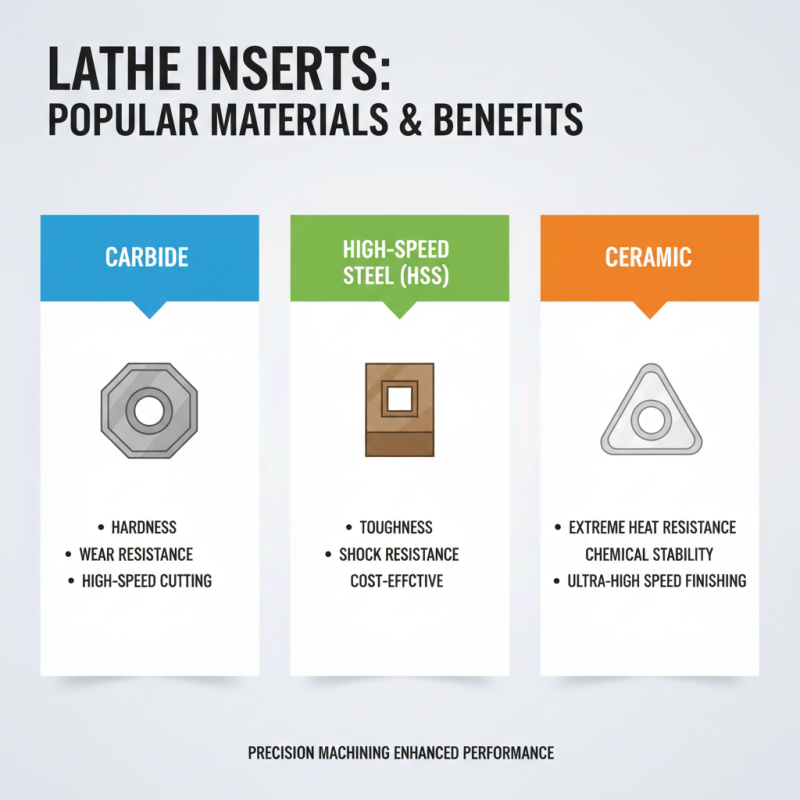
Popular Materials Used in Lathe Inserts and Their Benefits

2026 Top Lathe Insert Types for Global Buyers to Consider?

Lathe inserts are vital for precision machining. The right materials can significantly enhance performance. Commonly used materials include carbide, high-speed steel, and ceramic. Each material has unique benefits that cater to diverse machining needs.

Carbide inserts are popular due to their hardness. They withstand high temperatures and offer excellent durability. However, they can be brittle. Operators must handle them carefully to avoid chipping. High-speed steel inserts provide versatility. They are easy to sharpen and maintain. Yet, they may not last as long in high-demand applications.

Ceramic inserts are lightweight and resistant to wear. They excel in high-speed operations. Still, they can be less effective on tougher materials. Machinists often struggle to find the perfect balance. Choosing the right insert can lead to improved productivity, but it requires trial and error. Understanding the specific applications is crucial for optimal results.

Comparative Analysis of Coated vs. Uncoated Lathe Inserts

When choosing lathe inserts, buyers often face a critical decision: coated or uncoated options. Coated inserts feature a thin layer of material that enhances hardness and wear resistance. This coating can significantly extend tool life, making it a preferred choice for high-volume production environments. The coating helps reduce friction and improves cutting performance, especially in tough materials.

On the other hand, uncoated lathe inserts still hold value. They are typically less expensive and more suitable for softer materials. Their simpler construction offers ease of replacement without a steep learning curve for operators. However, they may wear out faster under high-stress conditions. Buyers must weigh these factors against their production needs.

Understanding the specific requirements of your machining tasks is essential. For instance, if you work with hard metals regularly, coated inserts may offer better longevity. But if your projects vary widely, uncoated may serve well without added cost. Reflecting on these choices can enhance decision-making in the long run. Adaptability is key in a rapidly evolving market, making awareness of these differences crucial for optimal results.

Future Trends in Lathe Insert Technology for Global Markets

The landscape of lathe insert technology is rapidly evolving due to advancements in materials and manufacturing processes. Industry reports indicate a projected growth of over 6% in the lathe insert market by 2026, with a significant shift towards ceramic and cermet insert types. Global buyers should pay attention to these trends as they indicate a move towards greater efficiency and durability, essential for demanding applications in aerospace and automotive sectors.

Recent research highlights the increasing demand for precision tooling in small batch production. This has led to innovations in insert geometry and coatings to enhance performance and tool life. For instance, advanced PVD coatings are expected to improve wear resistance significantly. However, there's still a gap in understanding the optimal conditions for these inserts, which can lead to underperformance if not properly matched with the application. Buyers must be vigilant in selecting the right insert types while considering their unique operational environments.

Sustainability is another critical trend shaping the future of lathe inserts. Many manufacturers are exploring eco-friendly materials and recycling processes, responding to global calls for reduced environmental impact. However, the integration of these sustainable practices remains inconsistent across the industry. This inconsistency may challenge buyers seeking reliable performance alongside environmental responsibility. Thus, continuous education and adaptation are necessary for both manufacturers and users in this evolving landscape.

2026 Top Lathe Insert Types for Global Buyers to Consider