2025 Top 5 Tungsten Carbide Applications: Industry Insights and Market Trends
In recent years, Tungsten Carbide has emerged as a critical material across various industries due to its unparalleled hardness and wear resistance. According to a report by Market Research Future, the global Tungsten Carbide market is projected to reach USD 28.5 billion by 2025, growing at a compound annual growth rate (CAGR) of 6.7%. This robust growth underscores the increasing demand for Tungsten Carbide applications in sectors such as mining, construction, and manufacturing, where durability and efficiency are paramount.
As industries evolve, the versatility of Tungsten Carbide continues to expand, leading to innovative applications that cater to emerging technological advancements. From cutting tools and drilling equipment to wear-resistant materials, its applications are diverse and ever-growing. The latest industry insights indicate a significant trend towards environmentally friendly practices, prompting manufacturers to explore sustainable methods of producing Tungsten Carbide components, further enhancing its appeal in today's market.
In conclusion, understanding the top applications of Tungsten Carbide is essential for stakeholders aiming to navigate the evolving landscape of this critical material. By analyzing market trends and industry insights, businesses can capitalize on the opportunities presented by Tungsten Carbide, positioning themselves for success in an increasingly competitive marketplace.
Top Applications of Tungsten Carbide in Manufacturing Industries
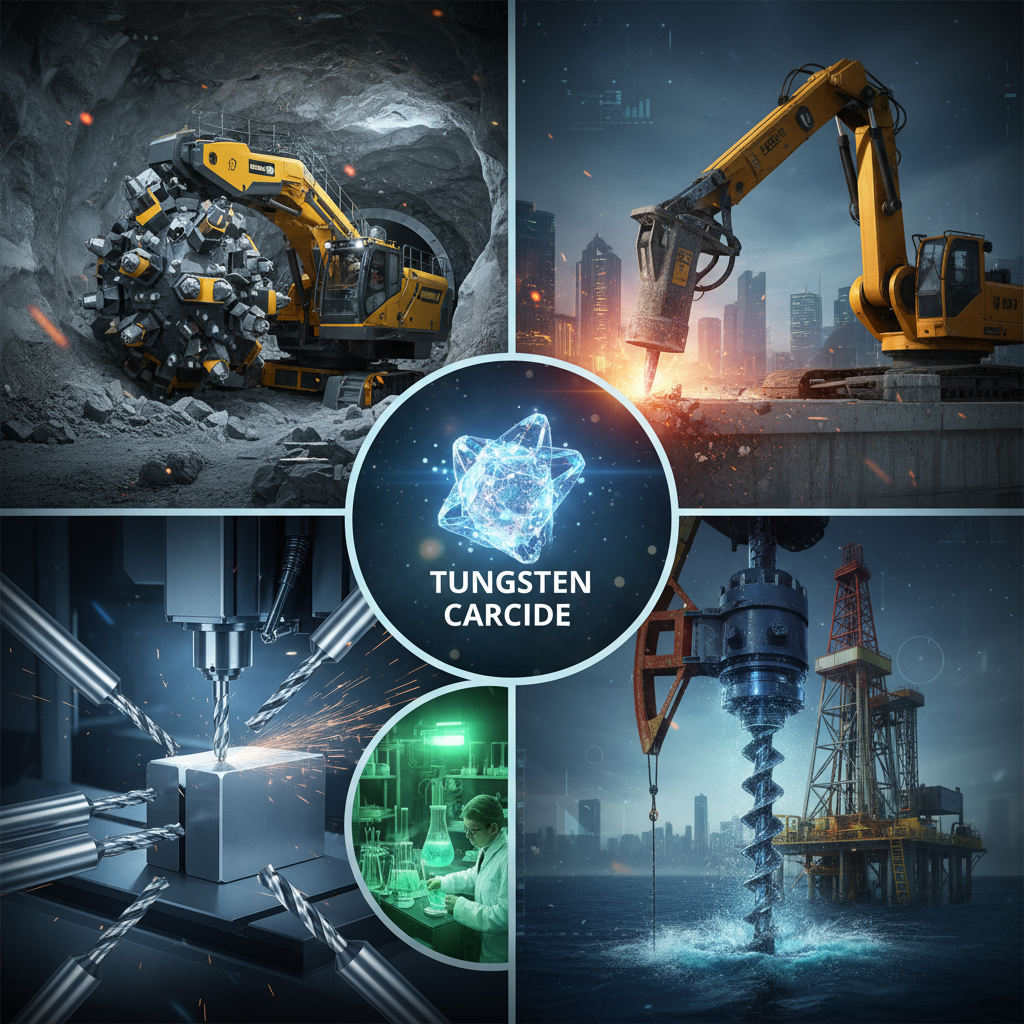
Tungsten carbide, renowned for its exceptional hardness and wear resistance, plays a critical role in various manufacturing industries. One of the most significant applications is in the production of cutting tools, where tungsten carbide inserts are utilized for machining metals and other tough materials. These tools are essential for precision operations, significantly enhancing productivity and tool lifespan, making them a cornerstone in sectors such as aerospace and automotive manufacturing.
Another vital application of tungsten carbide is in the mining and drilling sectors. Tungsten carbide components, such as drill bits and blades, are employed due to their ability to withstand extreme conditions and abrasion. They ensure efficient extraction processes, thereby increasing overall operational efficiency. Additionally, the material’s use in the manufacturing of wear parts for machinery underscores its importance in maintaining performance and reducing downtime, highlighting the material's growing significance in the industrial landscape.
2025 Top 5 Tungsten Carbide Applications
This chart illustrates the top five applications of tungsten carbide in manufacturing industries for the year 2025, highlighting the expected market trends and insights.
Emerging Trends in Tungsten Carbide Technology for 2025
As we approach 2025, the tungsten carbide industry is witnessing transformative advancements driven by emerging technologies and market demands. One of the key trends is the increased focus on sustainability and eco-friendly manufacturing processes. Companies are actively developing formulations that reduce environmental impact without compromising on performance. This shift not only aligns with global sustainability goals but also attracts environmentally conscious consumers and industries.
Furthermore, the integration of artificial intelligence and automation into the production and application of tungsten carbide is revolutionizing its uses. Advanced simulation techniques allow for the optimization of material properties, leading to enhanced efficiency and durability in applications ranging from industrial tools to aerospace components. These innovations are expected to result in a more cost-effective production process and open new avenues for tungsten carbide in various sectors, including construction and energy. As these trends evolve, they will undoubtedly reshape the landscape of tungsten carbide applications in the coming years.
Market Analysis: Demand Growth for Tungsten Carbide Products
The tungsten carbide market is witnessing significant demand growth, driven by a tight supply-demand balance and various policy pressures. On June 20, major domestic tungsten enterprises finalized long-term contract prices for tungsten concentrate and APT products, indicating a strategic approach to stabilize the market amidst volatility. This decision reflects the increasing necessity for reliable supply chains and price predictability in the face of fluctuating raw material costs.
Market insights indicate that the demand for tungsten carbide applications is expected to rise substantially as industries such as manufacturing, aerospace, and automotive increasingly incorporate advanced materials in their processes. For instance, the demand for tungsten carbide foils, ribbons, wires, and tubes is projected to grow, attributed partly to their superior hardness and resistance to wear and corrosion. As industries evolve, the ongoing trend of adopting high-performance materials like tungsten carbide will play a crucial role in shaping future market dynamics.
Innovative Manufacturing Techniques Utilizing Tungsten Carbide
Innovative manufacturing techniques utilizing tungsten carbide are reshaping various industries, driven by its outstanding hardness and wear resistance. Recent studies indicate that the global tungsten carbide market is expected to reach USD 28.6 billion by 2025, growing at a CAGR of 5.3% from 2020. This expansion reflects the increasing adoption of advanced manufacturing processes such as additive manufacturing and CNC machining that leverage tungsten carbide's robustness.
Furthermore, advancements in sintering technology have enabled the production of tungsten carbide components with finer microstructures, resulting in improved toughness and performance. Reports from the Metal Powder Industries Federation highlight that these breakthroughs facilitate the creation of high-precision tools utilized in sectors like aerospace and automotive. As manufacturers explore options like laser sintering and spark plasma sintering, they can achieve intricate designs that were previously unattainable, ultimately enhancing efficiency and reducing waste. With these innovations, tungsten carbide remains a pivotal material in producing cutting-edge tools and components in the industrial landscape.
2025 Top 5 Tungsten Carbide Applications: Industry Insights and Market Trends
| Application |
Industry |
Market Share (%) |
Growth Rate (2023-2025) |
Key Characteristics |
| Cutting Tools |
Manufacturing |
35 |
4.5% |
High hardness, excellent wear resistance |
| Mining Equipment |
Mining |
25 |
5.0% |
Impact resistance, toughness |
| Drilling Tools |
Oil & Gas |
20 |
3.8% |
Corrosion resistance, durability |
| Wear Parts |
Construction |
15 |
3.5% |
High abrasion resistance |
| Medical Devices |
Healthcare |
5 |
6.0% |
Biocompatibility, precision |
Environmental Considerations and Sustainability in Tungsten Carbide Use
Tungsten carbide is widely recognized for its exceptional hardness and durability, making it a preferred material in various industries. However, as sustainability becomes a critical focus in manufacturing, the environmental considerations of tungsten carbide use are increasingly under scrutiny. The extraction and processing of tungsten can involve significant ecological impact, including habitat destruction and greenhouse gas emissions. Therefore, industries are now exploring more sustainable practices in sourcing and utilizing tungsten carbide.
One promising development is the trend towards recycling tungsten carbide. With a substantial percentage of tungsten carbide tools and products reaching the end of their lifecycle, recycling presents an opportunity to minimize waste and reduce the demand for newly mined materials. Additionally, advancements in eco-friendly manufacturing processes aim to reduce the carbon footprint associated with the production of tungsten carbide. By prioritizing sustainability, companies can not only comply with emerging environmental regulations but also meet consumer demand for more responsible practices, thus fostering a more sustainable future for tungsten carbide applications.