Leave Your Message

Leave your message now to get your free sample and discount price

China Best Tungsten Carbide Tube Supplier?

Choosing the right Tungsten Carbide Tube supplier begins with more than a polished catalogue. Buyers need to know how the tube is made, measured, and inspected. A tube used in abrasive slurry service faces different demands from one guiding a precision tool. Small differences in bore finish, wall thickness, and carbide grade can affect wear life and fit.

The U.S. Geological Survey’s Mineral Commodity Summaries 2025 estimates 2024 world tungsten mine production at 81,000 metric tons, including 67,000 metric tons from China. This is useful context, not a tube-market forecast. Tungsten supply is only one part of the decision. Powder quality, binder content, sintering control, machining, and inspection also shape finished-tube performance. Ask suppliers for grade data, dimensional tolerances, inspection records, and application references. Requesting a sample can reveal details that a brochure may not.

Look closely. Does the supplier explain its limits as clearly as its strengths? A named, independently verifiable expert quotation was not provided for this introduction, so attributing a statement to an industry specialist would risk inventing evidence. That matters in a technical purchasing decision. The strongest supplier comparison should rely on traceable specifications, test documentation, and relevant operating experience—not unsupported claims. A dependable partner should also explain where its product may fall short. That honesty is useful. And sometimes, it is missing.
China Best Tungsten Carbide Tube Supplier?

What Tungsten Carbide Tubes Are and How They Are Made

China Best Tungsten Carbide Tube Supplier?

What Tungsten Carbide Tubes Are and How They Are Made

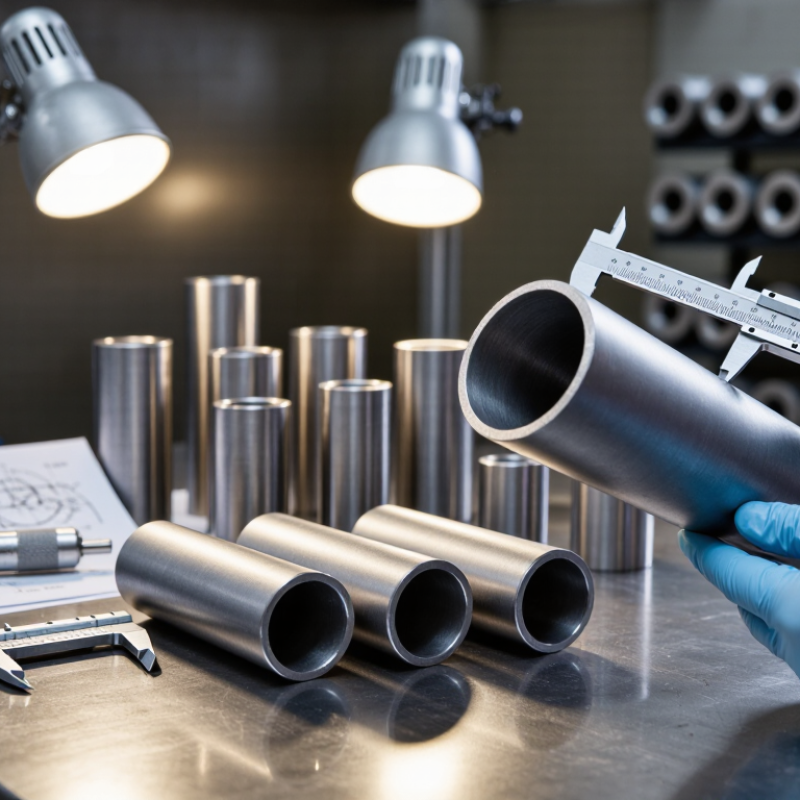
Tungsten carbide tubes are hard, wear-resistant components used where friction and abrasion can quickly damage ordinary metal. They are usually made from fine tungsten carbide powder mixed with a metallic binder, often cobalt. The carbide provides hardness; the binder helps hold the grains together. A tube may look simple, but its bore, wall thickness, and surface finish all affect performance.

Production starts by blending and milling the powders to create a consistent mixture. The material is then shaped into a tubular blank, commonly by pressing or extrusion around a core. After shaping, the blank is sintered at high temperature. It shrinks during this stage, so manufacturers must account for dimensional changes. The tube may then be ground or honed to meet specified inner and outer diameters. Tiny defects matter. In practice, the best process depends on the tube’s size, tolerance, and working conditions; there is no single recipe for every application.

Tips: Ask for the material grade, dimensional tolerances, and inspection details before choosing a tube. Check the bore carefully, especially if fluid or a moving part passes through it. A polished surface can help, but it does not fix a poor fit. And specifications can be easy to overlook.
Key Properties and Industrial Applications of Tungsten Carbide Tubes

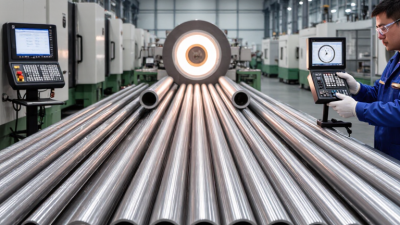
Tungsten carbide tubes are designed for work where ordinary metal surfaces wear quickly. Their high hardness helps resist abrasion, while their stiffness supports dimensional stability under pressure. Hardness matters. Actual performance depends on carbide grade, grain size, binder content, and manufacturing quality. A tube is not automatically corrosion-proof; certain fluids and temperatures can attack its binder.

In industrial equipment, these tubes may serve as wear sleeves, flow liners, metering components, or protective passages. They are useful in pumps and processing systems that handle abrasive particles, where repeated contact can erode softer materials. In wire and material forming, a smooth, accurately sized bore can help guide stock and reduce uneven wear. Small details count.

Selecting a tube involves more than checking hardness. Engineers should match bore diameter, wall thickness, length, and surface finish to the operating conditions. They should also consider impact loads and sudden temperature changes, since brittle carbide can chip or crack. A practical specification includes the fluid or material, expected pressure, temperature range, and replacement interval. In my view, buyers sometimes focus too heavily on hardness figures; service conditions reveal more. Testing a sample in the actual process can expose fit or wear issues before full-scale use.

China Best Tungsten Carbide Tube Supplier? - Key Properties and Industrial Applications of Tungsten Carbide Tubes

Category Property or Application Typical Information Industrial Relevance
Material composition Cemented tungsten carbide A hard tungsten carbide (WC) phase bonded with a metallic binder, commonly cobalt. Composition varies by grade. Binder content and WC grain size influence hardness, toughness, wear resistance, and corrosion behavior.
Hardness Resistance to indentation and abrasive wear Many WC-Co grades fall roughly within 88–92 HRA; the actual value depends on composition and manufacturing. Useful for tube liners, sleeves, and guides exposed to abrasive particles or repeated sliding contact.
Density High material density Common WC-Co grades are typically around 14–15.5 g/cm³, depending largely on binder content. Relevant to component weight, handling, and design of moving or rotating assemblies.
Elastic modulus Stiffness under elastic loading Often approximately 500–650 GPa for cemented carbide grades; values vary with grade and test method. High stiffness can help maintain bore geometry in precision guides and wear components.
Compressive strength Load-bearing capability in compression Generally high, but strongly dependent on grade, geometry, and test conditions. Design values should be confirmed for the selected grade. Supports use in pressure-loaded wear parts; impact and bending loads still require careful design.
Thermal behavior Heat conduction and thermal expansion Thermal conductivity and expansion vary by grade and temperature. Carbide parts can be sensitive to thermal shock. Important for tubes used near hot processes, where temperature gradients and cooling conditions should be assessed.
Corrosion behavior Resistance to chemical attack Depends on the binder, grade, fluid chemistry, temperature, and exposure time. Standard cobalt-bonded grades are not universally corrosion-resistant. For corrosive service, confirm compatibility with the process fluid and consider a suitable grade or protective design.
Industrial application Pump sleeves and shaft bushings Wear-resistant tubular parts may be used at sliding or rotating interfaces. Helps reduce wear in pumps and equipment handling abrasive slurries, subject to operating conditions and design.
Industrial application Guide tubes and wear liners Used where components need a hard, dimensionally stable surface around a passage or bore. Found in machinery for guiding rods, wires, or abrasive material flows.
Industrial application Nozzles and flow passages Carbide components can be selected for passages exposed to erosion from high-velocity fluids or particles. May be used in abrasive blasting, spraying, and fluid-handling equipment when the grade suits the service.
Industrial application Drawing and extrusion tooling Carbide tooling can provide wear-resistant working surfaces; tube geometry depends on the process and tool design. Used in selected forming operations where abrasion and dimensional stability are important.
Selection guidance Grade, dimensions, and service conditions Specify bore and outside diameter, length, tolerances, binder/grade requirements, surface finish, temperature, load, and media. Matching the grade and tube design to the actual operating environment is essential for reliable service life.

Note: Property ranges are indicative, not guaranteed specifications. Values vary by grade, production route, and test method; consult the applicable material data for design or purchasing decisions.

How to Assess Tungsten Carbide Tube Suppliers in China

Choosing a tungsten carbide tube supplier in China requires more than comparing prices. The USGS Mineral Commodity Summaries 2024 estimates 2023 world tungsten mine production at 78,000 tonnes, with China producing 63,000 tonnes. This shows the scale of China’s tungsten supply, not the quality of any individual tube maker. Ask how each batch is traced from powder to finished tube.

Request drawings with tolerances, plus measured results for outside diameter, bore, straightness, and wall thickness. Check whether the supplier can provide material composition, density, hardness, and transverse rupture strength data. Ask for the carbide grain size and binder content, too. Ask for evidence. A sample tube should be checked at several points, not just at its ends. Confirm the inspection method and whether reports identify the actual batch.

Quality documents matter, but they do not replace a physical sample. Compare certificates with independent measurements, and ask what happens when a tube falls outside specification. A supplier’s answers should be specific, not just “high precision.” Small details, such as chipped edges or a rough bore, can affect fit and service life. A polished brochure is not proof; even a careful checklist can miss variation between batches. Include packaging, lead time, and replacement terms in the assessment.

Manufacturing Quality, Customization, and Certification Factors

“Best” is not a country-level guarantee. It is a measurable match between the tube and its working conditions. The USGS Mineral Commodity Summaries 2025 estimates that China produced 67,000 of the world’s 81,000 metric tons of tungsten in 2024, measured as tungsten content. This supply concentration makes material traceability worth checking.

Ask for the carbide grade, batch identification, and inspection records—not just a sales description.

For manufacturing quality, compare outside and inside diameters, wall thickness, straightness, concentricity, and bore finish against your drawing. A small bore deviation can affect flow or assembly.

For customization, confirm available lengths, end features, and tolerance limits before approving a sample.

ISO 4499-4 provides methods for examining cemented-carbide microstructure, including porosity and carbon-related features; request relevant test results when material consistency matters.

ISO 9001 certification can indicate a quality-management system, but it does not prove that a particular tube meets your specification.

Still, a certificate is not the whole story. Check whether inspection reports identify the actual production batch, and agree on acceptance criteria in writing.

One point deserves a second look: tighter tolerances may raise cost or lead time without improving performance in every application.

Choosing a Supplier for Your Technical and Sourcing Needs

China Best Tungsten Carbide Tube Supplier?
Choosing a Supplier for Your Technical and Sourcing Needs

Choosing a tungsten carbide tube supplier starts with the job the tube must do. Share the required inner and outer diameters, length, tolerances, and operating conditions. Include details such as abrasive particles, temperature changes, and contact with other parts. These specifics help a supplier assess suitable carbide grades and manufacturing limits. A quote based only on a nominal size may miss the detail that causes trouble during installation.

Ask how dimensions and surface finish are checked, and whether inspection records can accompany the order. Discuss sample availability, production capacity, packaging, and realistic lead times before committing. Clear answers matter. A polished certificate alone cannot show whether the inspection matches your drawing. For repeat orders, confirm how material batches and revisions are identified. That reduces avoidable uncertainty.

Compare suppliers on technical communication as well as price. A responsive team should flag unclear tolerances and explain trade-offs, rather than simply promise a perfect fit. Request a sample when the application is sensitive, then measure it using the same method planned for incoming inspection. Even this has limits: one sample cannot prove every future batch will behave identically. A careful sourcing decision leaves room for verification.

China Best Tungsten Carbide Tube Supplier? — Choosing a Supplier for Your Technical and Sourcing Needs

Reference Density of Common Engineering Materials

Density is one technical reference when reviewing a carbide tube specification; it is not a measure of supplier quality. Cemented tungsten carbide density varies by grade and binder content, so confirm the exact grade, tolerances, and test method with each supplier. Values shown are approximate reference figures.