Leave Your Message

Leave your message now to get your free sample and discount price

China Top 10 Tungsten Alloy Manufacturers for Global Buyers

China remains a significant sourcing destination for tungsten-based materials, with manufacturers serving industries that need compact weight, wear resistance, or reliable dimensional control. Tungsten Alloy components can include counterweights, tooling parts, and precision-machined blanks. Their performance depends on more than material density. Composition, manufacturing consistency, machining quality, and inspection records all matter.

This guide introduces ten Chinese manufacturers for global buyers to investigate. It is a starting point, not a universal ranking. A supplier suited to a high-volume order may not fit a prototype project. Details matter. Buyers should compare product grades, available dimensions, tolerances, minimum order quantities, lead times, and export packaging. Ask for current technical data and inspection documents, then confirm that they match the specific part and intended use. A polished website alone proves little.

The comparison also considers practical signals: clear communication, documented quality processes, customization capability, and experience with overseas orders. These points can help narrow a search, but they cannot replace sample evaluation or direct supplier checks. Capabilities and certifications may change, and public information can be incomplete. Some differences are easy to miss until a part arrives. For that reason, request written specifications and clarify acceptance criteria before placing an order. Use this list to ask better questions, not to skip due diligence.
China Top 10 Tungsten Alloy Manufacturers for Global Buyers

Tungsten Alloy Manufacturing in China: Industry Overview

China’s tungsten alloy industry serves demanding uses in aerospace, medical equipment, precision tooling, and industrial balancing. Manufacturers commonly work with tungsten-heavy alloys, including tungsten-nickel-iron and tungsten-nickel-copper grades. Production may involve powder preparation, pressing, sintering, and finish machining. Each stage affects density, strength, and final dimensions.

The market is not perfectly uniform. A polished sample does not prove consistent production across every batch. Buyers should ask how suppliers control powder composition, furnace conditions, machining tolerances, and inspection records. Request material certificates and measured results for density and dimensions. For a close-fitting component, even a small deviation can mean extra machining or assembly delays. Capability also depends on part size and geometry, so a supplier’s general product range may not match a specific design.

Tips: Share drawings, expected quantities, and operating conditions before requesting a quote. Confirm tolerances and inspection methods in writing. Ask for a sample when practical. Keep one question in mind: can the process repeat the result, not just make it once?
Criteria for Selecting Leading Chinese Manufacturers

When assessing Chinese tungsten alloy manufacturers, begin with measurable process control, not catalogue claims. The USGS Mineral Commodity Summaries 2025 estimates China produced 67,000 tonnes of tungsten in 2024, out of 81,000 tonnes worldwide. This concentration makes supplier due diligence especially important, but it does not prove any individual factory’s quality.

Ask for batch-level chemical analysis and test results for density, hardness, and tensile strength. Confirm whether an independent laboratory can verify them. Request documented controls for powder preparation, sintering, machining, and final inspection. Small variations matter. A dense alloy block may look flawless while its composition or dimensions fall outside your drawing tolerances. Check how the manufacturer handles rejected batches and corrective actions; paperwork alone is not enough.

Traceability should connect each shipment to its material records and inspection data. Review certificates against the specifications you actually need, including applicable ISO or ASTM requirements. The World Bank’s 2024 Commodity Markets Outlook also highlights how concentrated critical-mineral supply chains can face disruption, so ask about raw-material sourcing and delivery contingency plans. A factory audit can reveal practical details, such as calibrated instruments and clean sample storage. Still, one visit is only a snapshot. Recheck performance across repeat orders.

Profiles of 10 Chinese Tungsten Alloy Manufacturers

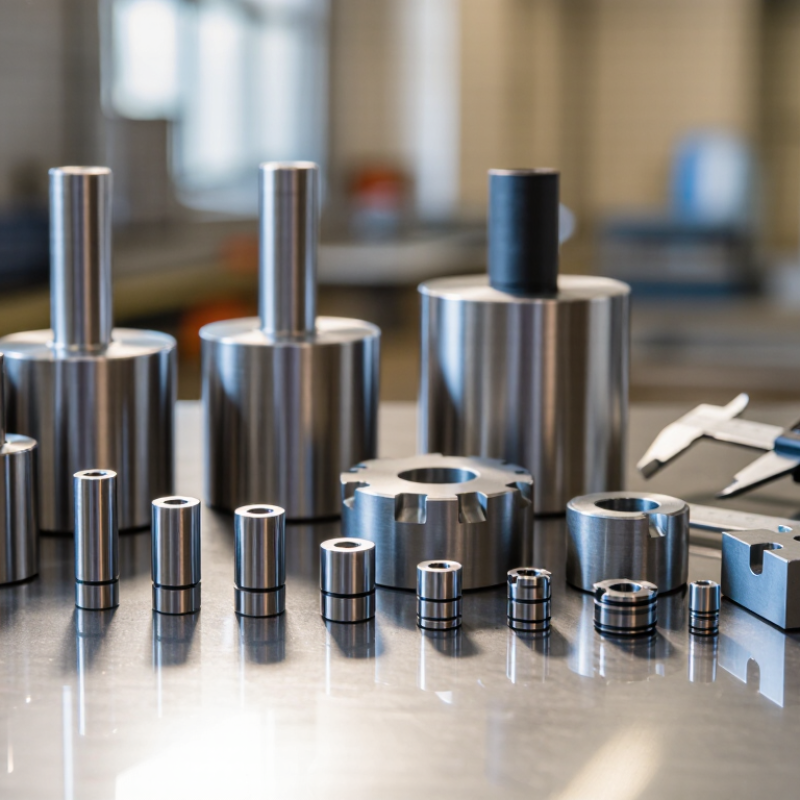
The ten profiles of Chinese tungsten alloy manufacturers focus on capabilities buyers can verify, rather than unsupported rankings. One profile may specialize in precision-machined counterweights; another may offer custom rods and plates. A third may emphasize high-density components for industrial equipment. Others may provide powder metallurgy, near-net-shape forming, or small-batch machining. Some facilities focus on standard grades, while others adjust composition and dimensions to match drawings. These are useful distinctions, but buyers should confirm each supplier’s actual equipment and product range.

The remaining profiles can be compared through practical details: available tungsten content, dimensional tolerances, surface finish, and inspection methods. Ask for material test reports and sample measurements. Check how the manufacturer handles drawing revisions, packaging, and delivery estimates. A polished product page is not enough. Request evidence, and compare like with like. One limitation deserves attention: published capability ranges do not guarantee consistent results across every order. A trial batch can reveal issues that a brochure cannot. Clear communication matters, too. Small misunderstandings about density or tolerances can affect fit and performance. Buyers should assess each manufacturer against the application, not assume that one supplier suits every project.

Product Types, Material Properties, and Applications

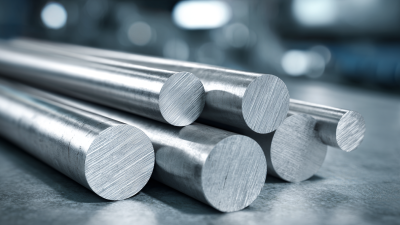
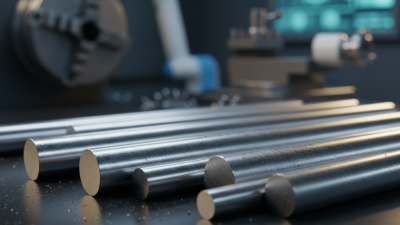
Tungsten alloys are commonly supplied as rods, plates, blocks, and machined components. Heavy alloys usually combine tungsten with nickel and iron, or nickel and copper. The binder metal affects strength, ductility, and magnetic behavior. That distinction matters. A part selected by density alone may not perform as expected.

These materials are valued for their high density, often around 17–18.5 g/cm³, and their ability to fit compact designs. They can provide useful balance in rotating equipment and help reduce vibration in precision assemblies. Tungsten-copper composites offer a different balance of thermal and electrical properties. They may suit heat-management components better than conventional heavy alloys. Still, material data should be checked against the intended operating temperature and machining method.

Applications include counterweights, industrial tooling, aerospace balancing parts, and shielding components in suitable equipment. Buyers should compare dimensions, tolerances, surface finish, and test documentation, not just alloy composition. A small caveat: dense does not mean indestructible. Edge damage and poor joining can still cause trouble. Choosing a product form early can also reduce machining waste, though that step is easy to overlook.

China Top 10 Tungsten Alloy Manufacturers for Global Buyers - Product Types, Material Properties, and Applications

The entries below describe common tungsten-based product and manufacturing categories, not named companies or a verified ranking of individual manufacturers. Property values are typical and vary by grade, composition, and processing route.

No. Product / Capability Category Typical Material Typical Material Properties Common Product Forms Typical Applications
1 Tungsten heavy-alloy precision components Tungsten–nickel–iron (W-Ni-Fe), commonly about 90–97 wt% tungsten High density, typically about 17–18.5 g/cm³; good machinability compared with pure tungsten; high strength for a dense alloy. Rods, bars, blocks, and machined parts Industrial counterweights, inertial components, and compact mass elements
2 W-Ni-Fe balance weights Tungsten–nickel–iron heavy alloy High density enables substantial mass in a relatively small volume; properties depend on tungsten content and heat treatment. Custom weights, rings, cylinders, and shaped inserts Balancing systems, aerospace equipment, sporting goods, and precision machinery
3 Radiation-shielding components Tungsten heavy alloy, often W-Ni-Fe or W-Ni-Cu High density supports effective attenuation of X-rays and gamma rays; shielding performance depends on energy, thickness, and geometry. Collimators, shielding blocks, syringe shields, and containers Medical imaging, radiotherapy equipment, and industrial radiography
4 Tungsten heavy-alloy machining blanks W-Ni-Fe heavy alloy Liquid-phase-sintered material with a tungsten-rich microstructure and a ductile binder phase; machinability is generally better than pure tungsten. Forged or sintered billets, plates, and near-net-shape blanks Custom-engineered parts requiring high density and complex machining
5 W-Ni-Cu heavy-alloy components Tungsten–nickel–copper (W-Ni-Cu), typically a tungsten-rich heavy alloy High density and a non-ferrous binder system; exact strength, ductility, and magnetic response vary with composition and processing. Rods, plates, counterweights, and machined components Balancing, instrumentation, and applications where a nickel-copper binder is specified
6 Tungsten–copper electrical materials Tungsten–copper (W-Cu) composite, commonly made by powder metallurgy and copper infiltration Combines tungsten’s high-temperature strength and wear resistance with copper’s electrical and thermal conductivity; properties vary with composition. Contacts, electrodes, and electrical-discharge machining parts Electrical contacts, resistance welding, and electrical-discharge machining
7 Tungsten–copper thermal-management parts W-Cu composite with a composition selected for the required thermal expansion and conductivity Thermal expansion can be tailored by adjusting the tungsten-to-copper ratio; conductivity is generally lower than that of pure copper. Heat spreaders, base plates, and electronic packaging components Power electronics, semiconductor packages, and thermal-control assemblies
8 Tungsten–molybdenum alloy products Tungsten–molybdenum (W-Mo) alloy Refractory-metal alloy with high-temperature capability; density and thermal behavior depend on the tungsten-to-molybdenum ratio. Rods, sheets, plates, and machined parts High-temperature furnaces, heat shields, and specialized tooling
9 Tungsten–rhenium wire and components Tungsten–rhenium (W-Re) alloy; common grades include approximately 3–26 wt% rhenium Rhenium additions can improve ductility and high-temperature performance compared with pure tungsten; grade-specific properties vary. Wire, rod, thermocouple elements, and small components High-temperature thermocouples, heating elements, and specialized electronics
10 Pure tungsten refractory products High-purity tungsten, rather than a tungsten heavy alloy Density is about 19.3 g/cm³ and melting point is about 3,422°C; very high-temperature capability, but room-temperature brittleness can be a design consideration. Rods, plates, sheets, electrodes, and machined parts Furnace components, vacuum equipment, electrodes, and high-temperature fixtures

How Global Buyers Can Evaluate and Source Suppliers

Global buyers should define the part’s job before comparing tungsten alloy suppliers. Specify dimensions, density, hardness, operating temperature, and machining needs. The USGS Mineral Commodity Summaries 2025 estimated 2024 world tungsten mine output at 81,000 metric tons, with China producing 67,000. This concentrated supply makes origin documentation, lead-time commitments, and continuity plans worth checking. A low quote is not the whole picture.

Request a material certificate showing chemistry and density, plus inspection records for the actual production lot. ASTM B777 covers tungsten-base, high-density metals; ask suppliers to identify the applicable class and explain any deviations. For a sample, compare its measured dimensions and mass with the drawing and certificate. Check whether the supplier can maintain tolerances across repeat orders, not just one polished prototype. A spreadsheet can miss that difference.

Tips: Send the same drawing and inquiry to each candidate. Ask for a sample, test method, production lead time, and written change-control process. If a certificate lacks traceable lot details, ask for clarification before ordering. Small oversight, but it matters. Verify claims with records, and keep the evaluation consistent across suppliers.

Tungsten Mine Production by Country (2023 Estimates)

China’s leading share of mine production highlights the importance of assessing supply-chain concentration when sourcing tungsten alloys. Mine output is broader market context—not a measure of any individual manufacturer’s capacity, quality, or reliability. Figures are rounded estimates.

Source: U.S. Geological Survey, Mineral Commodity Summaries 2024, “Tungsten” (2023 estimated mine production; metric tons of tungsten content).