How to Choose the Best Tungsten Carbide Tube for Your Needs?
Choosing the right Tungsten Carbide Tube is crucial for various applications. These tubes are known for their strength and durability. However, not all Tungsten Carbide Tubes are created equal.
When selecting a Tungsten Carbide Tube, consider your specific needs. Factors like size, thickness, and intended use matter. A high-quality tube can enhance performance significantly. But, many individuals may overlook these details, leading to subpar results.
Moreover, understanding the manufacturing process can provide insights into the quality. Not all suppliers maintain the same standards. This inconsistency can affect your project's outcomes. It’s essential to research and ensure you are working with a reputable source.
Understanding Tungsten Carbide: Composition and Properties
Tungsten carbide is a highly durable compound made from tungsten and carbon. This combination results in exceptional hardness and strength. The unique properties of tungsten carbide make it ideal for various applications, such as cutting tools and wear-resistant components. Understanding its composition helps in selecting the right product for specific needs.
One should consider the material’s density and hardness. Tungsten carbide typically exhibits incredible hardness, rated at 8.5 to 9 on the Mohs scale. This makes it suitable for industrial applications where durability is a must. However, the material is also brittle. Excessive force may lead to fracture, which is an important factor to keep in mind.
Another aspect to review is the tungsten content. Higher tungsten proportions enhance hardness but may reduce flexibility. Finding the right balance can be challenging. It requires expertise and careful evaluation of application requirements. Identifying your specific needs will lead to better choices. With tungsten carbide, understanding these properties is crucial to making informed decisions and avoiding potential pitfalls.
How to Choose the Best Tungsten Carbide Tube for Your Needs?
This chart illustrates the key properties of tungsten carbide, which are crucial when selecting the best tube for your specific needs. The data shows various important attributes like density, hardness, tensile strength, and Young's modulus, providing a helpful overview for comparison.
Applications of Tungsten Carbide Tubes in Various Industries
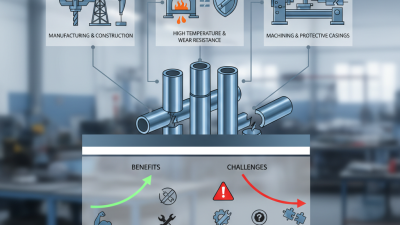
Tungsten carbide tubes serve various industries, including mining, petroleum, and manufacturing. Their high hardness and wear resistance make them ideal for applications that require durability. According to a report by Research and Markets, the global tungsten carbide market is expected to reach $21.5 billion by 2025, driven by demand across these sectors.
In mining, tungsten carbide tubes are used for drilling and tool manufacturing. They withstand harsh conditions and prolonged use. A notable study indicated that using tungsten carbide can increase the lifespan of drill bits by 40% compared to conventional materials. However, not all applications benefit equally. The precise application and environment should guide material selection.
In the petroleum industry, these tubes are integral in downhole tools. Their robustness ensures reliable performance in extreme conditions. However, the cost of tungsten carbide is higher than other materials. This raises questions about cost-effectiveness in certain applications. While the benefits are clear, weighing them against budget constraints is essential for businesses.
Key Factors to Consider When Selecting Tungsten Carbide Tubes
Choosing the right tungsten carbide tube can be a daunting task. Several key factors impact your decision.
First, consider the tube’s dimensions. The diameter and length are critical based on your application.
A precise fit enhances performance and minimizes waste.
Material composition is another vital aspect. Tungsten carbide tubes vary in hardness and density.
If your project involves heavy wear, a tough composition is essential. Pay attention to the manufacturing process.
Some methods yield better quality tubes than others. Unconventional methods may lead to inconsistencies.
Think about your specific needs. Sometimes, testing a few options helps clarify what works best.
Don't overlook the importance of supplier reliability. Engaging with reputable manufacturers can ensure you receive high-quality products.
Getting feedback from industry experts can also guide your choices.
Comparison of Tungsten Carbide Tubes by Diameter and Wall Thickness
When selecting a tungsten carbide tube, its diameter and wall thickness are crucial factors. The diameter directly influences the tube’s application. A wider diameter offers a larger flow area, suitable for high-pressure conditions. However, it also adds weight, which can be a drawback in some scenarios. Conversely, a smaller diameter is lighter but may restrict flow, making it less ideal for certain uses.
Wall thickness is equally significant. Thicker walls enhance durability and resistance to wear and tear. This is important in high-impact environments. Nonetheless, excessive thickness can lead to stiffness, limiting flexibility. It's essential to find a balance. Too thin may risk breakage under stress, while too thick might limit usability in tight spaces.
Understanding your specific needs is vital. Evaluate how these factors interact with your application. It’s not just about choosing a number; it's about functional compatibility. Reflecting on how different designs affect performance can help in making informed decisions. Think critically about your requirements. The ideal choice may require some trial and error.
Cost Analysis: Balancing Quality and Price in Tungsten Carbide Tubes
When considering tungsten carbide tubes, price and quality often clash. It's crucial to assess what you're getting for your investment.
High-quality tungsten carbide materials tend to last longer. Yet, they often come with a higher price tag. The key is understanding how much you are willing to spend versus the performance you need.
It’s important to note that not all expensive options are truly better. Some mid-range products can deliver good durability and performance.
Researching reviews and user experiences can provide insights into real-world performance. Look for materials that show signs of wear resistant properties and check their specifications.
Keep in mind, though, the cheapest product can lead to costly failures. Think about how often you'll use the tube. Will it face heavy stress? Then, spending a little more might save you money in the long run.
Balancing these factors is crucial for making the right choice. Quality assurance and price should go hand in hand in your decision-making process.