Top 5 Tips for Choosing Cemented Carbide Inserts for Your Needs?
When it comes to selecting the right Cemented Carbide Inserts, expert insights can offer invaluable guidance. John Smith, a well-known specialist in the tooling industry, once stated, “Choosing the right insert can significantly impact productivity and tool life.” This highlights the importance of making informed decisions based on specific needs.
Cemented Carbide Inserts are essential in machining applications. They offer durability and high resistance to wear. However, not all inserts are the same. The choice depends on factors like material type, cutting conditions, and machining operations. Understanding these elements is crucial for optimal performance.
In a rapidly evolving industry, keeping up with advancements is vital. While many might assume that any insert will work for a task, this can lead to disappointments. The wrong choice may result in faster wear or poor surface finish. Reflecting on one’s choices is key to finding the best fit in Cemented Carbide Inserts.
Understanding the Basics of Cemented Carbide Inserts and Their Applications
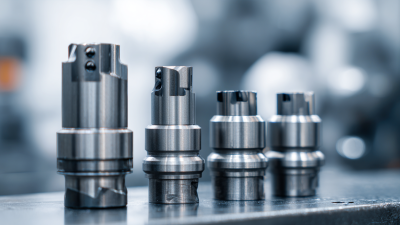
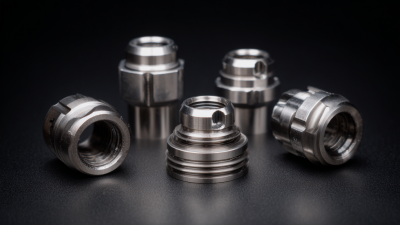
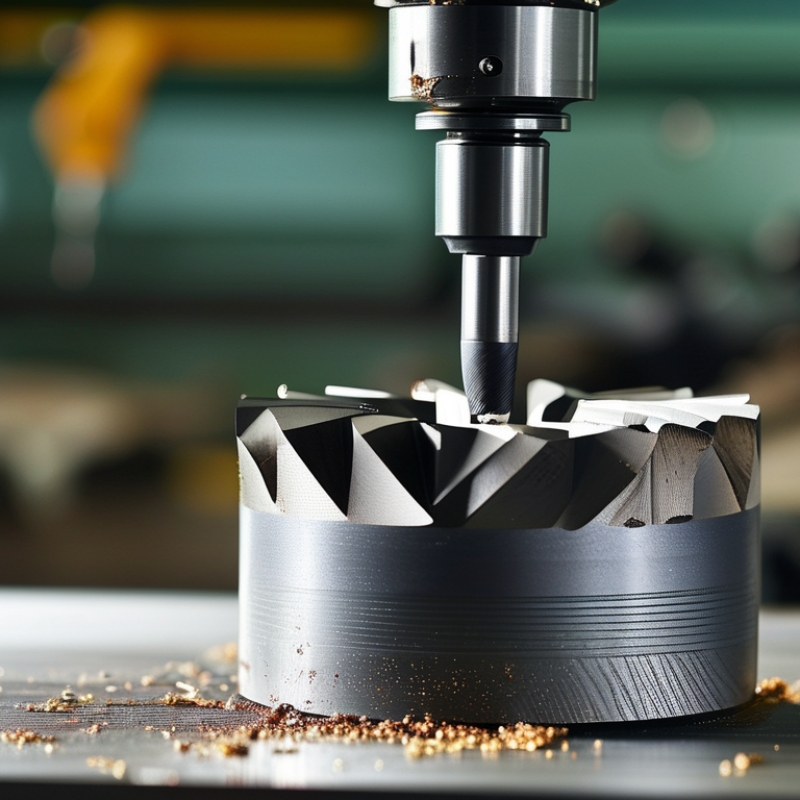
Cemented carbide inserts are essential tools in machining. Understanding their structure and applications is crucial for optimal performance. These inserts consist of tungsten carbide particles bonded with a metallic binder, providing durability and hardness. They are widely used for cutting, drilling, and milling operations, making them vital in manufacturing processes.
When selecting the right cemented carbide insert, consider the material to be machined. Different inserts suit various materials, like steel or aluminum. Matching the insert with the workpiece enhances efficiency and tool life.
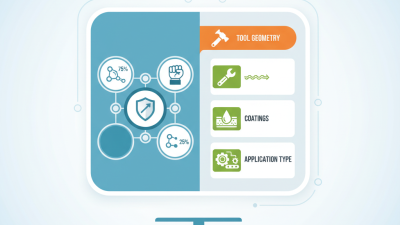
Another tip is to assess the insert geometry. Shapes and edge designs affect cutting performance. A sharper edge may provide cleaner cuts, while a robust design can handle higher impact. Testing with different geometries may reveal the best fit for your needs.
Lastly, don’t overlook the coating of inserts. Coatings improve wear resistance and reduce friction. However, some coatings may limit insert versatility. Experimenting with different coatings can lead to better outcomes. Continuous evaluation of your choices helps refine the selection process over time.
Identifying Your Specific Machining Needs and Requirements
When selecting cemented carbide inserts, it’s essential to identify your specific machining needs. Each application requires different characteristics, such as hardness and toughness. According to a recent industry report, over 65% of machining failures stem from improper tool selection. Understanding your material type will guide your choice of insert geometry and coating.
Once you define your workpiece’s material, consider the machining conditions. Is the operation continuous or interrupted? For instance, different inserts perform better under high-speed machining versus those used for heavy cutting. The 2022 Machining Industry Report found that 70% of manufacturers achieved better tool life by aligning inserts correctly with operational parameters.
Do not overlook the importance of testing inserts in your specific conditions. Many users find that initial selections often lead to underperformance. Make adjustments based on performance data, and continually seek feedback. Experimentation can lead to significant efficiency improvements and cost savings in the long run. Reflect on your past experiences, as they are invaluable in optimizing future choices.
Evaluating Insert Geometry for Optimal Performance in Your Projects
When selecting cemented carbide inserts, evaluating their geometry is crucial for boosting performance. Different geometries cater to specific machining tasks. For instance, sharp cutting edges facilitate smoother cuts, while rounded edges can handle tougher materials. A reputable study from the American Society of Mechanical Engineers indicates that proper insert geometry can improve tool life by up to 30%.
Understanding cutting angles and their effects on chip formation is essential. Inserts with a positive rake angle reduce cutting forces and improve surface finish. Inserts with negative rake angles are ideal for stability during heavy cuts. Choose inserts that match your material type and cutting conditions for optimal results.
Consider experimenting with various insert shapes—some may yield better results than anticipated. Data shows that a 20% shift in geometry can lead to noticeable differences in performance. While some may prefer standard shapes, irregular designs can sometimes outperform in specific scenarios. Don't hesitate to reassess your choices.
Selecting the Right Coating for Enhanced Durability and Efficiency
When selecting cemented carbide inserts, the coating plays a critical role in enhancing durability and efficiency. A well-chosen coating can increase tool life significantly. Reports show that tools with advanced coatings can last up to 50% longer than those without. This difference can lead to substantial cost savings in manufacturing.
Consider the specific environment in which the inserts will operate. High-speed machining may require coatings that resist abrasion and reduce friction. For instance, titanium aluminum nitride (TiAlN) provides excellent heat resistance, extending tool life in various conditions. Look closely at coatings designed for specific materials. They can make a significant difference.
Opt for inserts that match your material type and cutting conditions. Factors like temperature and surface finish are essential. While advanced coatings provide many advantages, they may not be suitable for every application. A coating that excels in one setting may underperform in another. Always reassess and test different options to find the best fit for your needs. The right coating can transform your production efficiency and product quality.
Considering Cost-Effectiveness and Longevity of Inserts in Your Decision
When selecting cemented carbide inserts, cost-effectiveness and longevity are crucial. A recent industry report highlights that quality inserts can last up to five times longer than cheaper alternatives. This longevity translates to fewer replacements and less downtime, leading to significant savings. Operators often overlook the hidden costs of frequent tool changes. These costs can add up quickly.
Moreover, the initial investment in durable inserts pays off. According to the International Journal of Advanced Manufacturing Technology, using high-quality carbide inserts can reduce machining time by nearly 30%. This efficiency contributes to higher productivity and profit margins. However, it is important to assess individual machining needs. Not every application requires premium inserts; some tasks may not justify the investment.
User feedback often reveals that choosing cost-effective inserts isn't solely about price. It involves evaluating the material properties, wear resistance, and cutting performance. Understanding specific machining conditions is essential. Take time to analyze your operations. Are you using the right insert for the job? Is the cost justified in terms of performance? These reflections can guide informed decisions that enhance both cost-effectiveness and overall productivity.