Leave your message now to get your free sample and discount price
Choosing the right Tungsten Carbide Inserts in 2026 requires more than comparing prices or catalog photographs. Global buyers must examine grade composition, carbide grain size, coating technology, edge geometry, and application suitability. A turning insert for hardened steel may fail quickly in cast iron or interrupted cutting. Small differences matter.
Professor E. O. Ezugwu, a respected machining researcher, has observed, “The machining of difficult-to-cut materials is a challenging task.” That statement remains highly relevant. Modern inserts can improve tool life, surface finish, and cutting stability, but they cannot eliminate poor parameter selection. Real performance depends on the machine, workholding, coolant, material batch, and operator experience.
This guide evaluates the 2026 best Tungsten Carbide Inserts for global buyers through practical purchasing criteria. It considers ISO grades, PVD and CVD coatings, chipbreakers, dimensional consistency, and supplier traceability. It also examines applications across steel, stainless steel, cast alloys, aerospace materials, and general engineering.
No universal winner exists.
A premium insert may be excessive for light-duty production. A cheaper grade may create hidden costs through frequent changes, scrap, and unstable cutting. Buyers should request test data, inspection records, and clear technical support before placing large orders. Certifications can help, but they do not replace controlled trials. Some recommendations may need revision when real workshop conditions differ. That is an unavoidable weakness in any global comparison.
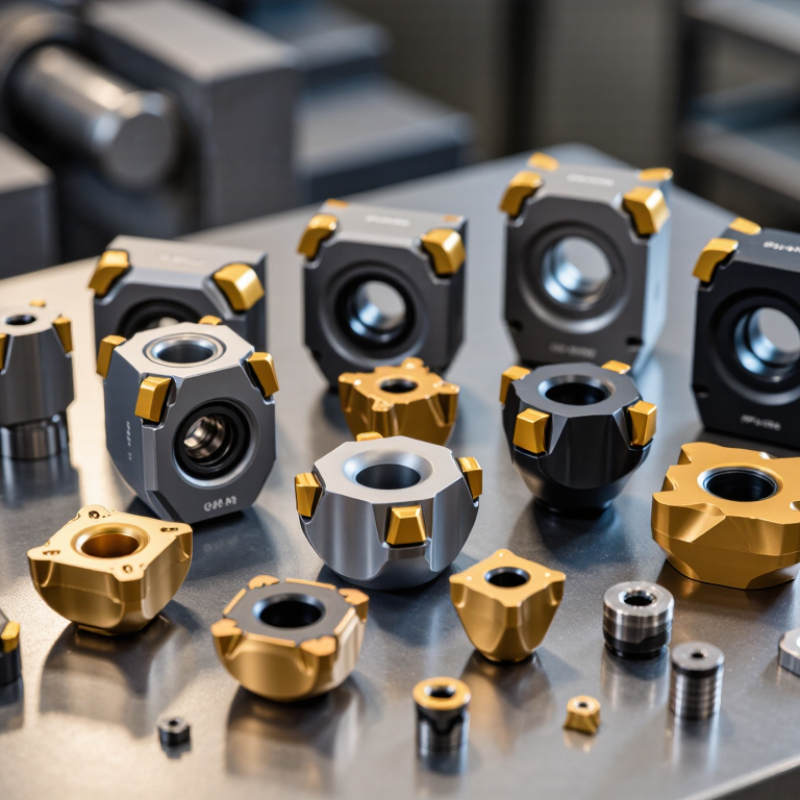
Tungsten carbide inserts combine hard WC grains with a cobalt binder. Typical WC–Co grades use about 6–12% cobalt. Lower cobalt usually raises hardness and wear resistance. Higher cobalt improves toughness during interrupted cuts. Hardness is not everything. A 1300 HV30 grade suits tougher cutting and unstable setups. Grades near 2200 HV30 resist abrasion better in continuous machining. ISO 3878 specifies the Vickers hardness method, including the HV30 test force used for meaningful comparison.
The 2025 USGS Mineral Commodity Summaries classifies tungsten as a critical mineral and reports global mine production at roughly 80,000 metric tons of tungsten content in 2024. That supply pressure makes grade selection more important for global buyers. Fine WC grains can increase hardness, but they may reduce resistance to edge chipping. Coarser grains often tolerate impact better. Wear can still surprise. Buyers should request hardness, cobalt content, grain size, density, and transverse rupture strength together. Comparing HV30 alone is an incomplete method. In practical trials, I would inspect flank wear after a fixed cutting distance, not only after the first few parts. Cutting speed, workpiece hardness, coolant, and edge geometry can shift results sharply. A 2200 HV30 insert may fail early when vibration dominates the cut.
Insert geometry under ISO 1832 starts with shape and clearance angle. The code is not decoration; it predicts access, strength, and cutting behavior. C-shaped inserts offer strong 80-degree corners for general turning. D-shaped inserts reach shoulders more easily, while V-shaped inserts suit profiling but tolerate less impact. Square and round forms provide different balances between edge strength and surface access.
Clearance angle changes contact with the workpiece. A 0-degree clearance gives strong support, but it can rub during difficult profiles. Positive angles, such as 7 or 11 degrees, reduce rubbing and cutting force. Thin walls often benefit from this choice. Hard interruptions may punish it. I have seen operators select maximum clearance, then blame the insert for edge failure. The geometry was wrong.
Chipbreakers deserve equal attention. Narrow grooves control small feeds and finishing chips. Wider, deeper grooves handle heavier cuts and larger chip volume. ISO 1832 defines the insert identification system, but it does not choose the best chipbreaker for every alloy. Cutting tests remain necessary. The USGS Mineral Commodity Summaries 2025 reported approximately 81,000 metric tons of tungsten content mined globally in 2024, showing the material’s continuing industrial importance. However, tungsten supply data does not replace machining evidence. Start with the workpiece, feed, depth, and machine rigidity. Then verify chip shape, edge wear, and cutting temperature. Small details matter.
2026 Best Tungsten Carbide Inserts for Global Buyers
ISO 513 Cutting Classes: Choosing P, M, K, N, S, and H Applications
ISO 513 provides a practical starting point for selecting carbide inserts. P suits steel, while M handles stainless steel with interrupted cutting and work hardening. K targets cast iron, where abrasive chips demand strong edges. N is designed for aluminum, copper, and other non-ferrous alloys. S covers titanium and heat-resistant superalloys. H serves hardened steels, usually above 45 HRC. These classes describe applications, not complete insert specifications.
The U.S. Geological Survey reported approximately 81,000 metric tons of tungsten mine production in 2024. That supply remains strategically important because tungsten carbide combines high hardness with wear resistance. However, choosing an insert only by ISO class is an avoidable mistake. Cutting speed, feed, workpiece hardness, coolant, edge preparation, and coating must also match the operation. A sharp N-grade edge may reduce burrs in aluminum, while a tougher M-grade edge can survive stainless steel interruptions. Practical testing still matters.
The European Commission identifies tungsten as a critical raw material because of supply risk and industrial importance. Buyers should therefore verify carbide composition, dimensional tolerance, inspection records, and traceability before ordering. I often recheck the actual workpiece condition, since drawings can hide scale, vibration, or interrupted engagement. ISO guidance is valuable, but it is not a substitute for a controlled trial. Even experienced machinists occasionally choose an overly hard grade and lose the edge early.
| ISO Class | Primary Workpiece Materials | Typical Machining Applications | Recommended Carbide Insert Characteristics | Coating and Edge Guidance | Starting Cutting-Speed Range* | Key Selection Considerations |
|---|---|---|---|---|---|---|
| P Steel |
Low-carbon steel, medium-carbon steel, alloy steel, tool steel in an annealed or machinable condition. | External and internal turning, facing, profiling, grooving, milling, and general steel production machining. | Medium-toughness to wear-resistant cemented carbide. Moderate to high cutting-edge strength is suitable for continuous cuts and controlled interruptions. | Multi-layer wear-resistant coatings are commonly selected for steel. Use a sharp or neutral edge for finishing and a stronger honed edge for roughing or interrupted cuts. | Approximately 120–280 m/min for turning, depending on steel grade, hardness, insert geometry, and coolant conditions. | For built-up-edge risk at low speeds, use a sharp, polished cutting edge and increase cutting speed where machine rigidity and workholding permit. |
| M Stainless Steel |
Austenitic, ferritic, martensitic, and precipitation-hardening stainless steels. | Turning, facing, grooving, profiling, and milling where work hardening, poor thermal conductivity, or long chips may occur. | Tough, deformation-resistant carbide with a sharp positive geometry for many stainless-steel operations. A reinforced edge may be preferred for interrupted cuts. | Smooth wear-resistant coatings and polished rake surfaces can reduce adhesion. Avoid excessive edge honing on light finishing cuts because it may increase cutting forces. | Approximately 60–180 m/min for turning, depending strongly on stainless grade, hardness, work-hardening tendency, and chip control. | Maintain a consistent feed so the insert cuts below the work-hardened layer. Use high-pressure or directed coolant when chip evacuation and heat control are critical. |
| K Cast Iron |
Grey cast iron, ductile cast iron, compacted graphite iron, and certain malleable cast irons. | Face milling, turning, boring, roughing, and finishing of engine, pump, machine-base, and structural castings. | Wear-resistant carbide is suitable for stable grey cast iron. Tougher grades and stronger edge preparations are preferred for ductile iron, hard spots, scale, and interrupted surfaces. | Uncoated or coated carbide may be used. Edge preparation should match the abrasiveness and impact level; a stronger edge helps resist micro-chipping on uneven cast surfaces. | Approximately 100–300 m/min for turning, with lower values for abrasive or interrupted castings. | Cast-iron dust is abrasive. Use effective extraction and avoid directing coolant onto a hot insert unless the tooling supplier specifically permits wet machining. |
| N Non-Ferrous Materials |
Aluminium alloys, copper alloys, brass, bronze, magnesium alloys, plastics, and other non-ferrous materials. | High-speed turning, milling, boring, drilling, profiling, and finishing where surface quality and chip evacuation are important. | Sharp, positive-rake carbide with a polished rake face. Fine-grain carbide is appropriate for precision edges; tougher substrates may be needed for interrupted cuts. | Polished uncoated edges are widely used for aluminium and copper alloys. Low-friction coatings can be considered when adhesion, built-up edge, or abrasive silicon content is present. | Approximately 300–1,200 m/min for aluminium turning; use substantially lower speeds for copper alloys, plastics, or unstable setups. | Select a chipbreaker that prevents chip packing. For high-silicon aluminium, use an abrasion-resistant edge and verify that the geometry does not cause smearing or burr formation. |
| S Heat-Resistant Alloys and Titanium |
Nickel-based and cobalt-based heat-resistant superalloys, titanium alloys, and high-temperature-strength materials. | Turning, profiling, milling, and slotting of aerospace, power-generation, medical, and high-temperature components. | Very tough carbide with a sharp but adequately supported cutting edge. Stable geometries and small radial engagement are preferred for many milling operations. | Heat-resistant coatings may extend tool life, but coating selection must match the alloy and operation. Avoid excessive edge honing, which can increase heat and work hardening. | Approximately 15–60 m/min for carbide turning, depending on alloy, insert geometry, depth of cut, and cooling method. | Use a rigid setup, constant tool engagement, controlled feed, and excellent chip evacuation. For titanium, prevent rubbing and avoid dwell because the material rapidly transfers heat to the cutting edge. |
| H Hardened Materials |
Hardened tool steels, bearing steels, die steels, and other ferrous materials typically hardened above approximately 45 HRC. | Hard turning, finishing of dies and molds, bearing-seat machining, profiling, and limited interrupted operations. | Fine-grain, wear-resistant carbide can be used for selected hardness levels and stable finishing cuts. For harder materials or higher productivity, ceramic, cermet, or cubic boron nitride may be more appropriate than carbide. | Use a strong, wear-resistant edge with suitable coating when carbide is technically appropriate. Keep the insert engaged consistently and avoid unstable impact loads. | Approximately 30–120 m/min for carbide hard turning, depending on hardness, workpiece condition, insert grade, and required surface finish. | Confirm hardness before selecting carbide. Carbide performance decreases as hardness and cutting temperature rise; use conservative parameters and a rigid machine-tool system. |
Hardness, cobalt content, grain size, and wear life now guide insert selection. ISO 513 classifies carbide tools by cutting application and wear behavior. It does not promise one grade for every metal.
Technical data from the European Powder Metallurgy Association commonly places cemented-carbide hardness near 1,300–2,000 HV30. Higher cobalt content usually improves toughness, while reducing hardness. Many general-purpose grades contain about 6–15% cobalt.
Grain size also matters. Submicron grains can improve edge strength and wear resistance, but they may cost more and react differently to heat.
USGS Mineral Commodity Summaries 2025 still identifies tungsten as a critical industrial material. Supply risk matters. Buyers should request recent test certificates, not rely only on catalog values. Check hardness using the stated load, and confirm cobalt percentage through chemical analysis. Wear life needs a real cutting trial. Material, coolant, speed, and interruption change results sharply.
Tips: Compare inserts under identical cutting conditions. Track flank wear in millimeters after each batch. Ask for grain-size measurement, not “fine grain” alone. Start with a small production trial. It may reveal an uncomfortable truth: the hardest insert is not always the longest-lasting choice. Grain size can be reported differently, and some supplier claims remain difficult to compare.
2026 Best Tungsten Carbide Inserts for Global Buyers
Tolerance should be checked before coating, price, or delivery time. Ask for the drawing, tolerance class, inspection method, and batch report. ISO 1832 helps identify insert geometry, but it does not replace dimensional inspection. For precision turning, measure nose radius and seating surfaces with calibrated equipment. A small mismatch can create vibration, poor surface finish, or early edge failure.
Coating selection must match the workpiece and cutting conditions. CVD coatings often suit stable, high-temperature cutting, while PVD coatings can support sharper edges and interrupted cuts. Request coating type, thickness range, adhesion results, and substrate grade. Certification also needs practical review. A quality certificate, material traceability record, and ISO 9001 registration are useful, but documents alone cannot prove cutting performance. Verify lot numbers and test dates.
Supply risk deserves attention. The USGS Mineral Commodity Summaries 2025 reported about 81,000 metric tons of global tungsten mine production in 2024, with China supplying roughly 67,000 tons. This concentration can affect lead times and costs. Calculate cost per edge using purchase price divided by verified usable edges, not inserts consumed. Run a controlled trial with 100 inserts, recording cutting time, parts completed, and failure mode. I would still question any unusually low quote. It may reflect weaker substrate, unstable coating quality, or incomplete certification.