Leave Your Message
Leave your message now to get your free sample and discount price
Leave your message now to get your free sample and discount price
As global manufacturers plan their 2026 sourcing strategies, Tungsten Tooling remains important for high-wear production environments. Its value comes from hardness, thermal stability, density, and resistance to deformation. These properties support cutting tools, dies, punches, extrusion components, mining inserts, and specialized furnace parts. However, tungsten is not one uniform material. Cemented carbide, pure tungsten, tungsten heavy alloys, and coated grades behave differently under pressure, heat, vibration, and chemical exposure.
The U.S. Geological Survey’s Mineral Commodity Summaries 2025 estimated global tungsten mine production at approximately 81,000 metric tons in 2024. China accounted for most reported output, highlighting supply concentration and procurement risk. The European Commission also identifies tungsten as both a critical and strategic raw material under its current materials framework. These reports matter to buyers because tooling costs extend beyond the purchase order. Lead time, powder origin, recycling practices, inspection records, and export documentation can influence total production reliability.
This guide examines the top types of Tungsten Tooling expected to attract global buyer interest in 2026. It compares performance, applications, tolerances, coating choices, and practical limitations. A carbide die may survive millions of cycles, while an improperly selected grade can crack during the first thermal shock. That difference is expensive.
No single ranking fits every factory.
Buyers should question impressive hardness figures without testing context. Material data can also vary between suppliers, even when specifications appear identical. For dependable decisions, this overview combines published industry evidence with manufacturing experience, while recognizing that field validation remains necessary. Supplier audits, sample trials, and dimensional inspections should support every serious tooling decision.
What Tungsten Tooling Is and Why It Matters in 2026
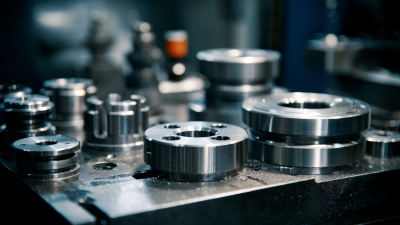
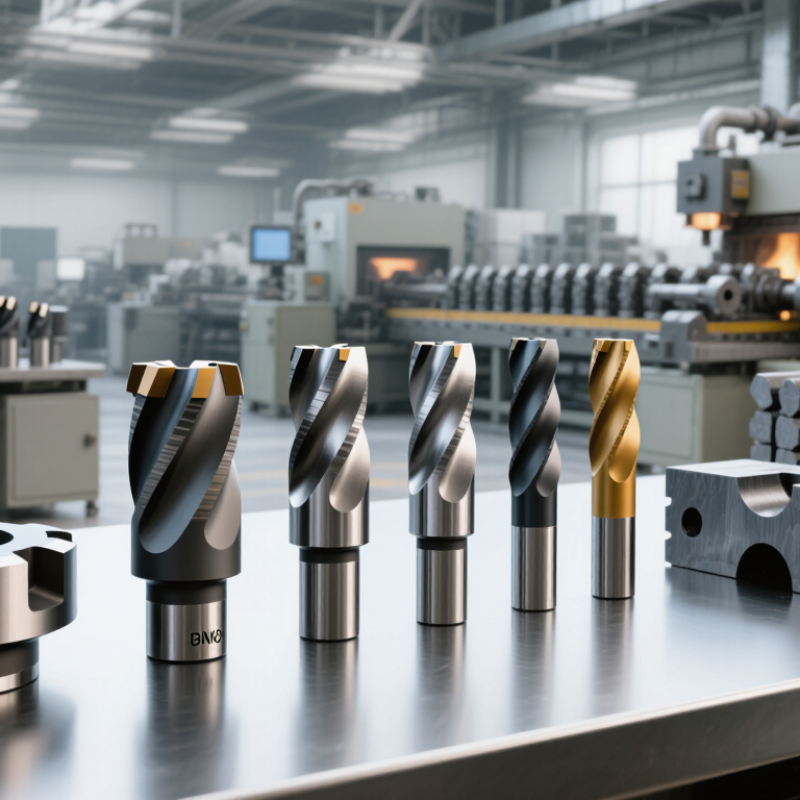
In 2026, tungsten tooling includes dies, punches, nozzles, electrodes, and wear parts made with tungsten or tungsten carbide. These tools support high-pressure forming, precision cutting, electrical discharge machining, and demanding thermal processes. Their high hardness resists abrasion, while their density and heat tolerance support stable performance. That stability matters when a tool must hold a tight shape through thousands of cycles. However, tungsten is not an effortless material. Poor grinding or uncontrolled heat can create cracks, edge damage, or early failure.
Tips: Check hardness, grain structure, dimensional tolerance, and operating temperature before purchasing. Ask for inspection records and material traceability. A low price can hide short service life.
Global buyers should match the tooling grade to the real working conditions. Consider impact, sliding wear, corrosion, thermal shock, and replacement time. A die for fine powder forming needs different performance from a nozzle exposed to extreme heat. Experienced engineers also review surface finish and clamping design, not only the material certificate. This step is often missed. Supplier reliability matters too, including consistent inspection, clear drawings, and practical technical support. No design is perfect. Field feedback should guide the next revision.
| Tungsten Tooling Type | Typical Material Composition | Typical Density | Key Performance Characteristics | Common Tooling Forms | Typical Applications | Main Buying Consideration |
|---|---|---|---|---|---|---|
| Cemented Tungsten Carbide | Tungsten carbide particles bonded with cobalt or another metallic binder | Approximately 14.0–15.5 g/cm³ | Very high wear resistance, high compressive strength, excellent edge retention, and useful hot-hardness | Drills, milling cutters, dies, inserts, punches, wear plates, and forming tools | Metal cutting, mining, construction, stamping, drawing, and high-volume wear applications | Grade selection must balance hardness, toughness, binder content, grain size, and cutting conditions |
| Fine-Grain Tungsten Carbide | Fine or ultrafine tungsten carbide grains with a metallic binder | Approximately 14.5–15.2 g/cm³ | Sharper cutting edges, higher transverse rupture strength than many conventional grades, and strong wear performance | Micro-drills, end mills, miniature punches, precision dies, and dental or medical cutting tools | Micro-machining, electronics, precision components, printed circuit board drilling, and small-part production | Grain size, edge preparation, runout, coating compatibility, and surface finish are critical |
| Pure Tungsten Tooling | Commercially pure tungsten, commonly supplied at about 99.95% tungsten or higher | Approximately 19.25 g/cm³ | Extremely high melting point, low vapor pressure, high-temperature strength, and strong resistance to thermal deformation | Electrodes, furnace fixtures, shields, trays, supports, and high-temperature inserts | Vacuum furnaces, semiconductor processing, high-temperature sintering, welding electrodes, and thermal systems | Room-temperature brittleness, oxidation sensitivity at elevated temperature, and difficult machining require careful handling |
| Tungsten Heavy Alloy | Tungsten combined with nickel-iron or nickel-copper binders | Approximately 17.0–18.6 g/cm³ | High density, good dimensional stability, better ductility than pure tungsten, and effective vibration damping | Counterweights, inertia rotors, balancing weights, shielding blocks, and precision masses | Aerospace balancing, medical radiation shielding, industrial vibration control, and compact high-mass assemblies | Density uniformity, binder system, machinability, corrosion protection, and dimensional tolerances |
| Tungsten-Copper Composite | Interpenetrating or infiltrated tungsten and copper phases | Approximately 12.5–17.0 g/cm³ | High thermal conductivity, low thermal expansion, arc resistance, and good resistance to thermal shock | Electrical contacts, EDM electrodes, heat sinks, welding electrodes, and thermal spreaders | Electrical switching, resistance welding, electrical discharge machining, power electronics, and thermal management | Tungsten-to-copper ratio determines conductivity, expansion, density, and erosion resistance |
| Tungsten-Silver Composite | Tungsten matrix combined with silver, generally for conductive and contact applications | Approximately 13.5–17.0 g/cm³ | High electrical and thermal conductivity, good arc resistance, and improved contact performance | Electrical contacts, contact tips, switching components, and specialized electrodes | High-current switching, electrical protection equipment, and industrial power-control systems | Electrical load, contact erosion, silver content, joining method, and operating temperature |
| Tungsten Carbide Drawing Dies | Cemented tungsten carbide selected for high wear resistance and dimensional stability | Approximately 14.0–15.5 g/cm³ | Low dimensional wear, high compressive strength, and stable die geometry during repeated drawing cycles | Wire dies, tube dies, extrusion dies, capstan inserts, and shaped drawing dies | Wire drawing, tube reduction, cable production, metal forming, and nonferrous alloy processing | Die geometry, polished surface quality, workpiece material, lubrication, and required service life |
| Tungsten Carbide Wear Parts | Cemented carbide with a grade selected for abrasion, impact, or erosion resistance | Approximately 13.5–15.5 g/cm³ | Excellent resistance to abrasive wear, particle erosion, and sliding contact damage | Wear buttons, nozzles, liners, bushings, scraper tips, guide components, and bearing surfaces | Mining, oil and gas, pumps, valves, agriculture, recycling, and bulk-material handling | Actual wear mechanism, impact level, particle size, operating temperature, and attachment method |
| Tungsten-Based Vacuum Furnace Components | Pure tungsten, tungsten-molybdenum, or tungsten-based refractory alloy | Typically 17.0–19.3 g/cm³ | High-temperature capability, low contamination potential, and resistance to creep in controlled atmospheres | Heating elements, baskets, trays, boats, screens, supports, and shields | Vacuum heat treatment, crystal growth, powder sintering, coating systems, and advanced material processing | Furnace atmosphere, service temperature, thermal cycling, load support, and contamination control |
| Tungsten-Molybdenum Tooling | Solid-solution or composite refractory tooling based on tungsten and molybdenum | Approximately 10.2–19.2 g/cm³, depending on composition | High-temperature strength, controlled thermal expansion, and improved process-specific performance | Furnace fixtures, mandrels, electrodes, supports, shields, and forming components | High-temperature manufacturing, glass processing, vacuum systems, aerospace materials, and electronic components | Alloy ratio, thermal cycling, oxidation protection, fabrication route, and operating atmosphere |
Data note: Values are representative engineering ranges for commonly used tungsten-based tooling materials. Actual performance depends on grade, manufacturing process, geometry, surface finish, operating environment, and service conditions.