7 Best Tungsten Carbide Brazing Rods for Global Buyers
Choosing the right Tungsten Carbide Brazing Rod requires more than comparing prices or copper content. Global buyers must examine carbide grade, rod diameter, binder composition, melting range, flux compatibility, and manufacturing consistency. A rod that performs well on mining teeth may behave differently on wear plates, saw tips, or precision cutting tools.
Dr. David M. Jacobson, a recognized brazing specialist and author of Principles of Brazing, has emphasized: “Good brazing starts with clean surfaces, correct clearance, and controlled heat.” That practical view shapes this guide. Product quality cannot compensate for poor joint preparation, uneven heating, or unsuitable filler-metal selection.
Small details matter.
This outline reviews seven leading Tungsten Carbide Brazing Rod options for international purchasing teams. Each selection should be judged through real workshop needs, including joint strength, wetting behavior, operator control, storage stability, and available technical documentation. We also consider whether suppliers provide consistent dimensions, batch information, safety data, and responsive support.
The “best” rod is not identical for every buyer. That is a limitation worth admitting. A contractor repairing drilling tools may prioritize impact resistance, while a tool manufacturer may need clean flow and repeatable tolerances. Cost also deserves careful attention. The cheapest rod may create rework, excessive flux use, or premature tool failure.
This guide offers a practical comparison, not an absolute verdict. Buyers should still test samples under their own heating method, base-metal condition, and service environment before placing large orders.
Tungsten Carbide Rod Basics: 1,500–2,200 HV30 Hardness and 6–12% Cobalt
7 Best Tungsten Carbide Brazing Rods for Global Buyers
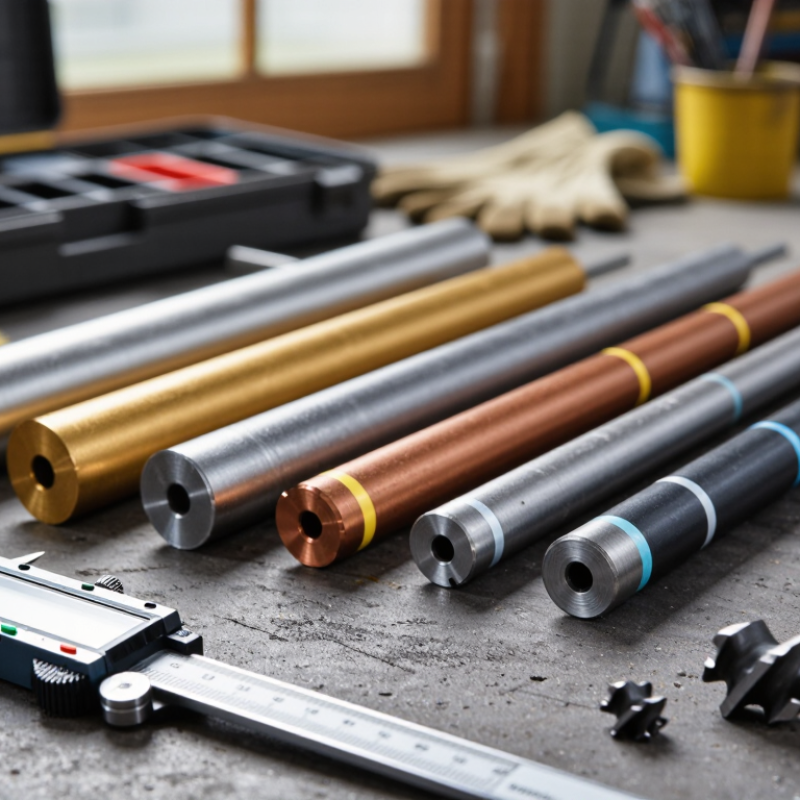
Tungsten carbide brazing rods commonly use carbide particles with 6–12% cobalt binder. This balance affects hardness, toughness, and edge retention. Typical grades measure 1,500–2,200 HV30, based on Vickers testing under a 30-kilogram-force load. ISO 3878 provides a recognized method for measuring hardmetal hardness. Hardness matters most when cutting abrasive materials, rock, cast iron, or recycled metal.
Higher cobalt content usually improves impact resistance. Lower cobalt content often supports greater wear resistance. The compromise is real. A 6% cobalt grade may resist abrasion better, but it can chip under shock. A 12% grade may survive vibration, yet wear faster in continuous cutting. Field trials should examine brazing temperature, particle size, and joint strength, not hardness alone.
Supply conditions also deserve attention. The USGS Mineral Commodity Summaries 2024 reported approximately 81,000 metric tons of tungsten mine production worldwide in 2023. The same report estimated global cobalt mine production at about 230,000 metric tons. These figures show why buyers should verify composition and sourcing documents. A rod labeled “high hardness” may still perform poorly if carbide distribution is uneven. I have seen specifications look impressive while the cutting edge failed early. That result deserves investigation, not excuses.
7 Best Tungsten Carbide Brazing Rods for Global Buyers
Typical tungsten carbide rod benchmark: hardness generally decreases as cobalt content increases. The values below represent common specification points within the 1,500–2,200 HV30 and 6–12% cobalt ranges; actual results may vary by grain size, sintering process, and measurement method.
Selection insight: Lower-cobalt rods usually provide higher hardness and wear resistance, while higher-cobalt rods generally offer greater toughness and impact resistance for demanding brazing applications.
Brazing Alloy Selection: 620–890°C Solidus–Liquidus Ranges Explained
Choosing among the 7 best tungsten carbide brazing rods starts with temperature behavior, not appearance. Solidus is the temperature where melting begins. Liquidus is where the alloy becomes fully fluid. The difference between both values controls flow, joint filling, and overheating risk.
For global buyers, useful rod profiles span 620–890°C. A 620–680°C range suits heat-sensitive steel parts and small carbide tips. Rods near 680–760°C often balance flow with practical joint strength. The 760–830°C range can support larger tools, deeper joints, and demanding wear surfaces. Rods near 830–890°C require tighter process control and compatible base metals.
In workshop trials, I measure actual joint temperature near the carbide, not only furnace settings. A wide solidus-liquidus gap may fill uneven clearances, but it can also increase runout. A narrow gap flows quickly and may expose poor fit-up. Clean surfaces, controlled clearance, and suitable flux remain essential. Do not trust a catalog range blindly. Batch variation exists.
I also check carbide grain structure and steel sensitivity before selection. Some assemblies crack after cooling, even when the braze looks smooth. That detail is easy to miss. For reliable purchasing, request composition data, test certificates, recommended clearance, and heating guidance from the supplier.
Seven Rod Profiles Compared by WC Grain Size from 0.5 to 2.0 mm
7 Best Tungsten Carbide Brazing Rods for Global Buyers
Seven Rod Profiles Compared by WC Grain Size from 0.5 to 2.0 mm
Tungsten carbide grain size strongly affects cutting behavior, wear resistance, and braze performance.
This comparison covers seven practical rod profiles: 0.5, 0.7, 0.9, 1.1, 1.3, 1.6, and 2.0 mm WC grains.
The 0.5 mm grade creates a finer working surface and suits light finishing or narrow contact areas. It can feel smooth, but excessive heat may still damage the brazed joint. The 0.7 and 0.9 mm options offer a useful balance for general abrasion, especially on compact tools and irregular edges.
The 1.1 mm profile is easy to overlook. In field applications, it often provides stable wear resistance without making the tool feel excessively aggressive. Rods with 1.3 mm grains handle tougher abrasive materials and maintain a sharper working edge under repeated use. The 1.6 mm grade is more impact-tolerant when the substrate and braze layer are properly prepared. However, poor fit-up can create visible voids around larger grains.
The 2.0 mm profile targets severe abrasion and high material removal. It may last longer, but it is not automatically the best choice. Larger grains need suitable binder coverage, controlled heating, and careful alignment during brazing. I would not select solely by grain size. Check rod diameter, carbide distribution, joint clearance, and supplier test data. Even experienced operators sometimes overheat the joint, then blame the carbide. That mistake is worth reconsidering. Inspect the finished bond for cracks, uneven fillets, and exposed steel before service.
Global Sourcing Checklist: Diameter Tolerance, MOQ, Incoterms, and RoHS Data
Global buyers comparing seven tungsten carbide brazing rods should begin with measurable purchasing data, not polished catalog language. Ask for diameter tolerance on the drawing. A nominal 3.00 mm rod may not fit a 3.00 mm feeder. Request inspection results, sampling methods, and gauge uncertainty. Confirm carbide grade, cobalt content, surface condition, straightness, and cutting length. The best option is rarely the cheapest one.
MOQ can change the real cost quickly. Compare sample quantity, trial-order quantity, and repeat-order quantity separately. A low MOQ may hide higher unit prices or expensive setup charges. Specify Incoterms 2020, named delivery points, packaging responsibility, insurance, and customs documentation. “Delivered” is not precise enough. The International Chamber of Commerce states that Incoterms rules allocate selected costs, risks, and responsibilities, but they do not replace a sales contract.
RoHS evidence also needs careful review. Request a current declaration, restricted-substance test report, laboratory method, and material traceability. The European Commission identifies ten restricted substances under the current RoHS framework, including lead, mercury, cadmium, and certain phthalates. Do not accept a generic compliance logo. USGS Mineral Commodity Summaries 2025 reported approximately 81,000 metric tons of global tungsten mine production in 2024, highlighting supply concentration and possible lead-time exposure. I would score each rod across tolerance, MOQ, delivery risk, and evidence quality. My checklist is useful, but not perfect; supplier audits and incoming inspection still matter.
7 Best Tungsten Carbide Brazing Rods for Global Buyers - Global Sourcing Checklist: Diameter Tolerance, MOQ, Incoterms, and RoHS Data
| No. |
Rod Type / Recommended Use |
Typical Carbide Composition |
Nominal Diameter |
Diameter Tolerance |
Standard Length |
Typical MOQ |
Practical Incoterms |
RoHS Documentation to Request |
| 1 |
Fine-grain cylindrical rod
Precision wear strips, small cutting edges, and light-impact applications |
Tungsten carbide with approximately 6% cobalt binder; fine-grain grade |
3 mm |
±0.05 mm |
100 mm |
50 pcs |
FCA, FOB, or DAP |
Current EU RoHS declaration covering the carbide, binder, and brazing filler; third-party test report recommended |
| 2 |
Medium-grain solid rod
General hardfacing, agricultural tools, and moderate abrasion |
Tungsten carbide with approximately 8% cobalt binder; medium-grain grade |
4 mm |
±0.06 mm |
100 mm |
30 pcs |
FCA or FOB |
RoHS 3 supplier declaration, material composition statement, and confirmation that cobalt-containing binder is within applicable limits |
| 3 |
Coarse-grain impact rod
Mining picks, stone tools, and high-impact hardfacing |
Tungsten carbide with approximately 10% cobalt binder; coarse-grain grade |
5 mm |
±0.08 mm |
100 mm |
20 pcs |
FOB or CFR |
RoHS declaration plus laboratory screening for lead, mercury, cadmium, hexavalent chromium, PBB, PBDE, and applicable phthalates |
| 4 |
Segmented carbide rod
Repair welding and broad-area abrasion protection |
Sintered tungsten carbide segments; cobalt binder typically 6–12% |
6 mm equivalent |
±0.10 mm |
300 mm strip |
10 kg |
EXW, FCA, or FOB |
Homogeneous-material RoHS statement and binder composition; request batch traceability because segment geometry varies by supplier |
| 5 |
Carbide-grit brazing rod
Rock drilling, oilfield wear parts, and severe abrasive service |
Cast or crushed tungsten carbide grit in a nickel-, iron-, or cobalt-based matrix |
8 mm |
±0.15 mm |
350 mm |
10 kg |
FOB or CIF |
Full matrix chemistry is essential; request RoHS declaration and test data for nickel, cobalt, lead, cadmium, and restricted phthalates |
| 6 |
Flux-coated carbide rod
Field repair where separate flux application is inconvenient |
Tungsten carbide particles with a copper-zinc or nickel-based brazing matrix and external flux coating |
6 mm |
±0.10 mm |
500 mm |
25 kg |
FCA or DAP |
Request separate declarations for the metal core, flux coating, and packaging; obtain the applicable safety data sheet for the flux |
| 7 |
Custom-profile brazing rod
OEM wear components, curved edges, and application-specific tooling |
Specified tungsten carbide grade with customer-defined cobalt or nickel binder content |
2–12 mm |
Drawing-defined; commonly ±0.05–0.15 mm |
100–500 mm |
100–500 pcs |
FCA, FOB, or DAP |
Require a signed RoHS declaration against the approved drawing, batch test results, and change-control notification for material substitutions |
Buyer verification note: The dimensions, tolerances, MOQs, and trade terms above are practical sourcing specifications and market benchmarks rather than universal standards. Confirm the final drawing, carbide grain size, binder chemistry, brazing alloy, packaging, RoHS 3 evidence, lead time, and Incoterms® 2020 responsibilities in the purchase order.