Leave Your Message

Leave your message now to get your free sample and discount price

China Top 10 Cemented Carbide Tools Manufacturers

China’s cemented-carbide sector serves manufacturers that need tools to cut, drill, and shape demanding materials. This guide introduces ten Chinese manufacturers and the capabilities buyers may want to compare. The details matter: carbide grade, coating, edge geometry, and tolerance can affect tool life and the finish left on a steel component. A polished catalogue is not enough.

Materials scientist G. S. Upadhyaya, author of Cemented Tungsten Carbides, emphasizes the importance of understanding these materials and their properties. In paraphrase: “A carbide tool’s performance depends on the relationship between its composition, structure, and application.” This is a summary, not a verified verbatim quotation. That distinction matters. Buyers should confirm technical claims through current specifications, test data, and direct discussions with manufacturers.

The following overview considers product range, manufacturing experience, quality controls, customization, and support. These are useful starting points, not guarantees of performance. A tool that works well in one workshop may disappoint in another. That happens. Even a careful comparison can miss a real production constraint, such as coolant delivery or machine rigidity. Use the list to form questions, then validate answers against your own materials, equipment, and operating conditions.
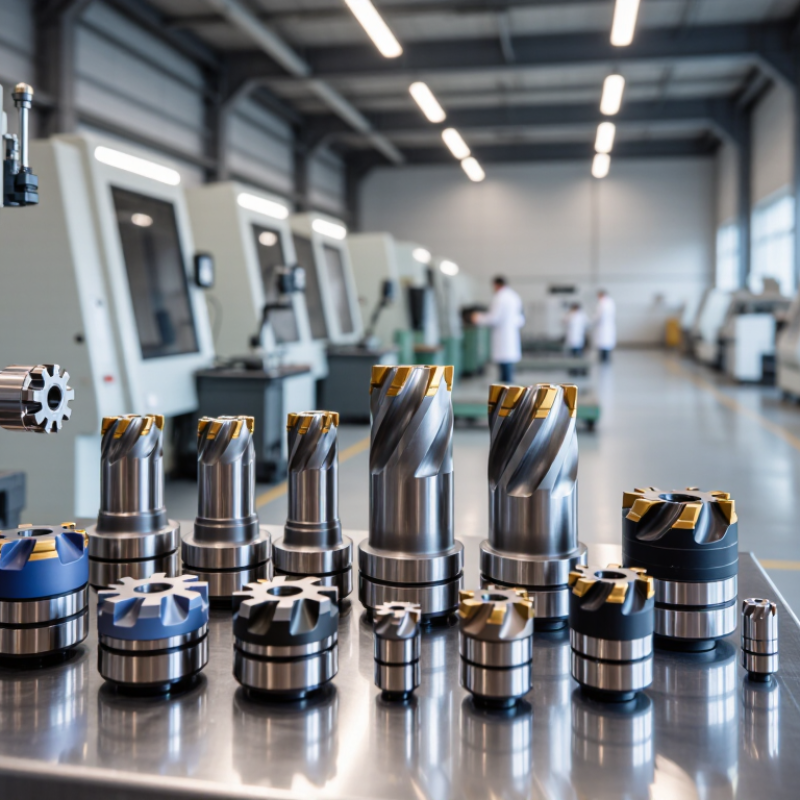
China Top 10 Cemented Carbide Tools Manufacturers

Cemented Carbide Basics: WC–Co Grades and the 3–30 wt% Cobalt Range

WC–Co cemented carbide combines hard tungsten-carbide grains with a cobalt binder. The 3–30 wt% cobalt range is a practical guide, not a universal grading rule. Around 3–6% cobalt, many grades favor hardness and abrasion resistance. Higher binder levels, often 10–30%, can improve toughness under impact. Trade-offs remain. More cobalt generally means less hardness, while WC grain size and porosity also affect performance.

Weight percentage can hide the binder’s volume. Using approximate densities of 15.7 g/cm³ for WC and 8.9 g/cm³ for cobalt, 10 wt% cobalt is about 16 vol%. At 30 wt%, it approaches 43 vol%. That shift changes how much binder surrounds the carbide grains. ISO 4499-2 provides metallographic methods for measuring WC grain size, a useful reminder that cobalt content alone cannot describe a grade.

Supply context matters, too. The USGS Mineral Commodity Summaries 2025 estimates 2024 world tungsten mine production at 81,000 metric tons, including 67,000 tons from China. This is mining data, not carbide-grade output, so it should not be mistaken for factory capacity. A neat chart can mislead. For tool selection, compare cobalt fraction with grain size, hardness, and the actual cutting conditions. A grade that survives interrupted cuts may wear faster in steady, abrasive service.
Tool Classification: ISO 513’s Six Application Groups for Cutting Materials

ISO 513:2012 sorts cutting-material applications into six groups: P for steel, M for stainless steel, K for cast iron, N for non-ferrous metals, S for heat-resistant alloys and titanium, and H for hardened materials. The familiar blue, yellow, red, green, brown, and gray labels help operators identify these groups on shop-floor charts. They are practical shorthand, not a complete tool-selection formula.

The scale of steel machining is clear: World Steel Association’s World Steel in Figures 2024 reports 1,892.2 million tonnes of crude steel production in 2023. This is useful industrial context, not a measure of cutting-tool demand. In practice, an ISO group narrows the choice, while hardness, workpiece geometry, coolant, and cutting speed still shape performance. Stainless steel can work-harden; titanium can retain heat near the cutting edge. Small setup differences matter. And the classification has limits: two materials in one group may cut very differently, so trial results and manufacturer-neutral shop data remain important.

ISO 513: Six Application Groups for Cutting Materials

A classification overview relevant to cemented carbide cutting tools

ISO 513 classifies cutting-tool applications into six material groups: P (steel), M (stainless steel), K (cast iron), N (non-ferrous metals), S (heat-resistant alloys and titanium), and H (hardened materials). Each equal-height bar represents one group; the chart does not compare tool performance or cutting conditions.

Ranking China’s Top 10: Production, Product Range, Patents, and Export Data

A useful ranking of China’s cemented carbide tool manufacturers should compare evidence, not just company size. Production capacity can be assessed through disclosed output, plant capabilities, and quality-control processes. Look for details such as powder preparation, pressing, sintering, and precision grinding. These steps affect consistency in cutting inserts, end mills, drills, and wear-resistant parts. Numbers matter. But capacity figures may use different reporting periods, so direct comparisons need care.

Product range is another practical measure. A supplier serving turning, milling, mining, and general wear applications may show broader manufacturing experience. Patent records can indicate investment in tooling design or material research, but patent counts alone do not prove commercial performance. Check publication dates, technical relevance, and whether the patents relate to products currently offered. That measure is imperfect. Public records rarely reveal how often a patented design is used on a factory floor.

Export data can help show international reach, yet trade classifications may combine different carbide products. Shipment totals should therefore be checked against product catalogs, destination markets, and available company disclosures. A careful top-ten list would explain its sources and scoring method, rather than presenting an unexplained order. Some information will remain incomplete. That is worth stating openly, especially when comparing private manufacturers with different levels of disclosure.

Profiles of China’s Top 10 Cemented Carbide Tool Manufacturers

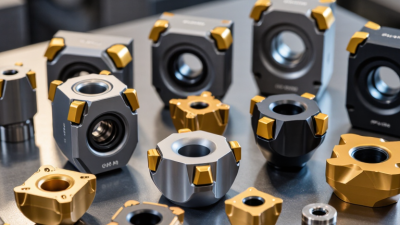
Profiles of China’s Top 10 Cemented Carbide Tool Manufacturers are best compared by production strengths, not headline rankings. Some focus on solid-carbide drills and end mills; others specialize in replaceable inserts, mining tools, or wear-resistant components.

Look for details such as carbide grade range, coating options, dimensional tolerances, and whether a supplier controls powder preparation and sintering. These details matter on the shop floor. A consistent cutting edge can reduce tool changes, while a poorly matched grade may chip during interrupted cuts.

Raw-material scale offers useful context, but it is not proof of finished-tool quality. The US Geological Survey’s Mineral Commodity Summaries 2024 estimated China’s 2023 tungsten mine output at 63,000 metric tons, out of 78,000 worldwide. That figure indicates a major upstream base; it does not measure tool performance or factory capability.

For a ten-supplier comparison, examine sample inspection records, coating uniformity, and delivery consistency alongside catalogue breadth. Ask how each manufacturer handles custom geometries and batch traceability.

One caution: published specifications can look precise, yet real cutting life depends on the workpiece, machine, and operating conditions. A profile should say what was tested, and what was not.

Comparing the Top 10: Hardness, Grain Size, and Tool Applications

When comparing cemented carbide tools, hardness matters, but it is not the only useful measure. Higher hardness can help an edge resist wear during continuous cutting. Yet a very hard grade may chip when the machine vibrates or the workpiece has a hard spot. There is a trade-off. Grain size influences this balance: finer grains often support hardness and edge strength, while coarser structures may offer greater toughness. Actual performance also depends on binder content, tool geometry, and operating conditions, so a hardness figure alone cannot predict service life.

Applications help narrow the choice. Fine-grain grades are often considered for finishing, small cutting edges, and wear-resistant components. Tougher grades may suit interrupted cuts, rough milling, or drilling where impact loads are harder to avoid. A carbide insert cutting steel, for example, faces different heat and abrasion than a tool shaping wood-based panels. Compare hardness alongside grain size, toughness data, and the recommended cutting range. Test results from one setup may not transfer neatly to another; that part is easy to overlook. Even a well-matched grade can fail early if feed, speed, or cooling is poorly controlled.