Leave Your Message
Leave your message now to get your free sample and discount price
Leave your message now to get your free sample and discount price
Choosing the right Titanium Tungsten Alloy starts with the job it must perform. A polished datasheet cannot tell you how a component will behave under heat, repeated loading, or contact with other materials. You need to match the alloy’s properties to real operating conditions. Small details matter.
Materials-selection scholar Michael F. Ashby is known for emphasizing that material choice should follow the design requirements. A useful way to apply that principle is: “Choose for the conditions the part will face, not for a headline property.” This is a practical paraphrase, not a direct quotation. It points to the questions buyers should ask: What temperature will the part reach? How much wear is acceptable? Does weight matter more than strength? What manufacturing processes can the supplier support?
This guide explains how to compare Titanium Tungsten Alloy options by composition, performance, fabrication needs, and application. It also highlights where specifications can be misleading. Two products with similar names may differ in tungsten content, processing, or measured properties. Ask for a current technical data sheet, test conditions, and traceable product details. Then compare those records against your design requirements. No single grade suits every use. That sounds obvious, but it is easy to overlook when a material looks impressive on paper.
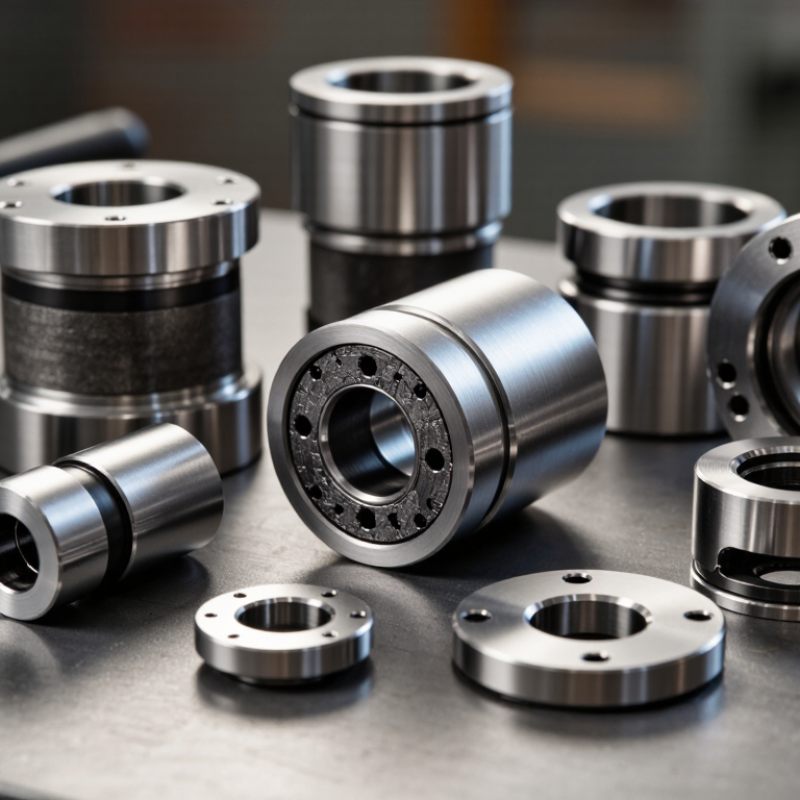
How to Choose the Right Titanium Tungsten Alloy?
Identify the Ti–W grade and tungsten content before comparing options. “Titanium tungsten alloy” can describe materials with different compositions and processing histories. Ask for the exact grade, tungsten percentage by weight, and a current material certificate. A small change in composition can affect density, hardness, machinability, and performance at elevated temperatures. Do not rely on a broad product label alone.
Match the specification to the job. For a component exposed to heat, confirm the intended operating temperature and check relevant test data. For a part that must be machined, ask about available forms and machining guidance; dense alloys can be demanding to cut. Compare like with like: the same product form, dimensions, and test method. A polished datasheet is useful, but it cannot replace evidence for the actual batch.
Tips: Write down your required grade and tungsten content before requesting quotes. Check units, tolerances, and certificate details. If a supplier’s answer is vague, pause and clarify it. One practical detail can be easy to miss: your application may need a specific balance of properties, not the highest tungsten content.
| Nominal Composition (wt%) | How to Identify It | Approx. Theoretical Density | Composition-Based Considerations | What to Verify Before Comparing |
|---|---|---|---|---|
| Ti–10W 90% Ti / 10% W |
Specify as titanium–10 wt% tungsten; do not assume “Ti–10W” is a universal standardized grade. | 4.88 g/cm³ | Lowest tungsten content in this comparison. Tungsten is a beta-stabilizing element in titanium alloys; the resulting phases and properties depend on the full chemistry and processing route. | Confirm actual tungsten content, other alloying elements, oxygen and nitrogen limits, and whether the material is wrought, cast, or powder-processed. |
| Ti–20W 80% Ti / 20% W |
Specify the nominal composition in weight percent and request a chemistry certificate. | 5.32 g/cm³ | Higher tungsten content than Ti–10W. Composition alone does not establish strength, ductility, corrosion performance, or phase distribution. | Compare measured chemistry, product form, heat treatment, microstructure, and test methods on the supplier’s certificate. |
| Ti–30W 70% Ti / 30% W |
Use “30 wt% W” explicitly; weight percent and atomic percent are not interchangeable. | 5.85 g/cm³ | Substantially more tungsten than the lower-content examples. Processing and compositional uniformity become important comparison factors. | Check for compositional segregation, porosity, inclusions, and the specified acceptance criteria for the intended product form. |
| Ti–50W 50% Ti / 50% W |
Identify by the stated 50/50 weight composition and verify whether the material is an alloy, composite, or powder-metallurgy product. | 7.30 g/cm³ | High tungsten fraction gives a much higher calculated density than titanium-rich compositions. Actual properties depend strongly on phase constitution and fabrication. | Request the manufacturing route, density measurement, microstructure data, and confirmation that the delivered material meets the specified composition. |
| Any Ti–W composition | There is no single grade designation that should be assumed from a Ti–W label alone. | Varies with composition and material condition. | Tungsten and titanium have very different elemental densities (about 19.25 and 4.51 g/cm³, respectively). A simple mixture estimate is not a measured product value. | Compare only materials with matching composition basis, impurity limits, dimensions, product form, processing condition, and applicable specification. |
Density note: Approximate values are ideal rule-of-mixtures estimates calculated from elemental densities of 4.506 g/cm³ for titanium and 19.25 g/cm³ for tungsten. They are not guaranteed measured densities; use supplier test data for procurement. The compositions shown are nominal comparison examples, not claims of standardized or universally available Ti–W grades.