Leave Your Message
Leave your message now to get your free sample and discount price
Leave your message now to get your free sample and discount price
Silver Tungsten Alloy serves demanding electrical applications where conductivity and resistance to wear must work together. Buyers may encounter it in electrical contacts, switching components, and resistance-welding electrodes. Yet the grade, composition, and manufacturing route can vary. A familiar product name is not a complete specification.
Industry reports offer useful context, though not a direct measure of this alloy market. The Silver Institute’s World Silver Survey 2024 reported industrial silver demand of 654.4 million ounces in 2023. The USGS Mineral Commodity Summaries 2024 estimated global tungsten mine production at 78,000 metric tons that year. These figures describe wider supply and demand, not Silver Tungsten Alloy consumption. That distinction matters.
This guide compares ten suppliers for global buyers, with attention to product range, technical documentation, quality controls, and export experience. Ask for the alloy composition, dimensions, tolerances, and test methods before comparing quotations. A polished datasheet helps. So does a recent inspection record. Where possible, check conductivity and hardness against the requirements of your application, rather than relying on a broad grade label.
No list can prove that one supplier suits every project. Production capacity, lead times, and communication can change. Buyers should verify current details directly and request samples when practical. A small weakness in a supplier profile is worth noting, too: public information may be incomplete. This comparison is a starting point, not a substitute for technical review.
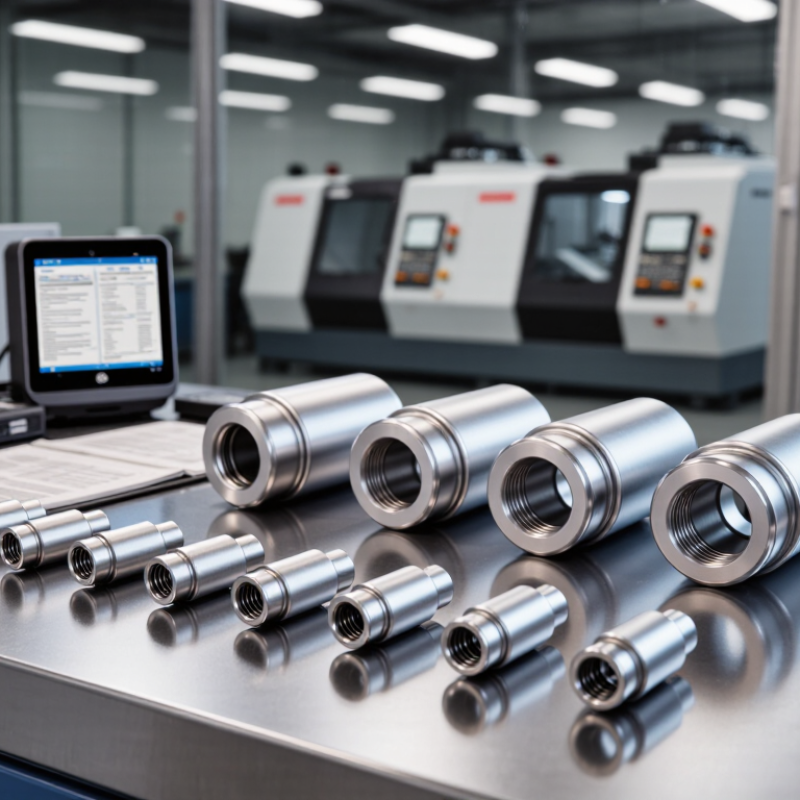
Silver–tungsten contact materials combine silver’s electrical and thermal conductivity with tungsten’s hardness and resistance to heat. Despite the familiar “alloy” label, they are generally powder-metallurgy composites: silver and tungsten have limited mutual solubility. Commercial grades commonly contain about 20–50% silver by weight, with the balance mainly tungsten; exact composition depends on the contact’s duty. The Silver Institute’s World Silver Survey 2025 reports record industrial silver demand of 680.5 million ounces in 2024. That figure describes the wider silver market, not silver–tungsten use specifically.
In service, these materials are used in circuit breakers, contactors, and other high-current switching contacts. Silver helps carry current, while tungsten supports resistance to arcing, erosion, and mechanical wear. Performance still depends on more than composition: porosity, contact pressure, surface finish, and switching frequency matter. A contact can look sound and still wear unevenly. That is easy to overlook.
Tips: Match the grade to current, voltage, and switching frequency. Ask suppliers for composition, density, and test data. Compare results under your actual operating conditions; published figures may use different test methods.
Supplier-neutral guide to commonly specified silver-tungsten (AgW) material options. These are material grades and sourcing specifications, not ranked or named companies.
| Material option | Nominal composition by weight | Estimated theoretical density | Typical property balance | Common application areas | Useful supplier verification |
|---|---|---|---|---|---|
| AgW30 | 30% silver, 70% tungsten | 15.6 g/cm³ | High tungsten content favors resistance to arc erosion and material transfer; electrical conductivity is lower than in silver-rich grades. | Heavy-duty switching contacts and applications with substantial arcing or contact wear. | Confirm composition, density, porosity, dimensions, and the applicable test method. |
| AgW40 | 40% silver, 60% tungsten | 14.4 g/cm³ | High wear and arc resistance with more silver-related conductivity than AgW30. | Circuit breakers, contactors, and other power-switching contacts. | Request a material certificate and clarify whether the product is made by infiltration or another powder-metallurgy route. |
| AgW50 | 50% silver, 50% tungsten | 13.4 g/cm³ | Intermediate balance of conductivity, thermal transport, and resistance to arc erosion. | Electrical contacts in switching equipment and selected resistance-welding assemblies. | Check composition tolerance, bonding quality, and contact-face finish. |
| AgW55 | 55% silver, 45% tungsten | 12.9 g/cm³ | More silver than AgW50 can support higher conductivity, while tungsten continues to provide arc and wear resistance. | General-purpose power contacts where both conductivity and switching durability matter. | Verify the specified grade and confirm that test results correspond to the supplied batch. |
| AgW60 | 60% silver, 40% tungsten | 12.4 g/cm³ | Silver-rich balance generally provides improved conductivity compared with higher-tungsten grades. | Contactors, switchgear, and electrical contacts subject to moderate arc loading. | Request electrical and physical property data appropriate to the intended contact design. |
| AgW65 | 65% silver, 35% tungsten | 11.9 g/cm³ | Higher silver fraction favors conductivity; arc-erosion resistance is generally lower than in tungsten-richer grades. | Switching contacts where electrical conductivity is a priority and arc severity is controlled. | Confirm dimensional tolerances, surface condition, and suitability for the switching duty. |
| AgW70 | 70% silver, 30% tungsten | 11.5 g/cm³ | Conductivity-oriented composition with tungsten retained to improve resistance to welding and contact wear. | Electrical contacts for moderate-duty switching and selected contactor applications. | Compare the supplier’s stated conductivity and hardness with the same test conditions. |
| AgW75 | 75% silver, 25% tungsten | 11.0 g/cm³ | Silver-rich grade; typically prioritizes conductivity over the arc-erosion resistance of tungsten-rich grades. | Applications requiring good conductivity with some added resistance to contact damage. | Specify operating current, switching frequency, and contact geometry when requesting a recommendation. |
| AgW80 | 80% silver, 20% tungsten | 10.6 g/cm³ | High silver fraction favors electrical and thermal conductivity; tungsten provides a reinforcing, arc-resistant phase. | Conductivity-focused electrical contacts with comparatively limited arc severity. | Confirm that the grade is available in the required form, such as rod, strip, plate, or finished contact. |
| Custom AgW composition | Composition specified by purchase agreement | Depends on composition and manufacturing route | Can be tailored to balance conductivity, arc resistance, wear, and component geometry; performance must be validated for the application. | Specialized switchgear, contact assemblies, and engineered electrical components. | Agree on composition limits, manufacturing process, inspection plan, traceability, and acceptance criteria before ordering. |
Notes: AgW contact materials are powder-metallurgy composites rather than conventional single-phase alloys. Composition percentages are by weight. Density figures are idealized estimates calculated from the nominal composition and the densities of silver and tungsten; actual values vary with porosity and manufacturing process. Property descriptions are comparative guidance, not guaranteed specifications. Confirm the grade and test requirements with the supplier for each application.