Leave your message now to get your free sample and discount price
Tungsten Carbide remains a critical material for cutting tools, mining components, wear parts, and high-pressure industrial equipment. Its value comes from exceptional hardness, compressive strength, and resistance to abrasive wear. However, choosing a grade requires more than comparing hardness numbers. The wrong composition may chip during interrupted cutting or wear quickly against corrosive slurry. Small grains cut differently. Coarse grains can tolerate heavier impact.
The U.S. Geological Survey’s Mineral Commodity Summaries 2025 estimated global tungsten mine production at approximately 81,000 metric tons in 2024. China supplied the largest share, confirming tungsten’s strategic importance and concentrated supply chain. Reports from the International Tungsten Industry Association also identify cemented carbide as the dominant industrial use of tungsten. These figures explain why material efficiency, recycling, and reliable grade selection matter to manufacturers. Cost alone is not a dependable guide.
A practical selection process should connect operating conditions with measurable material properties. Engineers should examine grain size, cobalt or nickel binder content, hardness, fracture toughness, corrosion exposure, cutting speed, and expected impact loading. ISO 513 classifications can support cutting-tool decisions, while supplier test data should be checked against real production conditions. Numbers can mislead. Laboratory wear results may not reproduce vibration, coolant contamination, or uneven loading on a factory floor. Experienced users therefore compare certified data with field trials, failure photographs, and maintenance records. This article explains how to choose Tungsten Carbide more responsibly, while acknowledging that no single grade performs best in every application.
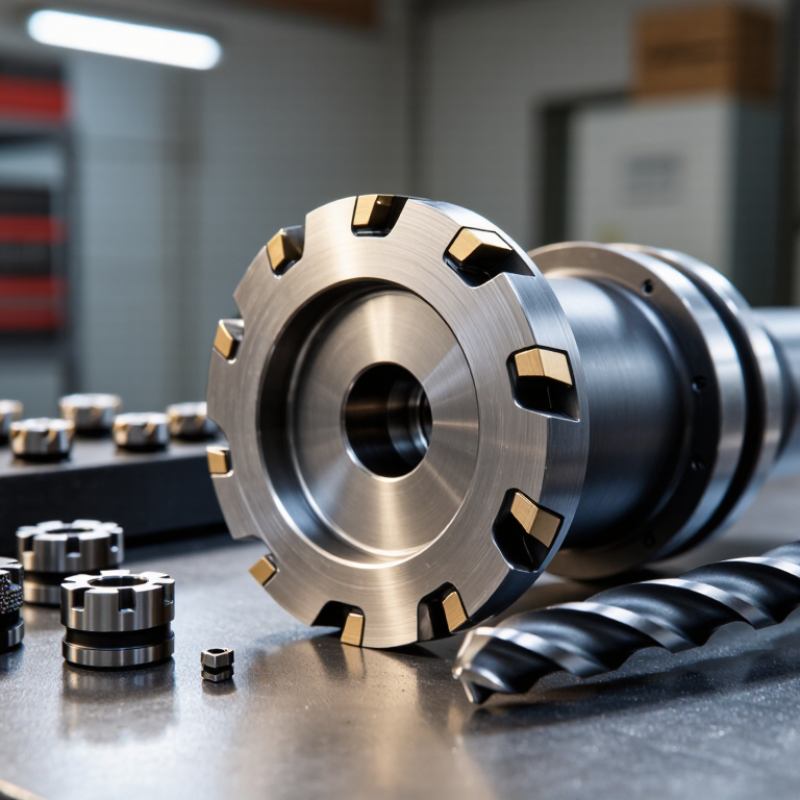
How to Choose Tungsten Carbide for Industrial Applications?
Understanding Tungsten Carbide Composition and Key Properties
Tungsten carbide is not a single, uniform material. Its performance depends on carbide grains, binder content, grain size, and carbon balance. Tungsten carbide grains provide hardness and wear resistance. Cobalt or another metallic binder adds toughness and helps absorb impact.
A higher binder percentage usually improves toughness. However, it can reduce hardness and resistance to abrasion. Fine grains create a harder structure with a smoother cutting edge. Coarser grains may tolerate shock better. The choice is rarely obvious. It depends on load, speed, temperature, and contact conditions.
A hardness number alone can mislead. In practical shop trials, a very hard grade may chip under interrupted cutting. A tougher grade may survive impact but wear quickly against abrasive minerals. Check transverse rupture strength, fracture toughness, density, and corrosion behavior with hardness. Manufacturing quality matters too. Uneven binder distribution can create weak areas.
For drilling rock, forming metal, or guiding wire, match the composition to the failure mode. Abrasive wear calls for higher hardness and suitable grain refinement. Repeated impact demands stronger toughness. Elevated temperatures can change binder behavior and dimensional stability. Review supplier test data, then compare it with your own operating records. Small differences in feed rate or cooling can change results. Erotiske
Matching carbide grades to operating conditions requires more than checking hardness. The cutting zone behaves like a small furnace. Heat, impact, vibration, and coolant changes all influence performance. ISO 513 classifies cemented carbide applications into P, M, and K groups, helping engineers connect grades with workpiece materials and chip behavior. A fine-grain grade can produce a sharper edge, but it may fracture under interrupted cutting. A tougher, coarser grade usually tolerates shock better, although it may wear faster during continuous high-speed machining.
Binder content also changes the balance. Higher binder levels generally improve toughness, while lower levels can support greater hardness and wear resistance. The correct choice depends on actual operating conditions.
For example, a stable turning process on hardened steel may need wear resistance and thermal stability. Milling cast iron with interrupted engagement demands stronger edge support.
Drilling abrasive composites can require a carefully balanced grade, not simply the hardest available option. Small details matter, including feed rate, clamping rigidity, coolant delivery, and edge preparation.
Material availability deserves attention, too. The U.S. Geological Survey reported global tungsten mine production of about 81,000 metric tons in 2023, with China supplying most reported output in its Mineral Commodity Summaries 2024. This supports careful material planning and recycling.
A practical trial should compare flank wear, edge chipping, surface finish, and tool life under identical settings. The method is not flawless. Laboratory results may fail on a vibrating production machine. Field feedback must therefore challenge the original grade selection.
Hardness is the first screening point, not the final decision. Cemented carbide grades commonly measure about 1,400–2,200 HV30, according to technical data compiled by the International Tungsten Industry Association. Higher hardness usually improves cutting-edge retention and abrasive wear resistance. However, it can reduce toughness. A brittle insert may chip when a machine meets vibration, interrupted cutting, or a hard inclusion. ASM technical data generally places fracture toughness around 5–20 MPa·m½, depending on grain size and binder content. Small differences matter.
Toughness deserves practical testing. Watch the cutting edge under real impact. Fine-grained carbide often supports sharper edges, while larger grains can tolerate heavier shocks. Wear resistance also depends on speed, feed, temperature, lubrication, and the workpiece. Laboratory rankings can change on the factory floor.
Corrosion is less obvious. Wet chloride environments may attack the metallic binder, even when the carbide phase remains hard. Industry studies in the International Journal of Refractory Metals and Hard Materials report substantial corrosion differences between binder systems and grain structures. I would not treat any published range as a promise. Test coupons in the actual coolant, temperature, and contact cycle. That detail is easy to miss.
How to Choose Tungsten Carbide for Industrial Applications?
Choosing tungsten carbide begins with the working environment, not a catalog grade. Cutting temperature, impact energy, corrosion, and contact pressure all influence the binder selection. Cobalt binders provide strong toughness for interrupted cutting and heavy shock. Nickel-based binders can offer better corrosion resistance in wet or chemically aggressive areas. Iron-based systems may suit cost-sensitive designs, but their performance requires careful validation.
Grain size changes the balance between wear resistance and fracture resistance. Fine grains usually support sharper edges and better abrasion resistance. Coarser grains can tolerate stronger impacts. That distinction matters on a mining tooth or a stamping die. Measure the actual load cycle. A component facing repeated vibration may fail even when laboratory hardness looks excellent. This is where field data becomes more valuable than assumptions.
Geometry deserves equal attention. A thick cross-section can resist bending, while a thin edge may cut efficiently but chip easily. Avoid sharp internal corners when stress concentration is likely. Add generous transitions where possible. I have seen material choices appear correct until brazing heat, clamping pressure, or poor edge support exposed the weakness. That experience deserves reflection. Test representative parts, inspect worn edges, and compare failure modes rather than relying on one hardness number. Small changes in binder content, grain size, or relief angle can alter service life significantly.
| Selection Dimension | Typical Options | Typical Effect on Performance | Recommended Industrial Use | Key Cautions |
|---|---|---|---|---|
| Cobalt binder | Approximately 3–20 wt% cobalt | Provides a strong balance of transverse rupture strength, fracture toughness, and wear resistance. Higher cobalt content generally improves toughness but reduces hardness and wear resistance. | General cutting tools, mining tools, wear parts, dies, punches, and components exposed to impact or vibration. | Avoid selecting a high-cobalt grade when maximum abrasion resistance or high-temperature hardness is the primary requirement. |
| Nickel-based binder | Nickel binder, often used with chromium additions | Offers good corrosion resistance and can provide better chemical stability than conventional cobalt-bonded grades. Mechanical properties depend strongly on composition and processing. | Corrosive environments, food-processing equipment, chemical-processing components, and applications where cobalt-free materials are preferred. | Confirm compatibility with the process fluid, temperature, and required strength because corrosion-resistant grades may not match the toughness of cobalt-bonded grades. |
| Iron-based binder | Iron-rich binder systems with alloying additions | Can reduce reliance on cobalt and may offer a useful combination of strength, cost efficiency, and application-specific performance. | Selected wear components and engineered applications where the binder chemistry is validated for the service environment. | Performance varies considerably with alloy design; do not substitute it without checking corrosion behavior, magnetic response, hardness, and toughness. |
| Ultra-fine or submicron grain | Carbide grain generally below about 0.8 µm | High hardness, high edge strength, and good resistance to plastic deformation when the microstructure is well controlled. | Small-diameter cutting tools, precision milling, micro-drilling, hard non-ferrous alloys, and finishing operations. | More sensitive to manufacturing defects, thermal shock, and excessive impact. Rigid machines and stable cutting conditions are important. |
| Fine grain | Approximately 0.8–1.3 µm carbide grain | Combines high hardness with better toughness than ultra-fine grades, making it a versatile choice for precision and general machining. | End mills, drills, inserts, punches, forming tools, and wear parts requiring a balanced property profile. | The best performance depends on the binder content, carbide distribution, edge preparation, and operating temperature. |
| Medium or coarse grain | Coarse carbide grain, commonly above about 1.3 µm | Generally improves fracture toughness and impact resistance, while hardness and abrasion resistance are usually lower than in finer-grained grades. | Rock drilling, mining, construction tools, rotary-percussive applications, and heavy interrupted cutting. | Not normally the first choice for fine finishing, micro-tools, or applications demanding the highest edge retention. |
| Solid or monolithic geometry | Solid carbide body; straight, stepped, or profiled geometry | Provides high rigidity, dimensional stability, and accurate cutting edges. Suitable for components where the entire body must resist wear. | Rotary cutting tools, precision punches, small dies, wear pins, and high-speed machining tools. | Long, slender geometries require careful control of tool overhang, runout, clamping, and vibration. |
| Tipped or brazed geometry | Carbide tip, insert, or segment joined to a steel body | Reduces material cost and can provide a tough steel shank with a wear-resistant carbide working surface. | Large drills, saws, mining tools, forming tools, wear plates, and components with a large non-wearing body. | Joint design, residual stress, brazing quality, differential thermal expansion, and impact loading must be evaluated. |
| Thin edge or sharp profile | Small included angle with honed, chamfered, or prepared cutting edge | Improves cutting efficiency and reduces cutting forces, but increases the risk of edge chipping under impact or unstable conditions. | Finishing, precision machining, soft-to-medium work materials, and continuous cuts. | Use a stronger edge preparation for interrupted cuts, hard spots, vibration, or abrasive workpieces. |
| Thick section or reinforced profile | Larger cross-section, stronger edge hone, chamfer, or backed geometry | Improves load distribution and impact resistance, although it may increase cutting forces and reduce access to narrow features. | Heavy roughing, interrupted cutting, percussion tools, high-feed operations, and severe wear environments. | Ensure that the machine, holder, and workpiece can tolerate the increased forces and heat generation. |
Choosing tungsten carbide begins with its manufacturing method. Powder metallurgy remains the standard route for industrial grades. It controls composition, grain size, and density. Conventional pressing suits stable, medium-volume production. Isostatic pressing improves uniformity in complex or larger parts. Vacuum sintering removes binders and develops final hardness. Hot isostatic pressing can reduce internal pores, but it adds equipment and processing costs.
Performance depends on more than hardness. Fine grains usually improve edge strength and wear resistance. Coarser grains can offer better toughness under impact. The binder content also changes behavior. More binder may reduce brittleness, but it can lower hardness and chemical resistance. For a cutting insert, a sharp polished edge may reduce friction. For a mining button, fracture resistance often matters more. We once treated hardness as the main selection factor. That approach was too narrow.
Total cost includes machining, inspection, downtime, and replacement frequency. A lower-priced grade may wear quickly against abrasive material. Frequent replacement can exceed the original savings. A denser grade may cost more, yet deliver steadier dimensions after repeated cycles. Ask suppliers for density, hardness, transverse rupture strength, grain size, and porosity data. Test samples under real pressure, temperature, and lubrication conditions. Laboratory results help, but they cannot represent every production line. The best choice is often the grade that survives predictable abuse, not the one with the highest headline hardness.